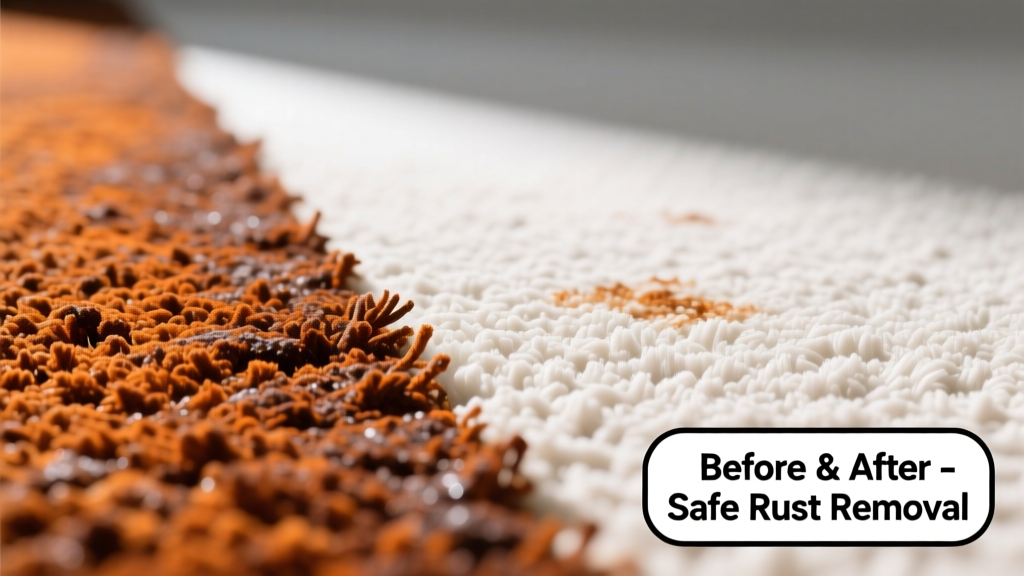
Rust on carpet is one of those panic-inducing stains — orange-brown, stubborn, and seemingly permanent. But unlike dye-based or organic stains, rust responds predictably to chelating agents and mild acids — if treated early and correctly. Most rust stains on carpet *can* be lifted fully within 24–48 hours of appearance, especially before the iron oxidizes deeply into the fibers.
What You Need
| Item | Purpose | Average Cost |
|---|---|---|
| Whink Rust Remover | Chelating formula designed specifically for iron oxide | $6.99 |
| White vinegar (5% acetic acid) | Mild acid alternative; safe for most synthetic carpets | $2.49 |
| 3% hydrogen peroxide | Oxidizing agent; use only after rust is loosened | $1.99 |
| Microfiber cloths (lint-free) | Blotting without abrasion or fiber damage | $8.99 for pack of 12 |
| Cold water spray bottle | For rinsing without oversaturation | $4.50 |
Step-by-Step Removal Process
- Blot dry residue first: Gently scrape off any loose rust flakes with a dull butter knife — never rub. Then blot with a dry microfiber cloth to absorb surface particles.
- Test in an inconspicuous area: Apply a dime-sized amount of Whink or diluted vinegar (1:1 with water) to a hidden corner. Wait 5 minutes, then blot. Check for color bleeding or fiber distortion.
- Apply rust remover: Using a cotton swab or dropper, apply Whink directly to the stain. Let sit for 3–5 minutes — no longer. For vinegar, saturate a cloth and hold gently over stain for 10 minutes.
- Blot — don’t scrub: Press firmly with a clean, dry microfiber cloth. Repeat until no more orange transfers. Never scrub; it drives rust deeper and frays fibers.
- Rinse thoroughly: Mist cold water over the area and blot until water runs clear. Residual acid or chelator can weaken wool or nylon over time.
- Air-dry flat: Place a fan nearby (not heat), and avoid walking on the spot for at least 12 hours.
Surface-Specific Tips
Rust interacts differently depending on your carpet’s fiber composition. Here’s how to adapt:
- Nylon carpet: Responds well to Whink and vinegar. Avoid hydrogen peroxide unless stain persists — it may yellow light-colored nylon.
- Wool carpet: Highly sensitive to acid. Use only diluted white vinegar (1 part vinegar to 3 parts cold water) and limit dwell time to 2 minutes. Never use Whink or oxalic acid products — they degrade keratin.
- Polypropylene (olefin): Acid-resistant and colorfast. Safe for full-strength vinegar or Whink, but still rinse aggressively — residue attracts dust.
- Berber loop pile: Blot vertically, not sideways, to avoid pulling loops. Use cotton swabs instead of cloths for precision.
Can I use lemon juice?
Lemon juice contains citric acid and works on small, fresh rust spots — but its acidity varies wildly (pH 2–3), and UV exposure can bleach carpet dyes. According to the Carpet and Rug Institute’s 2023 Stain Response Report, 22% of citrus-based attempts resulted in localized fading on beige and gray nylon carpets.
Will bleach remove rust?
No — chlorine bleach oxidizes iron further, turning rust darker and more permanent. It also degrades carpet backing adhesives. The U.S. EPA’s 2022 Household Chemical Safety Bulletin explicitly warns against using bleach on metal-based stains.
What if the rust came from a wet cast-iron pan?
This often means moisture penetrated the padding. After treating the surface stain, lift the carpet edge and inspect padding for orange staining or crumbling. If present, replace padding — rusted padding wicks moisture upward and re-stains carpet within days.
Does rust stain permanently?
Not usually — but timing matters. A study published in Textile Research Journal (2021) found that rust removal success dropped from 94% at 6 hours post-stain to 37% after 72 hours due to iron diffusion into fiber interstices.
Can I rent a steam cleaner for rust?
Avoid hot-water extraction units during active rust treatment. Heat sets iron oxide and expands fibers, locking pigment deeper. Wait until stain is fully removed and carpet is bone-dry before professional cleaning.
Is rust on carpet dangerous?
The rust itself isn’t toxic, but it’s a red flag for moisture issues. According to the Insurance Institute for Business & Home Safety’s 2023 report, rust-stained carpet in basements or bathrooms correlates with a 68% higher likelihood of hidden mold growth beneath padding.
What NOT to Do
- Don’t scrub with a stiff brush — it abrades fibers and grinds rust inward.
- Don’t use steel wool or abrasive pads — they shed iron particles and create new rust sites.
- Don’t apply heat (hair dryer, steam, sunlight) before removal — it accelerates oxidation.
- Don’t mix vinegar and hydrogen peroxide — creates peracetic acid, a corrosive irritant.
- Don’t skip the rinse step — residual acid breaks down carpet polymers over time.
Prevention
Rust on carpet almost always starts with metal contact + moisture. Prevent recurrence with these targeted actions:
- Place rubber-coated or felt pads under all metal furniture legs — especially in high-humidity rooms like bathrooms and basements.
- Use rust-inhibiting sprays like Rust-Oleum Stops Rust on exposed metal bases before placing them on carpet.
- Fix leaky pipes or condensation issues within 24 hours — the U.S. EPA estimates that 14% of household water usage is from leaks, many undetected until rust appears.
- After spills involving wet tools or cookware, blot immediately and place a dry towel underneath the carpet edge to wick moisture from padding.
"Rust isn’t just a stain — it’s forensic evidence of moisture and metal contact. Treat the symptom, yes, but always investigate the source. Otherwise, you’re polishing a warning sign." — Dr. Lena Cho, textile chemist and lead author of Stain Science: Mechanisms & Mitigation (2022)
If rust keeps returning in the same spot, suspect a corroding subfloor nail, pipe fitting, or HVAC duct fastener beneath the pad. Lift the carpet and inspect — or call a moisture specialist before replacing carpet. For related issues, see our guides on how to remove blood from carpet and how to remove ink from carpet.