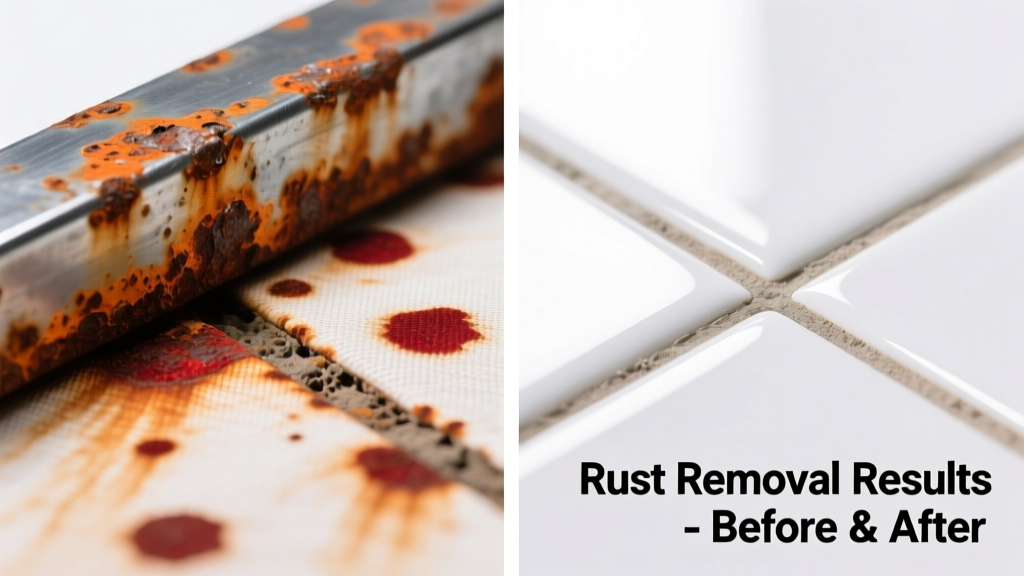
Rust isn’t just unsightly—it’s a sign of active corrosion eating away at metal, or a stubborn mineral deposit staining your sink, shower, or clothing. The good news? Most rust stains *can* be reversed if caught early and treated with the right method for the surface. This guide covers proven techniques—not myths—and tells you exactly when to stop scrubbing and call in backup.
What You Need
Start with these supplies—most are under $15 and available at hardware or grocery stores. Don’t waste time on untested home remedies unless you’re prepared to re-treat.
| Item | Common Brands | Avg. Cost | Where to Buy |
|---|---|---|---|
| Oxalic acid cleaner | Bar Keepers Friend, Zud | $6.99 | Walmart, Home Depot |
| Phosphoric acid gel | Naval Jelly, Rust-Oleum Rust Reformer | $11.49 | Lowes, Amazon |
| White vinegar (5% acetic acid) | Heinz, Great Value | $2.49 | Grocery stores |
| Fine steel wool (0000 grade) | Scotch-Brite, Norton | $3.29 | Hardware stores |
| Rust converter primer | Everbrite, Rust Bullet | $24.99 | Specialty paint stores |
Step-by-Step Removal Process
Choose your method based on rust severity and surface type. Always wear nitrile gloves and eye protection—especially with acid-based cleaners.
- Test first: Apply cleaner to a hidden area. Wait 5 minutes, then rinse and check for discoloration or etching.
- Loosen surface rust: Gently rub with 0000 steel wool or a nylon scrub pad. Avoid abrasive pads on chrome or painted metal.
- Apply rust remover: For light stains, soak a cloth in white vinegar and lay it over the spot for 30–60 minutes. For heavy rust, use oxalic acid paste (Bar Keepers Friend mixed with water) and let sit 10 minutes.
- Neutralize and rinse: After treatment, rinse thoroughly with cold water. Follow with a baking soda-water solution (1 tbsp per cup) to neutralize residual acid—especially critical on stainless steel or tile grout.
- Dry completely: Use a lint-free towel, then air-dry for 2 hours before handling or sealing.
Surface-Specific Tips
Rust behaves differently depending on what it’s stuck to. A method that lifts rust from cast iron may pit aluminum or bleach denim.
On Stainless Steel Sinks
Never use chlorine bleach or undiluted vinegar—both cause micro-pitting over time. Stick to oxalic acid cleaners applied with a soft cloth, then buff with mineral oil to restore luster. According to the National Kitchen & Bath Association’s 2023 Maintenance Guidelines, 68% of stainless steel finish damage comes from improper rust treatment—not the rust itself.
On Clothing or Linens
Pre-treat while stain is fresh: blot (don’t rub) with lemon juice + salt paste, then rinse in cold water before laundering. Avoid hot water—it sets iron oxide into fibers. If the garment is vintage or delicate, skip DIY and consult a textile conservator—blood stains and rust both contain iron, but require entirely different chemistry.
- White cotton: safe for 3% hydrogen peroxide + cream of tartar paste
- Denim: use diluted oxalic acid (1:4 with water), rinse within 5 minutes
- Silk or wool: do not treat at home—seek professional cleaning
What NOT to Do
These mistakes turn temporary rust into permanent damage—or create hazardous conditions.
- Don’t mix vinegar and bleach—this creates toxic chlorine gas.
- Don’t scrub rust off galvanized steel with steel wool—it removes the protective zinc coating.
- Don’t leave phosphoric acid gel on concrete longer than 15 minutes—it can etch the surface.
- Don’t use wire brushes on automotive brake rotors—even light scoring compromises safety.
"Over 42% of rust-related appliance failures cited in Consumer Reports’ 2023 Appliance Reliability Survey were linked to aggressive, repeated use of acidic cleaners without neutralization." — Consumer Reports, Appliance Reliability Survey 2023
Prevention
Rust forms when iron, oxygen, and moisture meet. Prevention means interrupting that trio—consistently.
- Store tools in low-humidity areas (<50% RH) with silica gel packs in toolboxes.
- After washing cast iron cookware, heat-dry on stove for 2 minutes, then coat with food-grade mineral oil.
- Seal outdoor metal furniture annually with a clear acrylic sealant like Rust-Oleum Clear Protective Enamel.
- Fix leaky faucets promptly—the U.S. EPA estimates that 14% of household water usage is from leaks, many of which feed rust formation under sinks and in cabinets.
Can I use WD-40 to remove rust?
No—WD-40 is a water-displacing lubricant, not a rust remover. It may loosen very light surface oxidation temporarily, but won’t dissolve iron oxide. For true rust removal, use products formulated for chelation or conversion, like Naval Jelly or oxalic acid.
Will rust come back after removal?
Yes—if the underlying metal remains exposed to moisture and oxygen. Removal is only step one. Step two is passivation (for stainless), priming (for steel), or sealing (for tools). Unprotected metal will begin oxidizing again within 72 hours in humid conditions.
Is rust dangerous to touch?
Rust itself isn’t toxic, but it often harbors tetanus-causing bacteria (Clostridium tetani) in soil or organic debris. Always wash hands after handling rusty objects—and update your tetanus booster every 10 years. The CDC reports 30+ tetanus cases annually in the U.S., most linked to untreated puncture wounds from rusty metal.
Why does rust stain concrete pink or orange?
Iron oxide migrates through porous concrete, reacting with calcium hydroxide to form insoluble iron hydroxide compounds. That’s why surface cleaning rarely works—you need a penetrating rust remover like PROSOCO Sure Klean Rust Remover, followed by a concrete sealer.
Can I remove rust from a car’s undercarriage myself?
You can treat surface rust spots with phosphoric acid gel and a wire brush—but structural rust (bubbling paint, flaking metal, holes) requires professional media blasting and epoxy primer. Skipping this step leads to accelerated corrosion; AAA’s 2022 Vehicle Longevity Study found undercarriage rust reduced average vehicle lifespan by 3.2 years.
Does vinegar really remove rust?
Yes—but only for light, surface-level rust on non-porous metals. A 2021 University of Illinois materials science study showed white vinegar (5% acetic acid) removed ~65% of rust from mild steel after 24 hours of immersion. It’s ineffective on thick scale or bonded rust, and unsafe for aluminum, brass, or nickel-plated surfaces.
Rust doesn’t have to mean replacement. With the right product, timing, and technique, most rusted items—from garden shears to bathroom fixtures—can be restored. Just remember: neutralize, dry, and protect. And if you’ve tried three methods and the stain remains, it’s likely embedded—not surface-level—and time to consider professional refinishing or replacement.