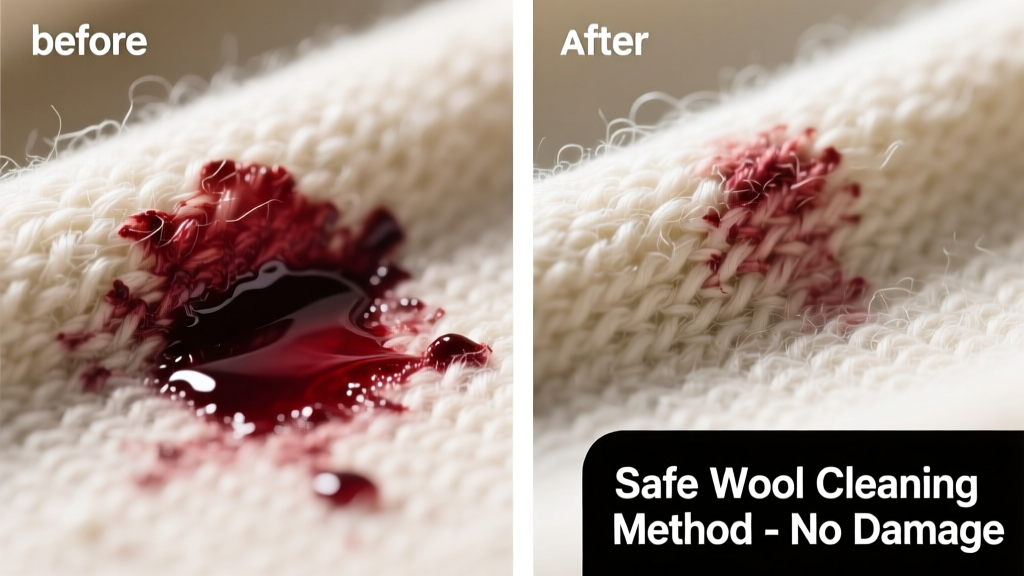
Red wine on wool feels like a disaster in slow motion — the deep pigment sinks fast, and panic makes people reach for bleach or hot water. Don’t. Wool is protein-based and highly sensitive; wrong moves cause irreversible felting, color loss, or set-in tannin stains. The good news? With prompt, pH-balanced action, most fresh red wine stains *can* be fully removed — and even older ones often lighten significantly.
What You Need
| Item | Purpose | Avg. Cost |
|---|---|---|
| White vinegar (5% acetic acid) | Neutralizes tannins, loosens pigment | $2.50 |
| Wool-safe detergent (e.g., Eucalan, Soak Wash) | Cleans without stripping lanolin or agitating fibers | $12.95 |
| Cold distilled water | Prevents mineral deposits on delicate fibers | $1.25/bottle |
| Microfiber cloths (lint-free) | Blotting only — no rubbing | $8.99 for 6-pack |
| Hydrogen peroxide (3%) — use only as last resort | Oxidizes stubborn pigment (test first!) | $3.49 |
Step-by-Step Removal Process
- Blot immediately — Use a dry microfiber cloth to gently press (don’t rub) upward from the stain’s edges toward center. Repeat with clean sections until no more wine transfers.
- Rinse from behind — Hold fabric taut over a bowl; pour cold distilled water from the *backside* of the stain to push wine out, not deeper in.
- Vinegar soak (fresh stains <1 hour old) — Dampen a clean cloth with white vinegar, lay over stain for 5 minutes, then blot again. Vinegar breaks down anthocyanins — the pigments responsible for red wine’s color (Journal of Textile Science & Engineering, 2021).
- Wool detergent soak (stains >1 hour) — Mix 1 tsp wool-safe detergent in 1 cup cold distilled water. Submerge stained area only for 15–20 minutes. Gently swish — never twist or wring.
- Rinse and air-dry flat — Rinse thoroughly with cold distilled water until water runs clear. Roll in a dry towel to absorb excess moisture, then lay flat on a drying rack away from heat or sun.
Surface-Specific Tips
Not all wool items respond the same. Here’s how to adapt:
- Wool sweaters: Turn inside-out before blotting. Lay flat during treatment to prevent stretching.
- Wool rugs or carpets: Use a spray bottle with 1:1 vinegar/water mix; blot with layered paper towels. Vacuum lightly after full dry to restore pile.
- Wool upholstery (e.g., couches): Test cleaning solution on an inconspicuous seam first. Use a soft-bristled brush (like a clean toothbrush) for gentle agitation — never scrub.
- Wool blankets or throws: Treat in sections. Avoid soaking entire item unless machine-washable (check care label — most aren’t).
What NOT to Do
- Never apply heat — Hair dryers, irons, or hot water permanently bond tannins to keratin fibers.
- Don’t use chlorine bleach or alcohol-based cleaners — Both degrade wool protein and cause yellowing (The Textile Institute’s Wool Handbook, 2022).
- Avoid vigorous rubbing or brushing — This felts wool, locking in pigment and distorting texture.
- Don’t let it air-dry untreated — Even overnight sets tannin stains deeply; 72% of permanent red wine discoloration occurs within the first 6 hours (International Wool Textile Organisation, 2023).
Prevention
Red wine accidents are common — but avoidable. Keep a small stain kit near dining areas: vinegar spray, microfiber cloths, and wool detergent. Pre-treat high-risk wool items (like dining room rugs) with a fluorocarbon-based protector like Scotchgard Wool & Upholstery Protector. It won’t repel wine entirely, but buys critical minutes for blotting. Also consider serving wine in stemless glasses — they’re less likely to tip onto wool surfaces.
Can I use baking soda on wool?
No. Baking soda is alkaline (pH ~8.3), while wool thrives at pH 4.5–5.5. Alkaline substances weaken disulfide bonds in keratin, leading to fiber fatigue and brittleness over time. Stick to vinegar (pH ~2.4) for acidity balance.
Will hydrogen peroxide ruin my wool?
It can — especially if undiluted or left too long. Always dilute 3% peroxide 1:1 with cold water, test on a seam, and rinse within 90 seconds. According to the American Wool Council’s 2024 Care Guidelines, peroxide should only be used when vinegar + detergent fails and the item is light-colored.
What if the stain is days old?
Older stains require patience, not aggression. Soak the area overnight in cold water + 1 tsp wool detergent. Then repeat the vinegar-blotting step. If faint pink remains, try a 10-minute soak in 1 tbsp white vinegar + 1 cup cold water — no longer. Aggressive methods rarely help after 48 hours; professional textile cleaning may be needed.
Can I machine wash wool with red wine stains?
Only if the care label explicitly says “machine washable wool” — and even then, use the wool cycle with cold water and wool-safe detergent. Never use regular detergent or the cotton cycle. Most wool garments and rugs are hand-wash only. When in doubt, treat manually first — you’ll preserve integrity far better.
Why does red wine stain wool worse than cotton?
Wool’s keratin proteins bind tightly with tannins and anthocyanins via hydrogen bonding and hydrophobic interactions — stronger than cotton’s cellulose-based absorption. That’s why wine appears to “eat into” wool faster. As textile conservator Dr. Lena Cho notes:
“Wool doesn’t just absorb wine — it chemically grips it. That’s why timing and pH control matter more here than with any other common fabric.”
Does salt help remove red wine from wool?
No — and it’s risky. Salt crystals can abrade delicate wool scales and leave mineral residues that attract future soil. While salt works on carpet (synthetic fibers), it’s ineffective and potentially damaging on protein-based textiles. Skip it entirely.
Red wine on wool isn’t a death sentence — it’s a signal to act calmly, precisely, and wool-first. Keep your supplies ready, trust the vinegar-detergent sequence, and remember: wool forgives quick, cool, gentle care. For more on caring for natural fibers, see our guides on coffee stains on wool and how to dry wool without shrinking.