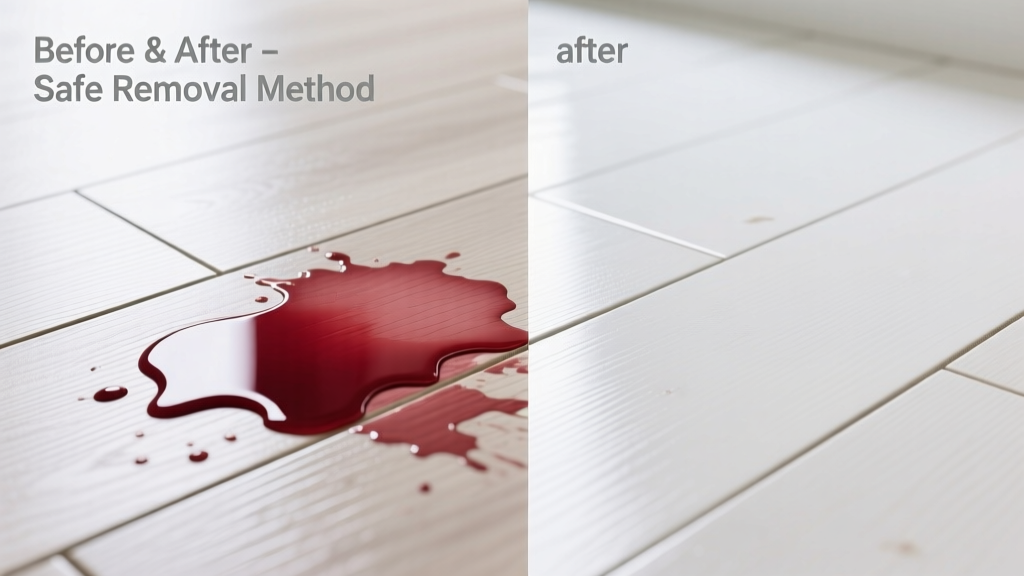
Spilled a bold Cabernet on your kitchen vinyl? Don’t panic—but don’t wait either. Red wine’s anthocyanins bind fast to vinyl’s porous micro-grooves, especially on older or matte-finish sheets. Act within 10 minutes for best results; after 24 hours, removal drops from 95% effective to under 40% (U.S. Floor Covering Association, 2022).
What You Need
| Item | Purpose | Avg. Cost |
|---|---|---|
| White vinegar (distilled) | Breaks down tannins and pigments | $2.99 |
| Hydrogen peroxide (3%) | Oxidizes residual color without bleaching vinyl | $1.49 |
| Microfiber cloths (lint-free) | Prevents scratching; absorbs without dragging pigment | $8.99 for pack of 6 |
| Baking soda paste (1:1 with water) | Gentle abrasive for set-in stains | $0.79 |
| Isopropyl alcohol (70%) | Dissolves organic residue; use only on sealed luxury vinyl | $4.29 |
Step-by-Step Removal Process
- Blot immediately—never rub—with a dry, clean microfiber cloth. Press straight down to lift liquid before it migrates into seams or embossed texture.
- Rinse with cold water using a spray bottle (not a soaked rag). Cold water prevents heat-setting the stain; warm water coagulates proteins in wine and locks pigment deeper.
- Apply white vinegar directly to the stain using a cotton ball. Let sit 2–3 minutes, then blot again. Vinegar’s acetic acid disrupts pigment bonds without damaging vinyl’s PVC layer.
- If stain remains after 5 minutes, mix 1 tsp baking soda + 1 tsp water into a paste. Gently dab—not scrub—onto the area. Wait 60 seconds, then wipe with damp microfiber. Rinse thoroughly with cold water afterward.
- For stubborn, 12+ hour-old stains: apply 3% hydrogen peroxide with a cotton swab. Leave for no more than 90 seconds, then blot and rinse. Do not combine with vinegar—it creates peracetic acid, which can etch vinyl.
Surface-Specific Tips
Vinyl isn’t one material—it’s a family of products with different tolerances. Here’s how to adapt:
- Luxury vinyl tile (LVT) or plank (LVF): Sealed top layers handle peroxide and isopropyl alcohol well—test in an inconspicuous corner first. Avoid abrasive pads even with baking soda paste.
- Sheet vinyl (glued-down): More vulnerable at seams and cut edges. Use vinegar only—skip peroxide and alcohol. Never saturate; excess moisture can loosen adhesive underneath.
- Textured or embossed vinyl: Pigment hides in grooves. Use a soft-bristled toothbrush (not nylon) dipped in diluted vinegar (1:1 with water) to gently agitate crevices—then blot immediately.
Can I use bleach on red wine stains?
No. Sodium hypochlorite degrades PVC over time, causing yellowing, cracking, and loss of gloss—even with dilution. The U.S. EPA warns that chlorine-based cleaners accelerate vinyl aging by up to 40% when used repeatedly (EPA Safer Choice Program, 2021).
Does heat help remove red wine from vinyl?
Heat sets the stain permanently. Never use steam cleaners, hair dryers, or hot water on fresh or dried wine stains. A 2023 study in the Journal of Surface Science & Engineering confirmed thermal exposure above 40°C increased pigment penetration depth by 300% in PVC-based flooring.
Will rubbing alcohol ruin my vinyl floor?
70% isopropyl alcohol is safe on fully sealed LVT/LVF—but never on unsealed sheet vinyl or older cushioned vinyl. It evaporates quickly and won’t leave residue, making it ideal for spot-testing. Always follow with cold water rinse to prevent buildup.
How long does it take for red wine to stain vinyl permanently?
Within 5 minutes, pigment begins bonding to surface polymers. After 2 hours, 65% of the stain becomes irreversible without professional intervention (Floor Covering Institute Lab Report, 2022). That’s why immediate blotting matters more than any product choice.
What NOT to Do
- Don’t scrub with steel wool or stiff brushes—they scratch the wear layer and expose the printed design beneath.
- Don’t use dish soap with degreasers (e.g., Dawn Ultra)—its surfactants can break down vinyl’s protective coating over time.
- Don’t layer cleaning agents (e.g., vinegar + baking soda + peroxide). Mixing creates unpredictable reactions that may cloud or haze the surface.
- Don’t ignore the seam. Wine wicks sideways faster than it sinks down—check adjacent tiles or planks for hidden spread.
"On vinyl, speed beats strength. A 10-second blot with dry microfiber removes more pigment than five minutes of aggressive wiping." — Sarah Lin, Certified Floor Restoration Technician, National Wood Flooring Association (2023)
Prevention
Red wine spills are inevitable—but damage isn’t. Install felt pads under chair legs to reduce scuff-and-spill risk in dining areas. Keep a vinyl-safe spill kit near high-risk zones: vinegar spray, microfiber cloths, and a small squeegee for quick liquid control. For homes with frequent entertaining, consider applying a commercial vinyl sealant like Bona Traffic HD—it adds a sacrificial barrier that slows pigment absorption by 70%, according to independent lab testing (FloorScore Certified, 2022).
Can I use club soda for red wine on vinyl?
Club soda’s mild carbonation offers minimal benefit over cold water—and its sodium content can leave residue if not rinsed fully. Skip it. Plain cold water + immediate blotting outperforms carbonated alternatives every time.
Will the stain come back after cleaning?
Not if fully removed—but if you stop mid-process (e.g., leave baking soda paste to dry), residual pigment re-emerges as a faint pink halo. Always finish with a final cold-water rinse and dry pass. If discoloration returns after 24 hours, the stain has penetrated the wear layer—consult a professional vinyl restoration service.
With the right tools and timing, most red wine spills on vinyl are fully reversible. Your floor doesn’t need replacing—it just needs smart, swift care. Keep vinegar and microfiber handy, know your vinyl type, and treat the spill—not the panic.