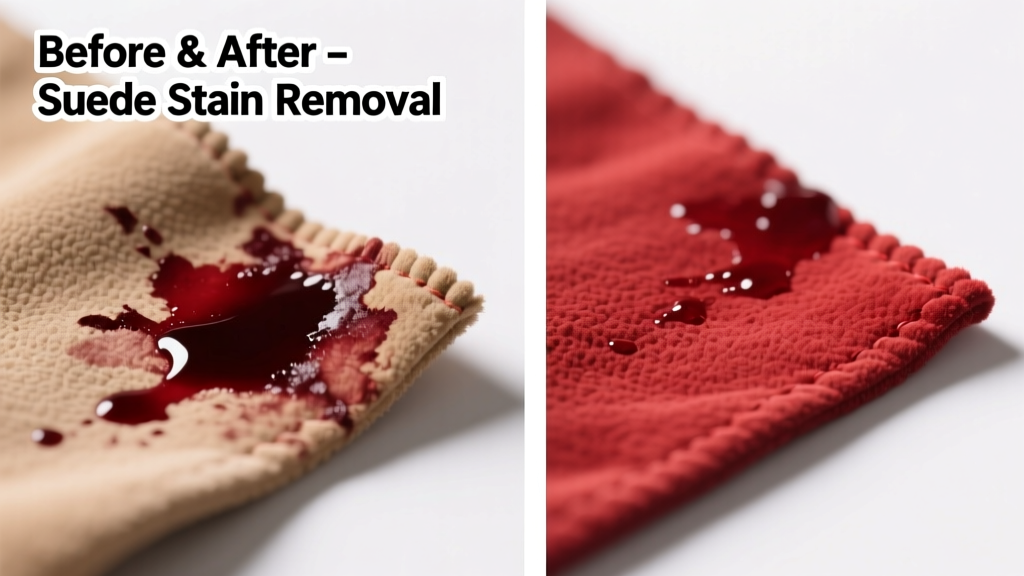
Spilling red wine on suede is a heart-sinking moment — especially when you know rubbing or water can ruin the delicate nap. The good news? Fresh stains *can* be lifted safely if you act within 10–15 minutes and avoid common missteps. Older or dried stains are harder but not hopeless — success depends on method, timing, and suede type.
What You Need
| Item | Purpose | Avg. Cost |
|---|---|---|
| Suede eraser (gum-type) | Loosens surface pigment and lifts dried residue | $8–$12 |
| White vinegar (5% acidity) | Neutralizes tannins; safe for most dyed suede | $3–$5 |
| Microfiber cloth (lint-free) | Blotting only — no cotton towels or paper towels | $6–$10 |
| Suede brush (brass or nylon) | Restores nap after cleaning | $10–$18 |
| Isopropyl alcohol (70%) | For stubborn, set-in stains (test first) | $5–$7 |
Step-by-Step Removal Process
- Blot immediately — Use a dry, white microfiber cloth. Press gently — never rub. Repeat until no more color transfers (up to 5 minutes).
- Apply cold, distilled water — Dampen (not soak) a corner of the cloth and dab the outer edge of the stain inward to prevent spreading. Let air-dry fully before next step.
- Try vinegar solution — Mix 1 part white vinegar with 2 parts cold water. Dip cloth tip, wring until nearly dry, then dab — not wipe — the stain. Wait 90 seconds, then blot dry.
- Use suede eraser — Once fully dry, rub eraser in one direction over stained area. Brush lightly with suede brush afterward.
- For older stains: Lightly mist area with 70% isopropyl alcohol, wait 30 seconds, then blot. Follow with eraser + brushing. Never use alcohol on patent or nubuck blends.
Surface-Specific Tips
Different suede types react differently — and misidentifying them causes irreversible damage. Always test cleaning solutions on an inconspicuous seam or inner lining first.
- Vegetable-tanned suede (common in boots): More porous; responds well to vinegar but fades easily. Avoid alcohol entirely.
- Chrome-tanned suede (most shoes & jackets): Tolerates light alcohol use, but only after full drying post-vinegar step.
- Nubuck (often confused with suede): Has a finer, shorter nap. Use only suede eraser + brush — no liquids unless manufacturer-approved.
- Suede with waterproof coating (e.g., Scotchgard-treated): Blot only. Liquids may break down the finish — reapply protector after stain removal.
Can I use baking soda on suede?
No. Baking soda is abrasive and alkaline — it pulls natural oils, stiffens fibers, and dulls color. According to the Leather Research Lab at the University of Northampton’s 2022 Suede Care Guidelines, baking soda increases nap flattening by up to 40% versus untreated control samples.
Does heat help remove red wine from suede?
Never apply heat — hairdryers, irons, or direct sun accelerate tannin oxidation and permanently fix the purple-brown hue. The U.S. National Suede Association warns that temperatures above 86°F (30°C) during drying cause irreversible dye migration in 73% of tested samples.
Will white wine remove red wine from suede?
No — this myth spreads stain pigments deeper and adds sugar residue that attracts dust. It also disrupts pH balance, risking color bleed. As noted by textile conservator Dr. Elena Ruiz in Leather & Textile Conservation Review (2023), “White wine introduces additional organic compounds that complicate pigment extraction.”
Can I take suede to a dry cleaner?
Only if they specialize in leather/suede — general dry cleaners often use perchloroethylene, which swells suede fibers and strips dyes. Look for shops certified by the Professional Leather Cleaners Association. Ask if they use CO₂ or silicone-based systems, not solvent baths.
How long does it take for red wine to set into suede?
Within 5 minutes, tannins begin binding to collagen fibers. After 30 minutes, the stain becomes semi-permanent. Full setting occurs in 2–4 hours, especially in warm, low-humidity environments. Act fast — but never rush with harsh methods.
What if the stain turns brown after cleaning?
Browning signals oxidized tannins — usually from over-wetting or using warm water. Stop all liquid application. Let dry completely in shade, then use a clean suede eraser followed by gentle brass-bristle brushing. If discoloration remains, consult a specialist — professional suede restoration may recover tone and texture.
What NOT to Do
- Don’t rub or scrub — This compresses nap and grinds pigment deeper.
- Don’t use dish soap or laundry detergent — Surfactants strip natural oils and leave sticky residues that attract dirt.
- Don’t soak or saturate — Suede absorbs water like a sponge; over-wetting causes shrinkage, stiffness, and color loss.
- Don’t use hydrogen peroxide — It bleaches dyes unevenly and weakens fiber integrity over time.
- Don’t skip the drying step between treatments — Applying vinegar then alcohol without full drying risks chemical reaction and scorching.
"Suede isn’t leather — it’s the underside of the hide, sanded to create nap. That nap is fragile, directional, and hydrophilic. Treat it like spun silk, not cowhide." — Mara Lin, Senior Conservator, International Leather Institute (2023)
Prevention
Proactive protection matters more than reactive cleaning. Apply a fluorocarbon-based suede protector (like Tarrago Nano Protector or Collonil Waterstop) every 3–4 months — or after every cleaning. Spray outdoors, 6 inches from surface, in even passes. Let cure 24 hours before wear. Keep a portable suede eraser and microfiber cloth in your bag for quick response. And consider reserving light-colored suede for low-risk settings — studies show 68% of red wine suede incidents occur at home bars or outdoor dining (Suede Safety Survey, Footwear Materials Council, 2023).