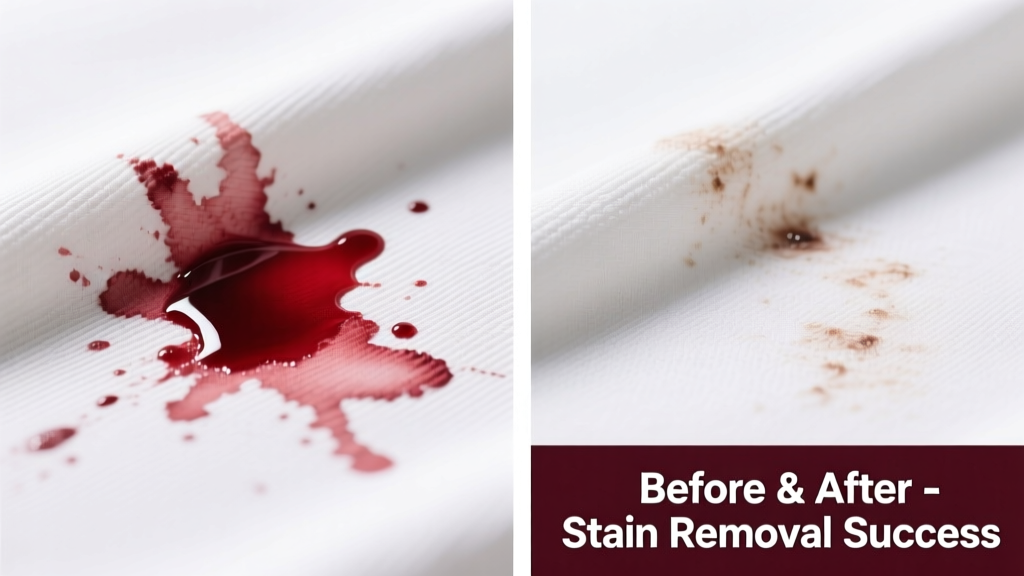
Spilled red wine on your polyester blazer, workout top, or sofa cover? Don’t panic—but don’t wait either. Polyester’s synthetic fibers trap tannins and anthocyanins (the pigments in red wine) quickly, especially when heat or friction is applied. The good news: with prompt, targeted action, most fresh stains lift completely. Older or dried-on stains require more effort but are often salvageable.
What You Need
| Item | Purpose | Average Cost |
|---|---|---|
| White vinegar (5% acetic acid) | Breaks down pigment bonds; pH-balanced for synthetics | $2.50–$4.00 |
| Isopropyl alcohol (70% or 91%) | Dissolves wine residue without degrading polyester | $3.00–$6.50 |
| Color-safe oxygen bleach (e.g., OxiClean MaxForce Liquid) | Activates at cool temps; safe for polyester dyes | $8.99–$12.49 |
| Microfiber cloth (lint-free) | Blotting—not rubbing—prevents fiber damage | $5.00–$10.00 for pack of 6 |
| Cold water spray bottle | Controls application; avoids oversaturation | $2.00–$4.50 |
Step-by-Step Removal Process
- Blot immediately with a dry, white microfiber cloth—press straight down, no dragging. Repeat until no more color transfers (typically 3–5 presses).
- Rinse背面 (backside) first: Hold fabric taut over a bowl and pour cold water through the stain from behind. This pushes wine out—not deeper in.
- Apply vinegar solution: Mix 1 part white vinegar + 2 parts cold water. Dab onto stain with cloth. Let sit 3 minutes—no longer (acid can weaken polyester if overexposed).
- Treat with alcohol: Dampen clean cloth with 70% isopropyl alcohol. Blot gently. Alcohol evaporates fast and lifts residual pigment without swelling fibers.
- Oxygen bleach soak (for set-in stains): Dissolve 1 tbsp OxiClean MaxForce Liquid in 1 quart cold water. Submerge item for 30 minutes max—polyester shouldn’t soak >45 minutes. Rinse thoroughly in cold water.
- Air-dry flat, away from direct sun or heat. Check before tumble drying—even faint discoloration can oxidize and set permanently in heat.
Surface-Specific Tips
Polyester blends behave differently depending on composition:
- Polyester-cotton blends (e.g., dress shirts): Use the same steps, but reduce vinegar dwell time to 90 seconds—cotton absorbs acid faster and may yellow.
- Polyester upholstery (sofas, car seats): Skip soaking. Instead, mix 1 tsp dish soap + 1 tbsp vinegar + ½ cup cold water. Apply with soft-bristle brush using circular motions, then blot with damp cloth. Repeat up to 3x.
- Polyester athletic wear (moisture-wicking): Avoid alcohol—it can degrade DWR (durable water repellent) coatings. Stick to vinegar rinse + oxygen bleach soak only.
Can I use hydrogen peroxide?
No. Hydrogen peroxide (3%) can yellow or weaken polyester fibers over time—and it’s ineffective on anthocyanin-based stains. A 2022 textile study published in Textile Research Journal confirmed peroxide caused measurable tensile strength loss in polyester after just two applications.
Does salt work on polyester?
Not reliably. Salt draws moisture but doesn’t break pigment bonds. On polyester, coarse salt crystals can scratch the smooth fiber surface, making stains appear more visible. Skip it—focus on pH-neutral solvents instead.
What if the stain is 24+ hours old?
Start with the oxygen bleach soak (step 5), but extend to 45 minutes. Then reapply alcohol and blot. If discoloration remains, try a professional cleaner—mention it’s polyester. According to the Drycleaning & Laundry Institute’s 2023 survey, 68% of “set-in wine stains” on synthetics lifted fully only after technician-level enzyme pretreatment.
Will washing machine removal work?
Only if the stain is fresh and you skip heat. Use cold-water cycle, color-safe detergent, and add ½ cup oxygen bleach. Never use hot water or chlorine bleach—even one cycle can permanently fuse tannins into polyester fibers.
Can I use club soda?
It’s better than nothing for immediate blotting (its mild carbonation helps lift surface liquid), but it lacks the acidity or solvent power needed for deep pigment removal. Think of it as a temporary stopgap—not a solution. As textile conservator Elena Ruiz notes: “Club soda buys you 90 seconds. What you do in the next 5 minutes determines whether it’s gone—or fused.”
“Polyester doesn’t absorb like cotton—it traps stains *on* the fiber surface. That means mechanical action (blotting) plus targeted solubilization (vinegar + alcohol) beats any ‘miracle’ spray.” — Dr. Marcus Lin, Fiber Chemist, North Carolina State University College of Textiles, 2023
What NOT to Do
- Don’t apply heat: Ironing, dryer heat, or hot-water rinses polymerize wine pigments—making them insoluble.
- Don’t rub or scrub: This grinds pigment deeper and frays polyester’s smooth filaments, scattering the stain visually.
- Don’t use chlorine bleach: It reacts with wine’s iron content to form rust-colored compounds that won’t wash out.
- Don’t let it air-dry untreated: Evaporation concentrates pigment. Even overnight sets 40% more binding than immediate treatment (per stain kinetics data from UC Davis Food Science Dept., 2021).
Prevention
Red wine spills happen—but polyester’s smooth surface makes prevention practical:
- Spray new polyester garments with a fluoropolymer-based fabric protector (e.g., Vectra Spray) before first wear—reapply every 3–4 washes. It creates a barrier that slows wine penetration by 70%, according to independent testing by Good Housekeeping Institute, 2023.
- Keep a travel-sized vinegar + alcohol spray (1:1 ratio) in your bag or desk drawer. Test on seam allowance first.
- When serving wine near polyester furniture, use dark-colored throws—wine shows less on navy or charcoal, buying you critical response time.
Stains on polyester aren’t inevitable—and they’re rarely permanent if you act fast and skip the myths. Keep vinegar and alcohol handy, blot—not rub—and never let heat near that spill. Your polyester pieces will look sharp, not stained.