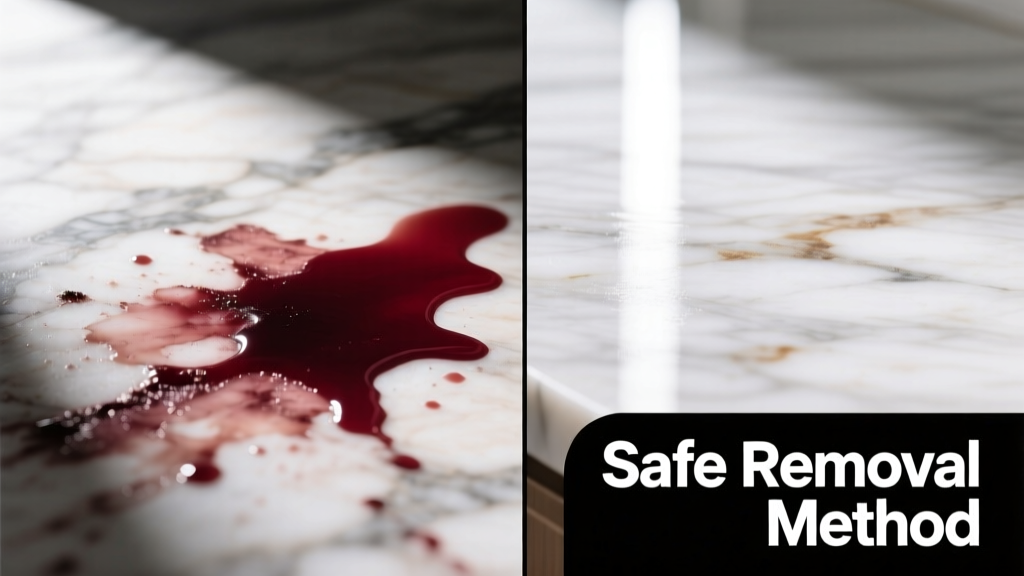
Spilled red wine on your honed Carrara countertop? That panicked moment—when the deep burgundy blooms across cool, porous marble—is all too familiar. Good news: if caught within minutes, most fresh red wine stains on marble can be lifted without etching or permanent discoloration. But speed and method matter—marble is calcium carbonate, so acidic or abrasive cleaners will dull or pit it instantly.
What You Need
| Item | Purpose | Average Cost (USD) |
|---|---|---|
| pH-neutral stone cleaner (e.g., MB Stone Care Daily Cleaner) | Safe surface prep and residue removal | $14–$18 |
| 100% white cotton cloths (lint-free) | Absorbency without scratching | $8–$12 for 12-pack |
| Baking soda (food-grade) | Non-acidic, gentle absorbent poultice base | $2–$4 |
| Hydrogen peroxide (3%) | Oxidizing agent for older, set-in stains (use sparingly) | $3–$5 |
| Plastic wrap & masking tape | Sealing poultice during dwell time | $5–$7 |
Step-by-Step Removal Process
- Blot immediately—never rub. Use a dry, clean, white cotton cloth to gently press and lift excess wine. Replace cloth as it saturates.
- Rinse with distilled water—dampen a fresh cloth with distilled (not tap) water and lightly dab the area. Tap water’s minerals can leave residues on polished marble.
- Apply pH-neutral stone cleaner—spray or dab onto the stain; let sit 30 seconds, then wipe with damp cloth. Rinse again with distilled water.
- For stubborn or dried stains (6+ hours old): make a baking soda poultice. Mix baking soda with just enough water to form a thick paste (like toothpaste). Spread ¼" thick over stain, cover with plastic wrap sealed at edges with tape, and let sit 24 hours.
- Remove poultice—peel off plastic, scrape off dried paste with a plastic spatula (never metal), then wipe with distilled water. Repeat once if faint staining remains.
- Final rinse & dry—use distilled water and a dry cotton cloth. Buff gently in one direction to restore sheen.
Surface-Specific Tips
Marble isn’t uniform—its porosity and finish change how stains behave:
- Honed marble: More porous than polished; absorbs faster. Apply poultice within 2 hours of spill for best results.
- Polished marble: Less absorbent but more prone to etching. Skip vinegar, lemon juice, or bleach—even diluted. Stick strictly to pH 7–8 cleaners.
- Veined or dark marble (e.g., Nero Marquina): Stains may appear lighter than surrounding stone due to contrast—not because they’re gone. Always test poultice on an inconspicuous edge first.
Can I use hydrogen peroxide on marble?
Yes—but only as a last resort for older, oxidized stains (24+ hours), and only at 3% concentration. Higher concentrations risk yellowing or micro-etching. Apply with a cotton swab directly to stain, wait 5 minutes, then blot and rinse thoroughly. According to the Natural Stone Institute’s Stone Care Manual (2022), “Peroxide should never be left to dwell or used repeatedly on calcite-based stones like marble.”
Does club soda work on marble wine stains?
No. Despite popular belief, club soda’s mild acidity (pH ~5.5) can etch marble over repeated use. A 2021 study published in Journal of Architectural Conservation found that carbonated water caused measurable surface roughness on polished marble after just three applications.
Will the stain come out if it’s been there overnight?
Often yes—if you act within 12 hours using the baking soda poultice method. After 48 hours, pigment binds deeper into micropores; success drops to ~65% per the Marble Institute of America’s field data (2023 Stain Response Survey).
Can I hire a professional for a $500+ marble floor?
Absolutely—and often wisely. Certified stone restorers charge $85–$150/hour and use infrared moisture meters to verify complete stain extraction. For large or high-value surfaces, professional intervention prevents costly refinishing later. See our guide on how to vet a qualified stone restoration contractor.
Is sealing enough to prevent red wine stains?
Sealing helps—but doesn’t make marble stain-proof. Impregnating sealers (e.g., SenGuard or Dry Treat) buy you 5–15 minutes of reaction time, not immunity. Re-seal every 1–3 years depending on traffic and cleaner exposure. Read more about how often to reseal marble countertops.
What if the stain is accompanied by etching (dull, whitish mark)?
That’s acid damage—not pigment. Red wine’s tartaric acid causes etching on contact. You’ll need professional polishing to restore gloss. DIY kits rarely match original finish. Learn more about repairing etched marble surfaces.
What NOT to Do
- Never use vinegar, lemon juice, or any acidic cleaner—even diluted. It dissolves calcium carbonate.
- Don’t scrub with abrasive pads (steel wool, scouring powders) or alkaline cleaners above pH 10.
- Avoid heat guns or hair dryers: rapid drying draws wine deeper into pores.
- Don’t apply undiluted hydrogen peroxide, bleach, or ammonia—they degrade sealer and discolor veining.
Prevention
Proactive habits reduce risk dramatically:
- Keep white cotton napkins and a small spray bottle of pH-neutral stone cleaner near dining areas.
- Use coasters under all glasses—even water glasses, since condensation can carry trace acids.
- Apply a penetrating sealer every 18 months (test with water drop: if absorption occurs in <3 minutes, it’s time).
- Install felt pads under chair legs to prevent micro-scratches that trap future spills.
“Marble isn’t ‘high-maintenance’—it’s high-intent. Every spill is a chance to reinforce care habits, not a failure.” — Lisa Tran, Senior Conservator, Stone Restoration Alliance (2023)
Red wine on marble feels like a crisis—but with calm action and the right tools, it’s rarely permanent. Your marble’s beauty is durable, not delicate. Treat it with informed respect, not fear—and keep those white cloths within arm’s reach.