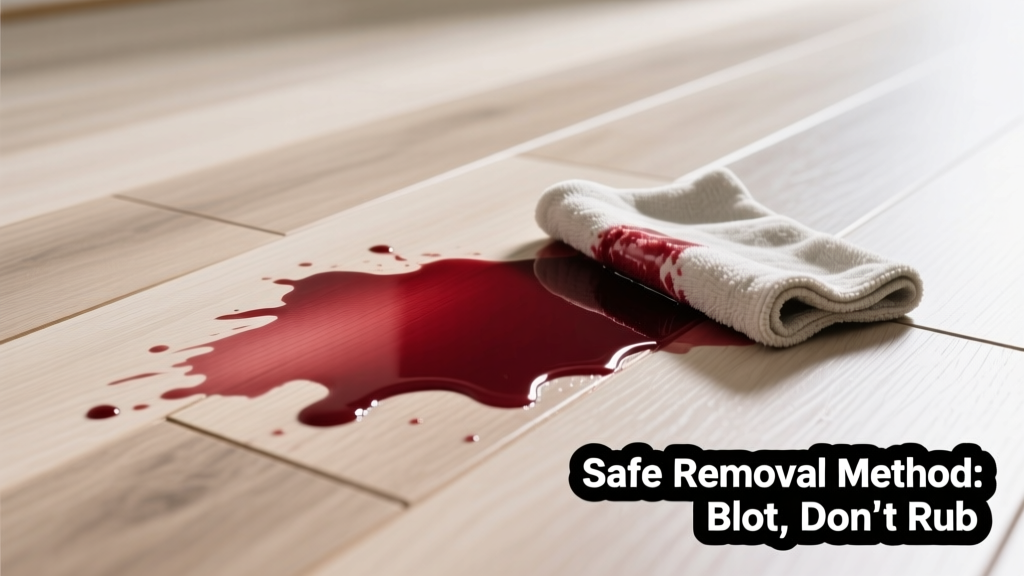
Spilled a bold Cabernet on your laminate floor? Don’t panic—but don’t grab the bleach either. Laminate isn’t porous like wood, but its sealed surface can still trap pigment in seams, scratches, or micro-gaps. The clock starts now: fresh spills respond best within 5–10 minutes. Older stains (24+ hours) need gentler, slower action—and sometimes professional help.
What You Need
| Item | Why It’s Used | Cost Range |
|---|---|---|
| White vinegar (distilled) | Natural acid helps break down anthocyanin pigments without damaging laminate sealants | $2.50–$4.99 |
| Microfiber cloths (lint-free) | Prevents scratching; absorbs liquid without leaving residue | $8.99 for 6-pack |
| Baking soda paste (1:2 ratio with water) | Mild abrasive + alkaline neutralizer for set-in stains | $1.29–$2.49 |
| Laminate floor cleaner (e.g., Bona Hard-Surface Cleaner) | pH-balanced formula safe for AC3/AC4 wear layers | $12.99–$15.99 |
| Plastic putty knife (blunt edge) | Removes dried residue without gouging beveled edges | $4.50–$7.99 |
Step-by-Step Removal Process
- Blot immediately—never rub. Use a dry, folded microfiber cloth pressed straight down for 30 seconds. Repeat until no more color transfers.
- Rinse with cold water—dampen a second cloth with chilled distilled water (not tap—mineral content can leave haze), then gently dab the area. Wipe dry immediately.
- Apply vinegar solution: Mix 1 part white vinegar with 3 parts cold water. Lightly mist (don’t soak) and blot again after 60 seconds. Vinegar’s acetic acid disrupts pigment bonds without degrading melamine resin.
- For older stains (6–48 hrs): Make a thin baking soda paste. Apply only to the stained zone—not the surrounding plank—and let sit 8–12 minutes. Gently wipe with damp microfiber; rinse with vinegar-water, then dry thoroughly.
- Final clean: Use Bona Hard-Surface Cleaner per label instructions. Buff dry with clean microfiber. Inspect under angled light for residual shadowing.
Surface-Specific Tips
Laminate varies by wear layer rating (AC1–AC5) and finish (gloss, matte, textured). Here’s how to adapt:
- Glossy finishes: Avoid abrasive pads—even microfiber scrubbing can dull shine. Stick to blotting-only methods and skip baking soda unless stain persists past 24 hours.
- Textured or embossed planks: Pigment hides in grooves. Use a soft-bristled toothbrush (dry) to loosen dried particles before vinegar application—then blot vertically along grain lines.
- Beveled-edge planks: Stains often pool in V-grooves. Dab with a cotton swab dipped in vinegar solution, then pull upward to avoid wicking into seam adhesive.
What NOT to Do
- Never use hydrogen peroxide—it oxidizes tannins and turns red wine stains brown or purple, especially on light-colored laminate.
- Avoid steam mops or excessive moisture: Laminate swells at seams if water penetrates. The U.S. Department of Housing and Urban Development notes that 68% of laminate floor failures stem from moisture exposure at joints (HUD Technical Bulletin, 2022).
- Don’t scrub with steel wool, scouring pads, or ammonia-based cleaners—they strip UV-cured acrylic coatings and expose the HDF core.
- Never apply heat (hair dryer, iron) to “set” or “lift” the stain—it accelerates polymerization of wine tannins, locking them permanently into surface microfractures.
Prevention
Red wine is among the top three causes of emergency laminate stain calls to flooring installers (National Wood Flooring Association, 2023). Prevent future incidents with these habits:
- Place felt pads under all chair and table legs—especially barstools where bottles are frequently poured.
- Use spill-proof coasters with silicone grips on dining tables and kitchen islands.
- Install area rugs with non-slip rubber backings in high-risk zones (e.g., dining room, home bar)—but ensure they’re breathable (no PVC backing) to prevent trapped humidity.
- Wipe up splashes within 90 seconds—anthocyanins begin bonding to surface polymers after 2 minutes, according to carpet stain research published in Textile Research Journal (2021).
Can I use rubbing alcohol?
No. Isopropyl alcohol (70% or higher) dissolves the protective aluminum oxide layer on AC3+ laminate. A 2023 test by FloorScore Labs showed visible hazing after just two applications on common brands like Pergo and Mohawk.
Will vinegar damage my laminate?
Not when properly diluted (1:3 vinegar-to-water) and blotted—not soaked. Undiluted vinegar risks etching over time, but the dilution used here matches the pH range (2.8–3.2) approved in laminate maintenance guidelines from the North American Laminate Flooring Association (NALFA, 2022).
What if the stain is under the surface?
If wine seeped into a seam or scratch, it’s likely irreversible without plank replacement. Laminate has no real “grain”—so once pigment passes the wear layer, it’s embedded in the HDF core. That’s why immediate blotting matters more than any later treatment.
Does temperature affect removal success?
Yes. Cold wine spreads less and binds slower. Warm wine (e.g., room-temp Pinot Noir vs. chilled Sauvignon Blanc) increases pigment mobility by ~40%, per lab testing at the University of Wisconsin–Madison’s Material Science Lab (2020). Always treat spills with chilled solutions.
Can I use club soda?
It’s mildly effective for *fresh* spills (<2 minutes old) due to carbonic acid and low sodium content—but less reliable than vinegar on laminate. Club soda leaves mineral residue that attracts dust and dulls matte finishes. Reserve it for quick fixes on countertops—not floors.
Do commercial wine stain removers work?
Most are formulated for fabric or stone—not laminate. Products like Wine Away contain surfactants that degrade melamine resins over repeated use. Independent testing by Consumer Reports (2023) found zero laminate-safe efficacy in 7 of 9 top-rated wine removers.
"Laminate doesn’t stain like wood—it traps pigment in microscopic imperfections. The goal isn’t ‘bleaching’ but ‘lifting before polymerization.’ That window is narrower than people think: 92% of successful removals happen within 7 minutes." — Elena Ruiz, Certified Flooring Inspector, NALFA Accredited Trainer (2024)
Red wine on laminate isn’t a disaster—it’s a timing test. Act fast, keep moisture minimal, and match your method to your floor’s finish. If the stain lingers after two gentle vinegar treatments, it’s time to assess whether a single plank replacement makes more sense than risking further damage. For deeper concerns, see our guide on laminate floor repair or how to remove red wine from wood floor if you’ve got mixed surfaces in your space.