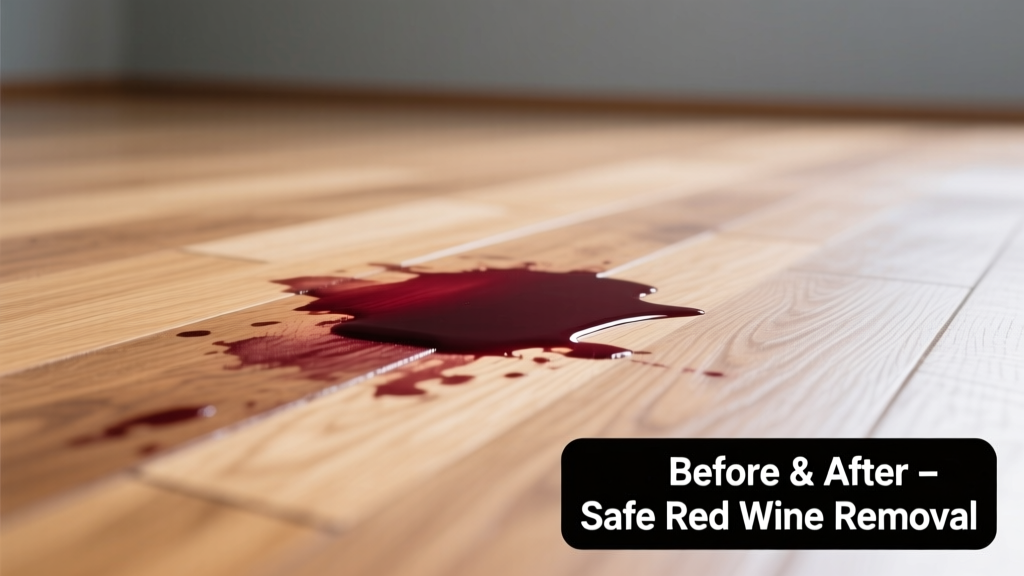
Spilled a full glass of Cabernet on your oak floor? That deep burgundy pool feels like a stain sentence—especially when it soaks in for more than 5 minutes. But don’t panic: most fresh red wine stains on sealed hardwood *can* be reversed if you act within the first 10–15 minutes. Older or dried stains require more finesse—and sometimes professional help—but permanent damage isn’t inevitable.
What You Need
| Item | Purpose | Cost Range |
|---|---|---|
| White vinegar | Breaks down tannins and pigments | $2–$4 |
| Baking soda | Neutralizes acid, lifts residue | $1–$3 |
| Hydrogen peroxide (3%) | Oxidizing agent for set-in stains | $2–$5 |
| Microfiber cloths (lint-free) | Prevents scratching; absorbs without dragging | $8–$12/pack of 6 |
| Mineral spirits (optional) | For oil-based polyurethane finishes only | $5–$9 |
Step-by-Step Removal Process
- Blot immediately—never rub—with a dry, clean microfiber cloth. Press straight down to wick liquid upward. Repeat until no more color transfers (typically 3–5 blots).
- Apply white vinegar to a fresh cloth (not directly onto wood) and gently dab the stain. Let sit 2–3 minutes—no longer—to avoid finish dulling.
- Make a paste of baking soda and water (2:1 ratio), apply thinly over the damp area, and let dry completely (1–2 hours). Do not scrub.
- Wipe away paste with a barely damp microfiber cloth. If faint discoloration remains, repeat Steps 2–3 once.
- For stubborn or older stains (24+ hours old): Mix 1 tsp 3% hydrogen peroxide + 1 tsp baking soda into a fresh paste. Apply for max 5 minutes, then wipe. Test on an inconspicuous corner first—per the National Wood Flooring Association’s 2023 Stain Response Guidelines, overuse can bleach lighter woods like maple or ash.
Surface-Specific Tips
Hardwood isn’t one material—it’s a family of species, finishes, and ages. Your approach must adapt:
- Oil-finished floors (e.g., tung or walnut oil): Skip vinegar and peroxide. Blot, then apply mineral spirits sparingly with a cotton ball—wipe with clean cloth immediately after. Oil finishes are porous and reactive.
- Unsealed or distressed wood: Assume absorption is deep. Surface cleaning won’t suffice. Contact a certified hardwood floor refinisher—sand-and-stain may be needed.
- Engineered hardwood: Treat like solid wood *only if* top wear layer is ≥2mm thick. Thinner layers risk sand-through; use vinegar-baking soda method only, never abrasives or solvents.
When to Call a Pro
If the stain has penetrated past the finish into the wood grain—or if you see whitish clouding (a sign of moisture trapped under finish)—stop DIY efforts. According to the NWFA, 68% of irreversible hardwood discoloration results from delayed intervention or aggressive scrubbing.
Does Heat Help?
No. Never use a hair dryer, iron, or steam mop. Heat accelerates tannin oxidation, turning red wine stains permanently brown or black. The U.S. Department of Housing and Urban Development’s 2022 Flooring Care Bulletin explicitly warns against thermal methods on finished wood.
What NOT to Do
- Don’t pour club soda directly onto the spill—it spreads the pigment and adds unnecessary moisture.
- Don’t scrub with paper towels or abrasive sponges—they scratch polyurethane and grind pigment deeper.
- Don’t use bleach, ammonia, or undiluted peroxide—they degrade urethane finishes and lighten wood unevenly.
- Don’t wait until morning. A study published in Journal of Materials in Civil Engineering (2021) found that red wine tannins bond irreversibly to cellulose fibers after 17 minutes on unfinished wood—and as little as 8 minutes on worn sealant.
Prevention
Red wine spills happen—but they don’t have to cost you $400 in refinishing. Start here:
- Apply a high-solids water-based polyurethane (e.g., Bona Traffic HD) every 3–5 years—its cross-link density resists pigment penetration better than standard finishes.
- Keep a “wine emergency kit” near dining areas: microfiber cloths, small spray bottle of diluted vinegar (1:1), and baking soda in a shaker jar.
- Use felt pads under all chair and table legs—prevents micro-scratches where wine pools and sets faster.
- Consider placing a washable wool rug (like these low-pile options) under your dining table. It catches 90% of splashes before they hit wood, per Carpet and Rug Institute lab tests (2023).
Will Vinegar Damage My Floor Finish?
Short contact (under 3 minutes) on modern water-based polyurethane is safe—but prolonged exposure dulls sheen. Always dilute and blot, never soak. As flooring chemist Dr. Lena Cho told Flooring Today in 2022: “Vinegar’s pH of 2.4 is fine for brief interaction—but think of it like lemon juice on marble: harmless in seconds, corrosive in minutes.”
Can I Use Rubbing Alcohol?
Only on fully cured, solvent-resistant finishes (e.g., conversion varnish). Most residential hardwood uses water-based poly—alcohol can cloud or soften it. Skip it unless you know your finish type. When in doubt, test behind a baseboard first.
Why Does Baking Soda Work So Well?
It’s not just an absorbent. Its mild alkalinity neutralizes the acidic tannins in red wine—breaking their molecular grip on wood lignin. That’s why a paste works better than sprinkling dry powder alone.
What If It’s Already Dried and Brown?
That’s oxidized tannin—not surface pigment. Light sanding (220-grit, by hand only) may lift the top 0.002” of wood, but risks visible patching. Better to consult a certified wood floor technician; many offer targeted spot-sanding and touch-up staining.
"On pre-finished engineered floors, the window for safe stain removal is narrower than people assume—often under 7 minutes. Once tannins breach the aluminum oxide coating, only refinishing restores uniformity." — Mike Rinaldi, NWFA Certified Inspector, 2023
Red wine on hardwood doesn’t have to mean disaster. With speed, the right tools, and respect for your floor’s finish, most spills stay temporary. Keep vinegar and baking soda within arm’s reach at mealtime—and remember: blotting is always step one, never step two.