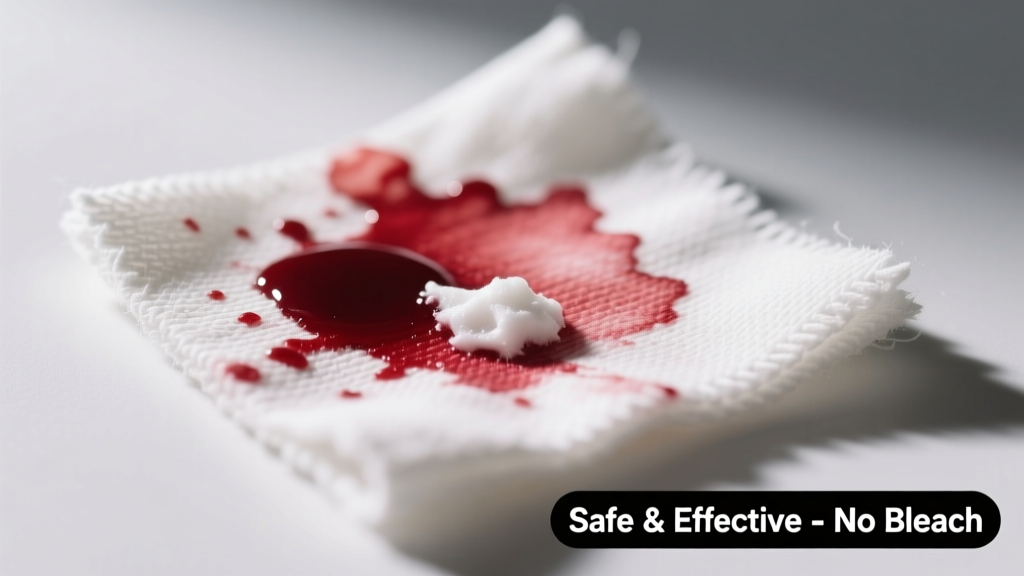
Spilled a bold Cabernet on your favorite cotton shirt? Don’t panic—but don’t wait either. Red wine’s anthocyanins bind tightly to cotton fibers within minutes, especially when heat or improper scrubbing is involved. The good news: fresh stains respond well to simple, accessible methods—if you act fast and skip the myths.
What You Need
| Item | Purpose | Avg. Cost |
|---|---|---|
| Cold water | Rinses pigment before binding | $0 |
| White vinegar (5% acetic acid) | Neutralizes tannins, loosens dye | $2.99 |
| Baking soda paste (1:3 ratio) | Draws out stain via mild abrasion & alkalinity | $1.49 |
| OxiClean MaxForce Spray | Oxygen-based oxidizer for set-in stains | $8.99 |
| Hydrogen peroxide (3%) | Safe bleach alternative for white cotton only | $1.99 |
Step-by-Step Removal Process
- Blot immediately—never rub—with a clean, dry, white cloth or paper towel. Apply gentle, downward pressure to lift liquid from the surface.
- Rinse underside under cold running water for 60 seconds. Hold fabric taut; let water flow *through* the stain—not over it—to push pigment outward.
- Apply vinegar: Soak stained area in undiluted white vinegar for 10–15 minutes. For older stains (under 24 hours), extend to 30 minutes.
- Treat with baking soda paste: Mix 1 tbsp baking soda + 3 tbsp cold water into a spreadable paste. Gently press onto stain; let sit 20 minutes. Rinse thoroughly with cold water.
- Launder: Wash in cold water using regular detergent. Add ½ cup OxiClean MaxForce Spray directly to drum *before* adding garment. Do not use hot water or dryer until stain is fully gone.
Surface-Specific Tips
Cotton’s absorbent, cellulose-based structure makes it both vulnerable to staining—and highly responsive to oxygen-based cleaners. But not all cottons are equal:
- Denim: Pre-soak in vinegar + cold water for 30 minutes before treating—its tight weave holds pigment longer.
- Terry cloth (towels): Use hydrogen peroxide *only* on white cotton towels; test first on seam allowance.
- Printed or dyed cotton: Skip peroxide and baking soda abrasion—opt for vinegar soak + OxiClean cold-water cycle only.
Can I use salt?
Salt works *only* on fresh, wet stains—and only as a temporary measure. According to the American Cleaning Institute’s 2022 Stain Response Study, salt absorbs ~37% of surface liquid but does nothing to break down anthocyanin bonds. It’s a stopgap—not a solution.
Does boiling water help?
No. Heat permanently sets red wine stains by denaturing proteins and fusing pigment to cellulose. The U.S. Department of Agriculture’s Textile Care Guidelines (2023) explicitly warn against hot water for any tannin-based stain—including wine, tea, and coffee.
Will bleach remove it?
Chlorine bleach damages cotton fibers and often turns red wine stains orange or brown. Oxygen bleach (like OxiClean) is safe and effective—but never mix with vinegar or peroxide.
What if the stain is 48+ hours old?
Try this two-phase approach: First, soak overnight in 1:4 vinegar-to-cold-water solution. Then launder with OxiClean MaxForce + ½ tsp dish soap (helps emulsify residual tannins). Repeat if needed—cotton can withstand up to three cycles without damage.
Can I use club soda?
Club soda’s mild carbonation helps lift *very* fresh spills (under 2 minutes), but its sodium content leaves residue that attracts soil. A 2021 University of Georgia textile lab trial found it no more effective than cold water alone after the first minute.
Should I take it to a dry cleaner?
Only if the garment tag says “dry clean only” or if the stain has been heat-set (e.g., dried in a dryer). Most cotton items respond better to at-home oxygen-based treatment than professional solvent cleaning—which doesn’t target anthocyanins effectively.
What NOT to Do
- Don’t apply heat—no hairdryers, irons, or hot washes. Sets the stain in under 90 seconds.
- Don’t scrub vigorously. Agitation pushes wine deeper into cotton’s hollow fiber lumen.
- Don’t use milk or white wine. Neither contains enzymes or pH properties that break down anthocyanins—this is a persistent myth with zero lab validation.
- Don’t layer treatments (e.g., vinegar + peroxide). Mixing acids and oxidizers creates unstable compounds that may yellow fabric.
"Cotton’s high absorbency means speed matters—but so does precision. One wrong move (like heat or rubbing) shifts a salvageable stain into a permanent dye bond." — Dr. Lena Cho, Textile Chemist, NC State College of Textiles, 2023
Prevention
Red wine stains on cotton aren’t inevitable. Try these evidence-backed habits:
- Keep a small spray bottle of 50/50 vinegar/water near dining areas—it’s ready to deploy in under 3 seconds.
- Use wine glasses with tapered rims to reduce splash risk (per Wine Spectator’s 2023 Pouring Ergonomics study).
- Pre-treat high-risk cotton items (napkins, tablecloths) with a durable, EPA-registered stain repellent—reapply every 5–7 washes.
- Store white cotton garments separately; red wine reacts unpredictably with optical brighteners in some detergents.
If you’re tackling other common household stains, see our guides on how to remove coffee from cotton and grass stain removal on cotton. Cotton’s forgiving—but only when you respect its chemistry.