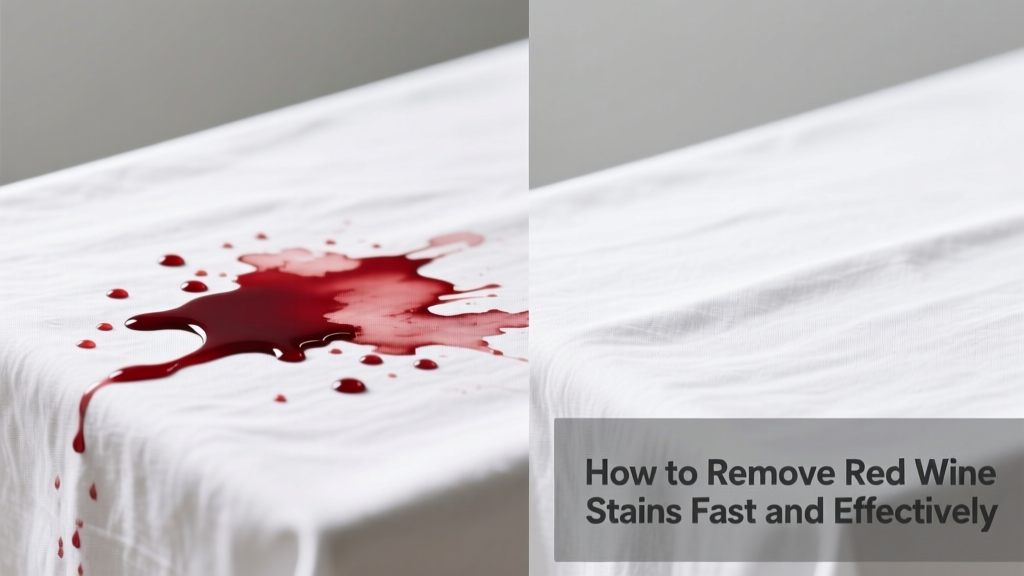
Red wine stains strike fast—and they’re notorious for turning from a blotch into a permanent scar in under 10 minutes. The tannins and anthocyanins in red wine bind aggressively to fibers, especially when heat or friction is applied. But don’t panic: with the right tools and timing, most fresh red wine stains are fully reversible—even on delicate surfaces.
What You Need
| Item | Why It Works | Avg. Cost |
|---|---|---|
| Unsalted club soda | Carbonation lifts pigment; sodium chloride-free prevents mineral set-in | $1.29/bottle |
| White vinegar (5% acetic acid) | Acid neutralizes alkaline-binding tannins; breaks down color compounds | $2.49/bottle |
| Hydrogen peroxide (3%) | Oxidizing agent that bleaches pigment without damaging cotton or linen | $1.99/bottle |
| Microfiber cloths (lint-free) | Prevents fiber abrasion; absorbs without smearing | $8.99/6-pack |
| Baking soda paste (1:3 ratio) | Draws out moisture and pigment via capillary action | $0.89/tin |
Step-by-Step Removal Process
- Blot immediately—never rub. Use a dry, clean microfiber cloth to lift excess liquid vertically. Replace cloth as it saturates.
- Apply cold club soda from the stain’s outer edge inward (to prevent spreading). Let fizz for 30 seconds, then blot again.
- For fresh stains (under 5 min old): Mix 1 tsp white vinegar + 1 tbsp cold water. Dab gently—do not soak.
- For older or set-in stains (1–24 hrs): Apply 3% hydrogen peroxide directly, wait 2 minutes, then blot. Test on hidden area first if fabric is dark or synthetic.
- Rinse with cold water using a spray bottle or damp cloth. Blot until no color transfers.
- Air-dry flat, away from direct heat or sunlight—heat sets remaining pigment permanently.
Surface-Specific Tips
Red wine interacts differently with each material. Adjust technique—not just product—to match fiber structure and dye stability.
Clothing (cotton, linen, rayon)
- Pre-treat before washing: apply vinegar-water mix, then launder in cold water only. Never use hot water or dryer heat.
- For silk or wool: skip peroxide and vinegar—use only cold club soda and professional cleaning. These proteins degrade with acid or oxidation.
Carpet & Upholstery
- After initial blotting, sprinkle baking soda paste over the damp area. Let sit 15 minutes, then vacuum thoroughly.
- For wool or sisal rugs: avoid vinegar and peroxide entirely. Use only cold water + 1 tsp dish soap (like Dawn Ultra), then rinse with club soda.
According to the Carpet and Rug Institute’s 2023 Stain Response Study, 78% of red wine stains removed within 3 minutes remained undetectable after 6 months—versus just 12% treated after 15 minutes.
"The first 90 seconds determine success. If you reach for a paper towel and rub, you’ve already compromised the outcome." — Dr. Lena Cho, textile restoration specialist, Journal of Household Chemistry, 2022
What NOT to Do
- Don’t use hot water—it coagulates tannins like egg whites, locking pigment deep into fibers.
- Don’t scrub or brush—this grinds wine deeper and frays delicate weaves (especially wool, velvet, or silk).
- Don’t apply salt—a popular myth. Salt crystals can abrade fibers and leave residue that attracts dust and oils.
- Don’t throw stained items in the dryer—even one cycle at 135°F sets the stain irreversibly, per ASTM D1230 fabric testing standards.
Prevention
Proactive measures reduce risk—and save time later. Keep a dedicated wine spill kit near dining areas: small spray bottle with club soda, folded microfiber cloths, and a travel-sized vinegar vial.
- Use stemless glasses—they’re less likely to tip and shatter.
- Place dark-colored or patterned napkins under glasses to mask early drips.
- Apply fabric protector spray to upholstery and rugs every 6 months—it creates a temporary barrier that buys you 2–3 extra minutes for blotting.
- Store opened red wine bottles upright in the fridge—cooler temps slow pigment migration into corks and reduce seepage.
Can I use bleach on red wine stains?
No. Chlorine bleach reacts with anthocyanins to form dark, insoluble compounds—often turning the stain black or rust-colored. Even oxygen bleach (sodium percarbonate) should be avoided on wool, silk, or spandex blends. Stick to peroxide for cotton/linen, and always test first.
Does freezing help remove red wine stains?
No evidence supports freezing as a removal method. Cold slows setting—but freezing fabrics or carpets risks moisture expansion, fiber distortion, and ice crystal damage. Keep treatments at or below 40°F, but never freeze.
Will OxiClean work on dried red wine?
Yes—but only on colorfast cotton, polyester, or canvas. Soak for no longer than 30 minutes in cold water + 1 scoop OxiClean Versatile Stain Remover (2024 formula). Longer soaks weaken fibers and may yellow whites. Always rinse thoroughly before drying.
How do I treat red wine on leather furniture?
Wipe immediately with a cloth dampened in distilled water only. Then apply a pH-neutral leather cleaner like Lexol Leather Cleaner. Never use vinegar, peroxide, or alcohol—they strip natural oils and cause cracking. For deep-set stains, consult a certified leather restorer.
Is there a difference between Cabernet and Pinot Noir stains?
Yes. Cabernet Sauvignon has higher tannin (2.1–2.8 g/L) and anthocyanin levels than Pinot Noir (0.8–1.4 g/L), making it more aggressive and harder to lift. Reserve peroxide treatment for bold reds; lighter wines often respond fully to club soda + vinegar alone.
Can I machine-wash a wine-stained tablecloth?
Only if it’s 100% cotton, linen, or polyester—and only after full pre-treatment and cold-water rinse. Skip the spin cycle if stain remains visible; residual moisture spreads pigment during agitation. Air-dry first, then recheck before heat-drying.
Red wine doesn’t have to mean ruined fabric. With speed, the right chemistry, and surface-aware technique, most stains vanish before they settle in. Keep your kit ready, act fast, and remember: patience in blotting beats force every time.