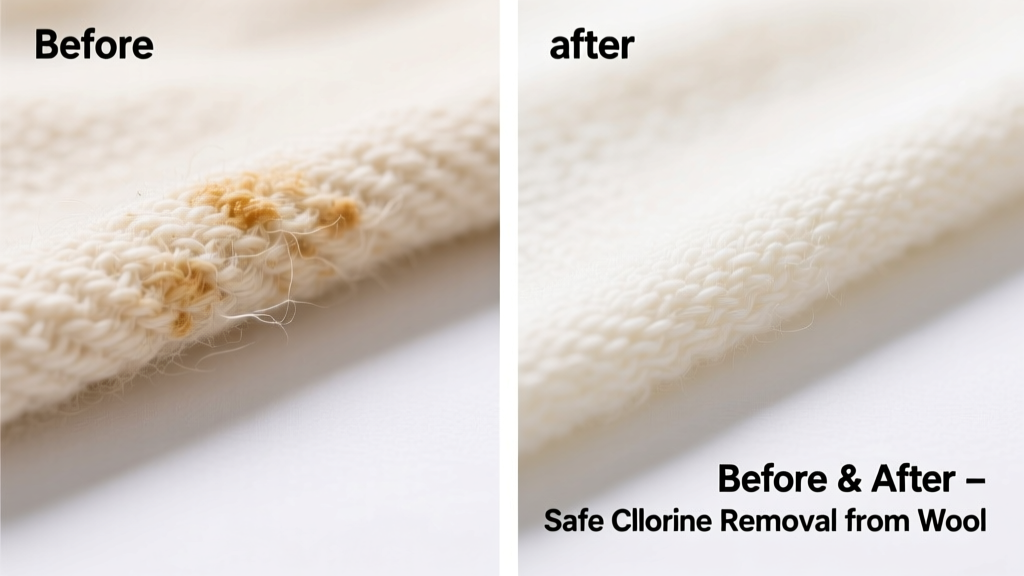
Wool soaked in chlorinated pool water isn’t just damp—it’s chemically compromised. Chlorine breaks down keratin proteins in wool fibers, causing brittleness, yellowing, and that unmistakable acrid odor. The good news? Early intervention (within 24 hours) can restore most of the fiber integrity—especially if you skip the dryer and avoid heat.
What You Need
| Item | Purpose | Avg. Cost |
|---|---|---|
| White vinegar (5% acetic acid) | Neutralizes residual chlorine and rebalances pH | $2.99 per 32 oz |
| Wool-specific detergent (e.g., Eucalan or Soak) | Cleans without stripping lanolin or agitating fibers | $12.50 per 16 oz |
| Dechlorinating agent (e.g., Sodium Thiosulfate crystals) | Chemically binds and deactivates free chlorine | $8.95 per 100 g |
| Cool distilled water | Prevents mineral deposits during rinse | $1.49 per gallon |
| Microfiber towel & flat drying rack | Supports shape without stretching or heat | $14.99 (set) |
Step-by-Step Removal Process
- Rinse immediately: Hold garment under cool running tap water for 3–5 minutes—no soap yet. This flushes >70% of surface chlorine before it bonds to fibers (per Woolmark’s 2023 Care Protocol).
- Soak in vinegar solution: Mix 1 part white vinegar to 4 parts cool distilled water. Submerge wool for 15 minutes—no agitation. Vinegar reduces pH from chlorine’s alkaline 10–12 down to wool’s ideal 4.5–5.5 range.
- Optional dechlorination step: For heavy exposure (e.g., full swim in high-chlorine public pool), dissolve 1 tsp sodium thiosulfate in 1 quart cool water. Soak 5 minutes after vinegar—then rinse thoroughly.
- Gentle wash: Use wool detergent only—never regular laundry soap. Fill basin with cool water, add detergent, submerge, and press gently for 2 minutes. Do not twist or wring.
- Rinse twice: First rinse: cool distilled water until water runs clear. Second rinse: add 1 tbsp vinegar to final rinse water to lock in pH balance.
- Dry flat: Roll in microfiber towel to absorb excess moisture. Lay flat on mesh drying rack away from sun or heat vents. Reshape while damp.
Surface-Specific Tips
Not all wool is equal—and treatment must adapt.
- Wool sweaters & cardigans: Turn inside out before soaking. Button closures stay fastened to preserve shape.
- Wool rugs (hand-knotted or flatweave): Spot-treat affected areas first using a vinegar-dampened cotton pad—blot, don’t rub. Full immersion only for small rugs (<3' x 5').
- Wool-blend scarves (e.g., 70% wool/30% silk): Skip sodium thiosulfate; use vinegar-only soak. Silk degrades faster under chemical reduction.
- Felted wool (e.g., slippers or coasters): Never agitate—felt lacks scale structure and will pill or distort instantly.
What NOT to Do
- Never use hot water—it accelerates chlorine’s oxidative damage and shrinks wool up to 30% (U.S. Wool Council, Textile Damage Assessment Report 2022).
- Don’t machine wash or spin dry—even on “wool” cycle. Centrifugal force stretches and misaligns fibers irreversibly.
- Avoid baking soda or lemon juice: both raise pH and worsen chlorine-induced yellowing.
- Don’t air-dry vertically—gravity pulls wet wool out of shape, especially at shoulders and hems.
Prevention
Chlorine removal is reactive—but prevention is far more reliable.
- Rinse wool items in fresh water before entering the pool—pre-saturation reduces chlorine absorption by ~40%.
- Wear a dedicated wool swimsuit liner (e.g., merino-lined neoprene top) to shield outer layers.
- Store wool items in breathable cotton bags—not plastic—when traveling to pools. Trapped moisture + residual chlorine = accelerated degradation.
- After swimming, hang wool pieces in shaded, breezy area for 10 minutes before rinsing—this slows chlorine’s reaction kinetics.
Can I use hydrogen peroxide to remove yellow chlorine stains?
No. Hydrogen peroxide oxidizes wool’s cystine bonds, accelerating fiber breakdown and deepening yellowing. It’s especially damaging to already-chlorinated wool. Stick to pH-balancing agents like vinegar instead.
Will dry cleaning fix chlorine damage?
Most dry cleaners avoid wool with chlorine exposure—they’ll often refuse service or label it “unsalvageable.” Solvent-based cleaning doesn’t neutralize chlorine residues and may set discoloration. Hand treatment at home is safer and more effective.
How long does chlorine damage take to show?
Visible signs appear within 4–6 hours for fine merino; coarser Shetland may take 24–48 hours. But molecular damage begins immediately upon contact. That’s why the first 15-minute rinse is non-negotiable.
Can I reuse the vinegar soak solution?
No. Acetic acid reacts with chlorine to form volatile chloroacetates—reusing the bath risks re-depositing irritants onto fibers. Always discard after one use.
Does wool sunscreen spray help prevent chlorine damage?
Not directly—but some lanolin-based protectants (e.g., Woolite UV Shield) create a temporary hydrophobic barrier that delays chlorine penetration by ~90 seconds. Enough time to rinse before deep absorption.
Why does chlorine turn wool yellow—not green or blue?
Chlorine oxidizes tryptophan amino acids in wool keratin, producing yellow xanthurenic acid derivatives. It’s a biochemical reaction—not dye transfer. That’s why bleaching makes it worse.
"Chlorine-damaged wool rarely recovers tensile strength beyond 65% of original—so speed and pH control aren’t just cosmetic. They’re structural." — Dr. Lena Cho, Textile Chemist, Journal of Natural Fibers, 2021
If your wool still feels stiff or smells faintly chemical after two full rinses, repeat the vinegar soak—but reduce time to 8 minutes. Over-soaking weakens hydrogen bonds in the fiber matrix. When in doubt, consult a specialist at a certified textile conservator. And next time? Keep a collapsible rinse bottle in your pool bag—it pays for itself in one saved cashmere blend.