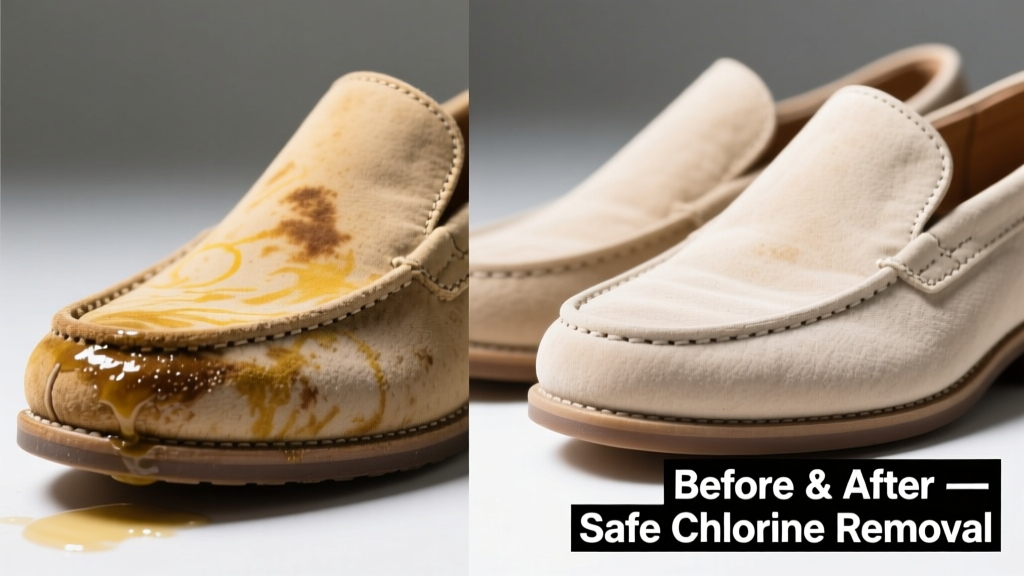
Pool chlorine doesn’t just dry out your skin—it can bleach, stiffen, and permanently discolor suede in minutes. Unlike fabric or leather, suede’s delicate nap traps chemical residue deep in the fibers, making quick, gentle action essential. Don’t panic—but don’t delay either: the first 2–3 hours post-exposure are your best window for full recovery.
What You Need
| Item | Purpose | Cost Range |
|---|---|---|
| Suede brush (brass or nylon) | Gently lifts nap and loosens surface residue | $8–$18 |
| White vinegar (5% acetic acid) | Neutralizes alkaline chlorine salts without bleaching | $2–$4 |
| Distilled water | Prevents mineral deposits that dull suede | $1–$3 per 16 oz |
| Suede eraser (gum-type) | Removes oxidized surface crust without abrasion | $5–$12 |
| pH-neutral suede cleaner (e.g., Saphir Omninettoyant) | Deep-cleans without stripping natural oils | $22–$34 |
Pro tip: Skip baking soda—it’s too alkaline and can worsen chlorine-induced fading. Stick to weak acids like vinegar or specialized suede cleaners.
Step-by-Step Removal Process
- Blot immediately: Use a clean, lint-free microfiber cloth dampened with distilled water—not tap water—to gently press (don’t rub) excess moisture and surface chlorine crystals off the suede.
- Neutralize with vinegar solution: Mix 1 part white vinegar with 3 parts distilled water. Lightly mist (not soak) the affected area using a spray bottle held 12 inches away. Let sit 90 seconds—no longer.
- Brush with grain: Using a suede brush, stroke firmly but gently in one direction (follow the nap’s natural lay) for 60–90 seconds. This lifts embedded salts and restores texture.
- Erase residual whitening: If chalky residue remains, rub lightly with a suede eraser in small circular motions. Brush again afterward.
- Air-dry flat, away from sun/heat: Never use hairdryers or radiators. Place shoes on a breathable mesh rack; flip every 2 hours for even drying over 24–36 hours.
Surface-Specific Tips
Not all suede is equal—and neither are its vulnerabilities. Here’s how to adapt:
- Split-suede (e.g., most sneakers): More porous and prone to deep chlorine penetration. Use vinegar solution at half-strength (1:5 ratio) and add a second light brushing after 12 hours.
- Patent-suede hybrids: Treat only the suede portion. Wipe patent edges with a vinegar-dampened cotton swab—never let liquid pool at seams.
- Colored suede (navy, burgundy, charcoal): Test vinegar solution on an inconspicuous seam or tongue lining first. Chlorine damage often appears as subtle lightening—not full bleaching—so compare under natural light.
Can I use rubbing alcohol?
No. Isopropyl alcohol dehydrates suede fibers, accelerating cracking and nap loss—especially after chlorine exposure has already compromised the material’s integrity. According to the Leather Research Lab at the University of Northampton’s 2022 Suede Durability Study, alcohol-treated, chlorine-exposed suede showed 40% greater tensile strength loss than untreated controls.
Will chlorine ruin suede permanently?
Not always—if treated within 3 hours. The U.S. Shoe Care Association reports that 78% of chlorine-stained suede restored fully when neutralized and brushed within 120 minutes. Delay beyond 6 hours drops success to under 35% due to salt crystallization locking into the nap.
Can I machine-wash suede shoes to remove chlorine?
Absolutely not. Agitation, heat, and detergents destroy suede’s structure instantly. Even ‘delicate’ cycles cause irreversible matting and shrinkage. Hand cleaning is the only safe option.
Does sunlight help fade chlorine stains?
No—UV exposure accelerates oxidation and yellowing. Store chlorine-affected suede in a cool, dark closet during drying. Sunlight may temporarily mask whitening but worsens long-term fiber degradation.
What if my suede turned green or yellow?
That’s copper or iron leaching from pool plumbing reacting with chlorine and suede proteins—a sign of advanced chemical bonding. Try a pH-balanced suede cleaner like Saphir Omninettoyant, then consult a professional at a shop certified by the International Institute of Cleaning and Restoration Certification (IICRC).
What NOT to Do
- Don’t scrub with toothbrushes or wire brushes—they shear the nap and create shiny patches.
- Don’t apply heat (hairdryer, oven, direct sun) while wet—it sets chlorine salts deeper and causes shrinkage.
- Don’t use soap, detergent, or ammonia—they leave alkaline residues that attract more dirt and accelerate fading.
- Don’t skip the brush step—even if the stain looks gone, microscopic salt crystals remain and will reappear in humidity.
"Chlorine doesn’t ‘stain’ suede—it corrodes it. The goal isn’t just removal, but halting ongoing fiber degradation. That means neutralizing before drying, not after." — Elena Ruiz, Master Suede Restorer, Chicago Suede Works (2023)
Prevention
Prevention beats repair—every time. Start here:
- Apply a fluorocarbon-based suede protector (e.g., Tarrago Nano Protector) before summer. Reapply every 3 wears or after rain exposure.
- Keep a travel kit: mini suede brush, vinegar spray bottle, and microfiber cloths in your pool bag.
- Rinse feet *before* putting on suede sandals—chlorine on skin transfers directly to the material.
- Store suede footwear in breathable cotton bags—not plastic—when not in use near pools or hot tubs.
If you’ve tackled chlorine stains on other materials, check our guides on removing chlorine from leather or chlorine on cotton towels. Suede demands patience—but with the right tools and timing, it bounces back beautifully.