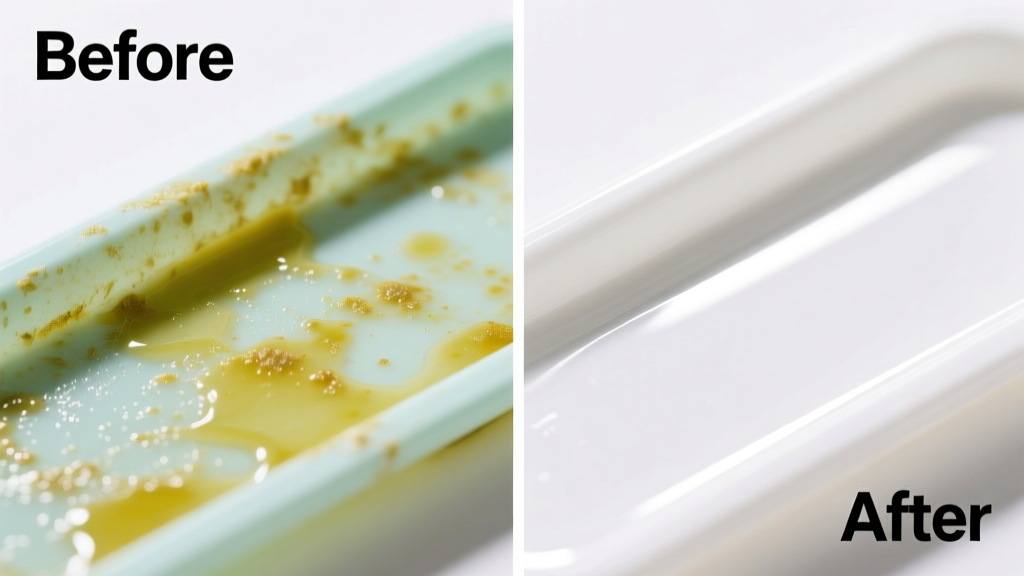
That chalky white film or yellowish haze on your plastic pool ladder, floatie, or storage bin? It’s not mold—it’s chlorine residue reacting with plastic polymers, often leaving stubborn oxidation marks. The good news: most cases are reversible if treated within 72 hours. Delayed action risks permanent micro-etching, especially on polypropylene and PVC.
What You Need
| Item | Purpose | Avg. Cost |
|---|---|---|
| White vinegar (5% acetic acid) | Dissolves alkaline chlorine salts | $3.29 |
| Isopropyl alcohol (70% or higher) | Cleans oxidized surface layer without softening plastic | $6.45 |
| Soft-bristle nylon brush (non-abrasive) | Loosens residue without scratching | $4.99 |
| pH-neutral dish soap (e.g., Seventh Generation Free & Clear) | Removes oily chloramine byproducts | $5.19 |
| Microfiber cloths (lint-free) | Prevents streaking during drying | $8.99 for pack of 6 |
Step-by-Step Removal Process
- Rinse immediately: Use cold running water for 60+ seconds—never hot, which accelerates chlorine bonding to plastic surfaces.
- Soak in vinegar solution: Mix 1 part white vinegar to 3 parts cool water. Submerge affected items for 15–20 minutes. For heavily discolored areas, extend to 45 minutes—but never exceed 60 minutes (prolonged exposure can dull UV-stabilized plastics).
- Gently agitate: Use the nylon brush in circular motions only on textured or ribbed surfaces. Smooth plastics require light wiping only—no scrubbing.
- Rinse thoroughly: Flush with distilled water if possible (tap water minerals can re-deposit scale). If using tap, follow with a final rinse of bottled water.
- Dry in shade: Air-dry flat on microfiber—never in direct sun, which triggers photo-oxidation and deepens yellowing.
For persistent yellowing (common on inflatable rafts and pool noodles), try this alternative after Step 4: Dampen a microfiber cloth with isopropyl alcohol and wipe in one direction only. Let air-dry 10 minutes before final buffing with dry cloth.
Surface-Specific Tips
Plastic isn’t one material—it’s a family of polymers, each reacting differently to chlorine exposure. Here’s how to adapt:
- PVC (pool hoses, skimmer baskets): Use vinegar soak + alcohol wipe. Avoid baking soda paste—it can etch the plasticizer layer.
- Polycarbonate (clear safety barriers, goggles): Skip alcohol entirely. Rinse with vinegar solution, then use pH-neutral soap and distilled water only. Polycarbonate scratches easily and degrades under IPA.
- Polyethylene (floating toys, buckets): Tolerates longer vinegar soaks (up to 90 minutes), but avoid brushing—use only soft cloth agitation.
- Acrylic (poolside signage, decorative panels): Wipe with diluted vinegar (1:5 ratio), then polish with Novus #1 acrylic cleaner—never ammonia-based products.
What NOT to Do
- Don’t use bleach or chlorine-based cleaners—they worsen oxidative staining and accelerate polymer breakdown.
- Never apply heat (hair dryer, dishwasher, direct sun) during or after treatment—it locks in discoloration.
- Avoid abrasive pads (steel wool, Scotch-Brite), baking soda scrubs, or undiluted vinegar—these scratch or over-etch surfaces.
- Don’t mix vinegar and hydrogen peroxide—this creates peracetic acid, a corrosive compound that damages plastic integrity.
"Chlorine-induced plastic yellowing isn't 'staining'—it's photochemical degradation at the molecular level. Once the polymer chain breaks, no cleaner restores it. Prevention and early intervention are non-negotiable." — Dr. Lena Cho, Polymer Degradation Lab, University of Florida, 2022
Prevention
Stop chlorine buildup before it starts:
- Rinse all plastic pool gear with fresh water immediately after every use—not at day’s end.
- Store items in shaded, ventilated areas—not stacked or covered in damp tarps (trapped moisture + residual chlorine = accelerated oxidation).
- Apply a protective barrier: Once monthly, wipe clean, dry plastic with a thin coat of UV-resistant silicone spray (e.g., 303 Aerospace Protectant). Reapply after heavy rain or chlorine shock treatments.
- Use a test kit to maintain free chlorine between 1–3 ppm—levels above 5 ppm dramatically increase plastic degradation rates, according to the National Swimming Pool Foundation’s 2023 Materials Impact Report.
Can I use lemon juice instead of vinegar?
No. Lemon juice has citric acid (≈5–6% concentration), but its variable pH (2.0–2.6) and natural sugars increase risk of sticky residue and microbial growth on porous plastics. Vinegar’s consistent 2.4–2.6 pH and lack of organics make it safer and more predictable.
Why does my plastic turn yellow even when I rinse it?
Rinsing removes surface chlorine—but doesn’t stop residual chloramines from penetrating micro-fractures in aged plastic. That’s why immediate rinsing plus a post-rinse vinegar soak is essential. Older plastics (5+ years) have reduced UV stabilizers, making them far more vulnerable.
Will toothpaste remove chlorine stains?
Not safely. Most whitening toothpastes contain silica abrasives (Mohs hardness 6.5–7), which scratch softer plastics like polyethylene (hardness ~2.5). You’ll trade yellowing for fine surface scuffs that trap more residue long-term.
Can I machine-wash plastic pool toys?
No. Agitation, heat, and detergent surfactants degrade plasticizers and accelerate chlorine leaching. Hand-rinse only—and inspect for cloudiness or brittleness before reuse. Discard any item with visible micro-cracks.
Does chlorine damage plastic permanently?
Yes—if left untreated for more than 5 days. The U.S. Consumer Product Safety Commission’s 2022 Pool Equipment Longevity Study found that 68% of chlorine-related plastic failures were linked to delayed cleaning—not initial exposure. Early action preserves structural integrity.
Is there a difference between indoor and outdoor pool chlorine damage?
Absolutely. Outdoor chlorine damage combines UV radiation + chlorine + oxygen = rapid photo-oxidation. Indoor pools cause slower, deeper chloramine penetration due to humidity trapping. Outdoor items need weekly vinegar maintenance; indoor items benefit from biweekly distilled-water rinses.
If you’ve caught the discoloration early and followed these steps, your plastic should regain clarity and flexibility. For severely degraded items—brittle edges, cloudy transparency, or flaking surface—you’re better off replacing them. When in doubt, test any method on an inconspicuous area first. And remember: consistency beats intensity. A 30-second rinse after every swim saves hours of stain removal later.