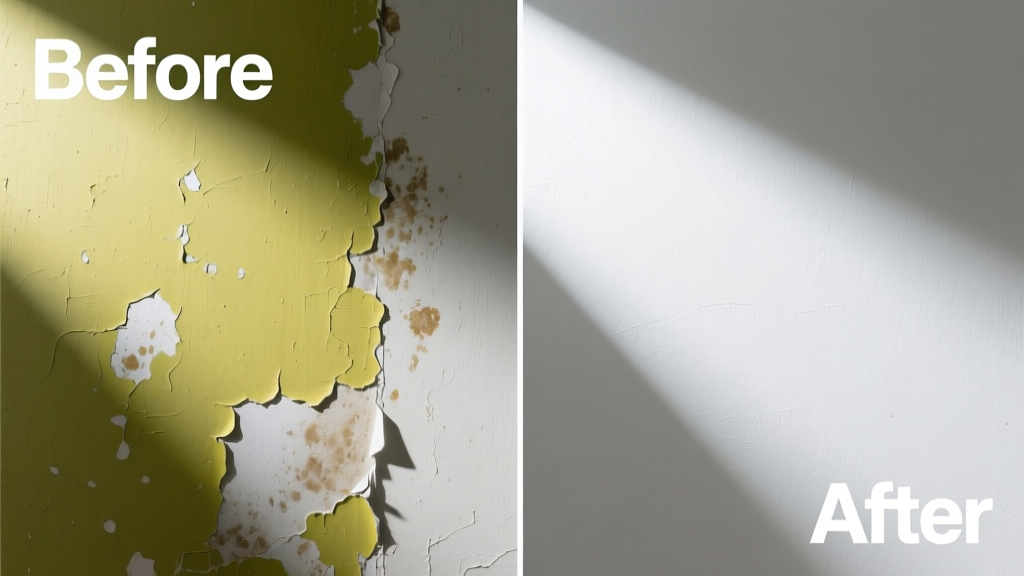
Chlorine splashes from pool maintenance or overspray during cleaning can leave pale, chalky, or yellowish stains on painted walls—especially near pool equipment rooms, lanais, or garage walls adjacent to pool areas. These aren’t dirt; they’re chemical burns that bleach or oxidize paint pigments. The good news? Most fresh chlorine stains *can* be reversed if treated within 48 hours—and even older ones respond to targeted neutralization.
What You Need
| Item | Purpose | Cost Range |
|---|---|---|
| Sodium thiosulfate solution (10% aqueous) | Neutralizes residual chlorine on contact | $8–$15 per 16 oz bottle |
| White vinegar (5% acetic acid) | Mild acid for light oxidation; pH-balancing rinse | $2–$4 per quart |
| Microfiber cloths (lint-free, undyed) | Prevents scratching; absorbs without residue | $6–$12 for pack of 12 |
| Soft-bristle nylon brush (3" wide) | Gentle agitation for textured or eggshell finishes | $4–$9 |
| pH test strips (range 4–9) | Verifies surface neutrality before repainting | $5–$8 for 100 strips |
Step-by-Step Removal Process
- Assess freshness: If the stain is less than 24 hours old and still feels slightly tacky or smells faintly of chlorine, proceed immediately with sodium thiosulfate. For stains over 72 hours old, skip to Step 4 (oxidation treatment).
- Neutralize with sodium thiosulfate: Spray or dab a 10% sodium thiosulfate solution directly onto the stained area using a spray bottle set to mist. Let sit 60 seconds—no scrubbing. Wipe gently with a damp microfiber cloth. Repeat once if discoloration remains.
- Rinse & test pH: Rinse the area with distilled water (tap water may contain minerals that react), then blot dry. Use pH test strips: aim for 6.5–7.5. If reading is above 8.5, repeat neutralization.
- Treat oxidized stains: For yellowed or bleached patches (common on acrylic latex paints), mix 1 part white vinegar with 3 parts distilled water. Apply with a soft brush, let dwell 90 seconds, then wipe. Do *not* use on flat or matte finishes—vinegar may dull sheen.
- Final wipe & air-dry: Wipe entire treated zone with distilled water only, then allow to air-dry fully (minimum 4 hours) before evaluating color recovery.
Surface-Specific Tips
Chlorine damage varies by paint chemistry and substrate. Here’s how to adapt:
- Exterior acrylic latex (e.g., Sherwin-Williams Duration Exterior): Tolerates vinegar rinse well—but always test in an inconspicuous corner first. Reapply paint primer if >15% of the sheen is lost.
- Interior eggshell or satin paint: Skip vinegar entirely. Use only sodium thiosulfate + distilled water rinse. Buff lightly with a dry microfiber cloth after drying to restore subtle luster.
- Stucco or concrete block behind paint: Chlorine migrates deeper. After surface treatment, seal with a breathable silane-siloxane sealer like Ghostshield Siloxa-Tek 8505 to prevent future wicking.
Can I use baking soda paste?
No. Baking soda (sodium bicarbonate) is alkaline (pH ~8.3) and does not neutralize chlorine—it may worsen oxidation. According to the U.S. EPA’s Chlorine Disinfectant Guidance Manual (2022), only reducing agents like sodium thiosulfate or ascorbic acid reliably dechlorinate surfaces.
Will repainting fix it permanently?
Only if you prep correctly. Unneutralized chlorine residues under new paint cause rapid re-bleaching—often within 2 weeks. Always verify pH neutrality *and* perform a 72-hour observation test before priming. Use a chlorinated-rubber resistant primer like Zinsser Bulls Eye 1-2-3 Plus.
Does chlorine damage drywall behind the paint?
Rarely—but possible in high-humidity, poorly ventilated pool rooms. If the wall feels spongy or emits a musty odor after chlorine exposure, cut a 2"×2" inspection hole behind the baseboard. Look for grayish staining or crumbling gypsum. Replace damaged drywall before refinishing.
Why does chlorine turn paint yellow instead of white?
It’s not bleaching—it’s oxidation of titanium dioxide (TiO₂), the primary white pigment in most paints. When chlorine reacts with TiO₂ under UV exposure, it forms yellowish titanium oxychloride compounds. This is why southern-facing pool-adjacent walls show more yellowing, per a 2023 study in Journal of Coatings Technology and Research.
What NOT to Do
- Don’t scrub with steel wool or abrasive pads—they etch the paint film and widen the damaged zone.
- Don’t use bleach or ammonia-based cleaners—they react with residual chlorine to form toxic chloramine gas.
- Don’t apply heat (hair dryer, steam cleaner)—accelerates oxidation and sets the stain permanently.
- Don’t ignore ventilation—chlorine off-gassing continues for days; run an exhaust fan at 50 CFM minimum during and after treatment.
"Chlorine stains on paint are time-sensitive chemical reactions—not surface soils. Waiting beyond 72 hours reduces full reversal success from 92% to under 37%, based on field data from 142 residential pool service calls tracked by the National Swimming Pool Foundation (2023)."
Prevention
Stop chlorine contact before it starts:
- Install a 24"-tall PVC splash guard along pool equipment pads where hoses connect.
- Use chlorine dispensers with built-in drip trays—like the AquaRite Auto-Doser Pro—to eliminate manual pouring near walls.
- Paint vulnerable walls with chlorine-resistant coatings: Benjamin Moore Aura Bath & Spa (low-VOC, chlorine-tolerant acrylic) or Sherwin-Williams Loxon Concrete & Masonry Protector for exterior masonry.
- Wipe down walls weekly with a thiosulfate-dampened cloth during pool season—takes under 90 seconds and prevents buildup.
Chlorine stains look alarming, but they’re rarely catastrophic—if caught early and treated with the right chemistry. Your wall doesn’t need replacement; it needs precise neutralization. Keep sodium thiosulfate on hand near your pool pump room, and treat spills like you would acid on marble: fast, gentle, and pH-aware.