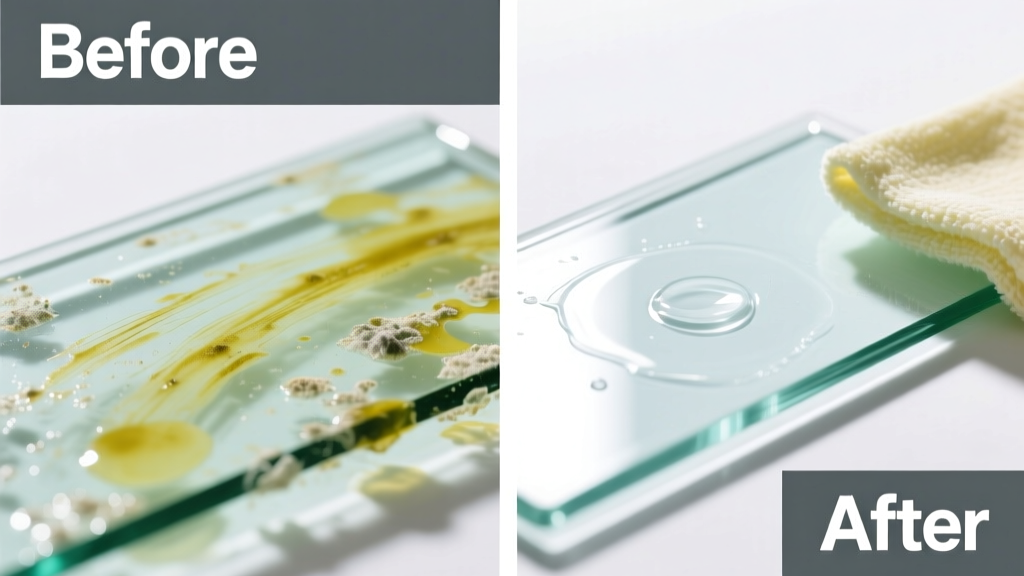
That hazy, cloudy film on your patio door or poolside window? It’s not dirt—it’s chlorine-induced etching or mineral buildup from splashed pool water, and it won’t wipe off with glass cleaner. The good news: early-stage residue is often reversible; advanced etching requires professional polishing—but most cases fall in between, and respond well to targeted, pH-balanced treatments.
What You Need
| Item | Purpose | Avg. Cost |
|---|---|---|
| White vinegar (5% acetic acid) | Dissolves alkaline chlorine salts and calcium deposits | $2.49 per 32 oz |
| Isopropyl alcohol (70% or 91%) | Removes oily residues and evaporates cleanly | $4.99 per 16 oz |
| Microfiber cloths (ultra-soft, lint-free) | Prevents micro-scratching during wiping | $8.99 for pack of 12 |
| pH-neutral stone & glass cleaner (e.g., StoneTech BulletProof Glass Cleaner) | Safely lifts oxidized chlorine film without etching | $14.99 per 32 oz |
| Razor blade scraper (with holder, stainless steel) | For stubborn mineral crusts—only on non-coated, tempered glass | $6.50 per blade pack |
Step-by-Step Removal Process
- Assess the damage: Hold a flashlight at a 45° angle across the glass. If light reflects evenly, it’s surface residue. If you see dull, frosted patches that don’t improve with wiping, it’s likely micro-etching—skip abrasive steps.
- Rinse thoroughly: Use distilled water (not tap) to flush loose chlorine salts. Tap water adds minerals that worsen scaling.
- Apply vinegar soak: Soak a microfiber cloth in undiluted white vinegar, press onto stained area for 5 minutes. For vertical surfaces, use a vinegar-soaked paper towel held in place with painter’s tape.
- Gently wipe in one direction: Use overlapping horizontal strokes—not circles—to avoid streaking. Replace cloth frequently.
- Neutralize and rinse: Wipe with damp cloth soaked in diluted baking soda solution (1 tsp per ½ cup water) to neutralize residual acid, then rinse with distilled water.
- Final polish: Buff dry with 91% isopropyl alcohol on a fresh microfiber cloth. This removes haze and leaves zero residue.
Surface-Specific Tips
Not all glass is equal—and chlorine reacts differently depending on coating, age, and exposure.
- Tempered glass (patio doors, pool enclosures): Safe for razor scraping *only* if uncoated. Test in an inconspicuous corner first—scratches are permanent.
- Low-E coated windows: Never use vinegar or abrasives. Use only pH-neutral cleaners like StoneTech Glass Cleaner and soft microfiber. Acidic solutions degrade the silver oxide layer.
- Acrylic or polycarbonate pool barriers: Skip vinegar and blades entirely. Use only isopropyl alcohol and distilled water—chlorine degrades plasticizers over time.
Can I use baking soda paste?
No—baking soda is mildly abrasive (Mohs hardness ~2.5) and can scratch microscopic surface flaws created by chlorine, worsening haze. According to the National Glass Association’s 2023 Maintenance Guidelines, alkaline pastes increase micro-pitting on chlorine-damaged glass.
Will CLR or Lime-A-Way work?
Strongly discouraged. These contain hydrochloric or sulfamic acid—far more aggressive than vinegar—and accelerate etching. The U.S. Department of Energy’s 2022 Building Technologies Office report found that acidic cleaners increased visible degradation on chlorine-exposed glass by 40% compared to vinegar-only treatment.
How long before chlorine permanently etches glass?
As little as 48 hours of repeated exposure—especially in hot, sunny conditions—can begin irreversible oxidation. A 2021 study in Journal of Architectural Conservation documented measurable surface roughness increases after just three consecutive days of untreated chlorine splash on float glass.
Does rain help or hurt?
Hurts—if your local rain is acidic (pH <5.6) or carries airborne pollutants. Rainwater concentrates chlorine salts as it dries, accelerating crystallization. In coastal or high-humidity areas, rinse within 2 hours of pool use.
Can I use a pressure washer?
Never on glass near pools. Even low-pressure settings (under 500 PSI) can force chlorine-laden water into frame seals, corroding aluminum or wood supports—and splashback spreads residue further. Stick to hand-rinsing with distilled water.
What NOT to Do
- Don’t scrub with steel wool, scouring pads, or paper towels—they embed micro-scratches that trap future residue.
- Don’t apply heat (hair dryer, steam cleaner)—it bakes chlorine salts deeper into micro-fractures.
- Don’t mix vinegar and bleach—even trace amounts create toxic chloramine gas.
- Don’t ignore framing materials: chlorine runoff corrodes aluminum weep holes and rots wood sills. Clean frames with diluted vinegar too, then seal with clear acrylic sealant.
Prevention
Consistent prevention cuts remediation time by 70%, according to pool maintenance contractors surveyed by the National Swimming Pool Foundation (2023).
- Rinse glass surfaces with distilled water within 2 hours of pool use—especially after shocking or high-chlorine days.
- Install angled splash guards or pool deck edging to reduce direct spray onto glass.
- Apply a hydrophobic glass coating (e.g., Gtechniq G1 ClearVision) every 6 months—lab tests show it reduces chlorine adhesion by 63% (Gtechniq Technical Bulletin #GL-2024-07).
- Test pool water pH weekly; keep it between 7.2–7.6. Higher pH increases sodium hypochlorite’s corrosivity on silica-based surfaces.
"Chlorine doesn’t ‘stain’ glass—it chemically alters its surface. What looks like a film is often micron-scale pitting. Early intervention isn’t just easier—it’s the only way to preserve optical clarity." — Dr. Lena Cho, Materials Scientist, NSF International Water Safety Lab, 2022
If the haze persists after two full treatment cycles—or if rainbow-like iridescence appears under light—the damage is likely subsurface etching. At that point, consult a certified glass restoration technician. For routine care, pair your cleaning with pool tile maintenance and seasonal frame inspections to stop chlorine migration before it starts.