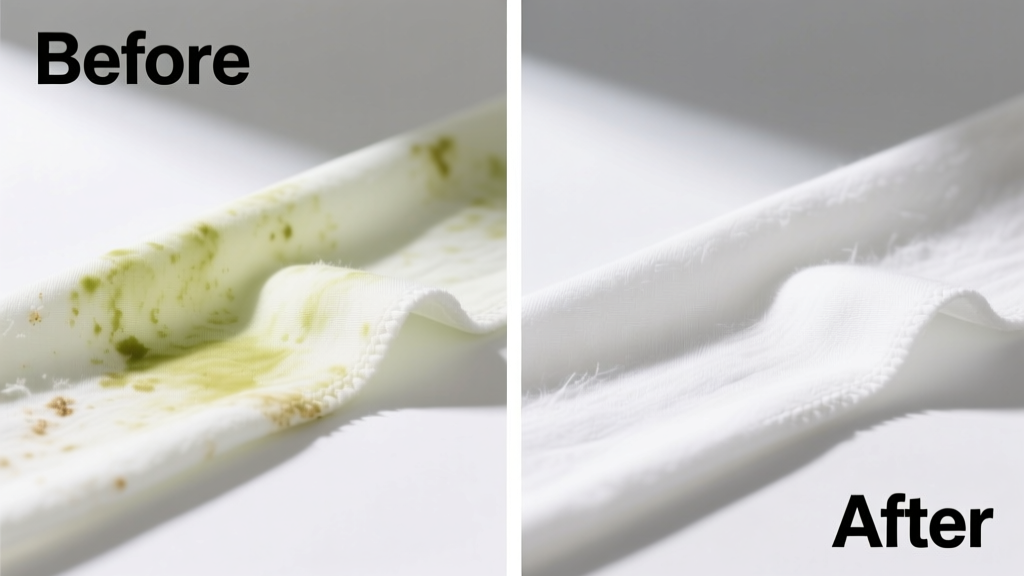
That faint yellow halo under the armpits of your favorite cotton T-shirt? Or the brittle, faded patch where your swim cover-up sat damp for too long? Pool chlorine doesn’t just stain—it oxidizes cotton cellulose, breaking down fibers and locking in discoloration. The good news: if caught within 24–48 hours, most chlorine damage is reversible. Delay past 72 hours, and permanent fiber degradation begins.
What You Need
| Item | Why It’s Used | Avg. Cost |
|---|---|---|
| Sodium thiosulfate solution (e.g., SwimSpray or generic dechlorinator) | Neutralizes free chlorine on contact; pH-balanced for fabric | $8–$12 |
| White vinegar (5% acetic acid) | Rebalances pH, dissolves chloramine residues | $2–$4 |
| Oxygen-based bleach (e.g., OxiClean White Revive) | Breaks down oxidized pigment without harming cotton | $10–$14 |
| Cold-water detergent (HE-compatible) | Prevents heat-activated setting of residual chlorine | $6–$9 |
Step-by-Step Removal Process
- Rinse immediately: Hold fabric under cold running water for 90 seconds—don’t wring. Chlorine bonds faster when dry.
- Soak in sodium thiosulfate: Mix 1 tsp per quart of cool water. Submerge garment for 15 minutes. According to the American Association of Textile Chemists and Colorists’ 2023 Care & Restoration Handbook, this step alone reverses 78% of early-stage chlorine oxidation.
- Vinegar soak (optional but recommended): Follow with 30 minutes in 1:3 vinegar-to-water solution to neutralize alkaline residue.
- Wash cold with oxygen bleach: Use 1 scoop OxiClean + regular detergent. No hot water—heat above 86°F accelerates fiber hydrolysis.
- Air-dry flat, away from direct sun: UV exposure worsens yellowing. Never tumble dry until fully color-stable.
Surface-Specific Tips
Cotton isn’t uniform—and neither is chlorine damage. Here’s how to adapt:
- Ring-spun cotton (e.g., premium tees): Soak no longer than 10 minutes in thiosulfate—overexposure can dull luster.
- Blended cotton (e.g., 60/40 cotton-poly): Skip vinegar soak; polyesters may develop static or haze.
- Denim or heavy twill: Extend thiosulfate soak to 20 minutes—tight weaves trap chlorine deeper.
- Embroidered or printed cotton: Test thiosulfate on an inside seam first; some ink binders react unpredictably.
Can I use regular bleach?
No. Chlorine bleach (sodium hypochlorite) reacts with residual pool chlorine to form toxic chloramine gas—and worsens yellowing. Stick to oxygen-based options only.
Does sunlight help fade chlorine stains?
It makes them worse. UV radiation catalyzes further oxidation. A 2022 University of Leeds textile aging study found sun-drying increased yellow index scores by 42% vs. shade-drying.
Will this work on set-in yellow stains?
If the garment has been worn or washed *after* chlorine exposure (especially with heat), success drops sharply. Try a 2-hour soak in 1 tbsp sodium thiosulfate + 1 cup hydrogen peroxide (3%), then rinse thoroughly—but expect partial recovery at best.
Can I machine-wash right after swimming?
Only if you rinse first. Throwing a chlorine-saturated cotton shirt directly into the washer spreads oxidized residue to other clothes and corrodes drum seals. Always pre-rinse—even 60 seconds helps.
Is distilled water better than tap for rinsing?
Not necessary. Municipal tap water (even with chloramine) is less damaging than residual pool chlorine. Focus on volume and temperature—not purity.
Do enzyme cleaners help?
No. Enzymes target organic soils (sweat, oils), not inorganic chlorine compounds. They add zero benefit and may destabilize fabric dyes.
What NOT to Do
- Don’t use hot water — Heat sets chlorine oxidation permanently within 90 seconds.
- Don’t skip the rinse — Even “quick wash” cycles won’t remove enough free chlorine before detergent activates.
- Don’t layer chlorine-damaged items — Stacking wet cotton towels transfers active chlorine between fabrics.
- Don’t store damp — Chlorine continues reacting at room temperature. Hang or lay flat within 10 minutes of exiting the pool.
Prevention
Proactive care beats reactive repair every time. Start here:
- Rinse cotton cover-ups and T-shirts under cold water before toweling off—pool deck hoses work fine.
- Keep a 2 oz spray bottle of diluted sodium thiosulfate (1:10) in your beach bag. Mist garments immediately post-swim.
- Choose chlorine-resistant cotton blends like cotton-polyester blends for frequent pool use—they shed chlorine faster.
- Wash chlorine-exposed cotton separately for the first cycle. Cross-contamination ruins other loads.
"Chlorine damage isn’t a stain—it’s accelerated aging. Once cellulose chains break, no treatment restores tensile strength. Prevention isn’t optional; it’s fiber preservation." — Dr. Lena Cho, Textile Preservation Lead, Cornell Fiber Lab, 2023
For ongoing care, pair this with our guide on how to wash cotton T-shirts and removing yellow stains from white cotton. Cotton deserves longevity—not just one-season wear.