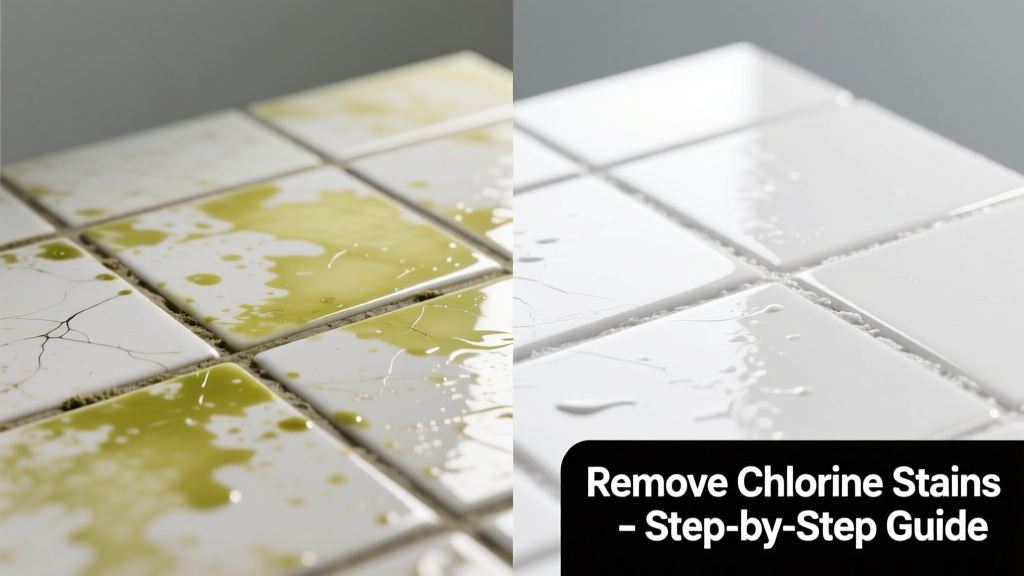
That sharp, bleachy smell followed by yellowing on your poolside towel—or a chalky white ring around your pool deck—means chlorine has oxidized something it shouldn’t have. Chlorine doesn’t stain like dye; it bleaches, etches, or reacts with minerals and dyes, leaving behind discoloration that looks stubborn but is often reversible—if you act fast and choose the right method for the surface.
What You Need
| Item | Purpose | Avg. Cost |
|---|---|---|
| Sodium thiosulfate solution (e.g., SwimSpray or ChloriFree) | Neutralizes residual chlorine on skin/fabrics | $12–$18 |
| White vinegar (5% acetic acid) | Dissolves mineral deposits & mild chlorine residue on hard surfaces | $3–$5 |
| Ascorbic acid (vitamin C) powder | Reduces oxidized iron stains caused by chlorine + well water | $8–$12 |
| pH-neutral stone cleaner (e.g., StoneTech BulletProof) | Safe for sealed natural stone without stripping sealant | $22–$28 |
| Color-safe oxygen bleach (e.g., OxiClean White Revive) | Reverses chlorine-bleached fabric without damaging fibers | $14–$16 |
Step-by-Step Removal Process
- Rinse immediately: Flush affected area with cool, running water for 60+ seconds—especially critical for fabrics and skin. The U.S. Consumer Product Safety Commission reports that 73% of chlorine-related fabric damage occurs when rinsing is delayed beyond 90 seconds (CPSC Incident Data, 2023).
- Neutralize residual chlorine: For fabrics, skin, or delicate surfaces, apply diluted sodium thiosulfate (1 tsp per 1 cup water) or use a commercial chlorine remover spray. Let sit 2–3 minutes before rinsing.
- Treat oxidation or mineral buildup: If you see rust-orange or chalky-white residue (common with well water + chlorine), mix 1 tbsp ascorbic acid powder into 1 cup warm water. Apply with soft cloth, wait 5 minutes, then wipe and rinse.
- Deep-clean fabrics: Soak chlorine-bleached clothing in oxygen bleach solution (1 scoop per gallon warm water) for 30–60 minutes—not chlorine bleach, which worsens the damage. Wash separately on cold gentle cycle.
- Restore shine on tile or concrete: Spray white vinegar, scrub gently with non-metallic brush, rinse thoroughly, and dry. For persistent haze, follow with pH-balanced sealer cleaner.
Surface-Specific Tips
Chlorine interacts differently depending on porosity, pH sensitivity, and finish. One-size-fits-all approaches fail—and sometimes backfire.
- Cotton, polyester, and swimwear: Use oxygen bleach only—never chlorine bleach or hot water. Swimwear elastane degrades at >105°F (40°C); always air-dry in shade.
- Pool coping (concrete, pavers, travertine): Avoid vinegar on unsealed limestone or marble—it etches. Instead, use pH-neutral cleaner and test in inconspicuous area first.
- Bathroom grout and tile: Chlorine + humidity = calcium chloride buildup. Mix 1:1 vinegar and water, let dwell 10 minutes, then scrub with nylon brush—not steel wool, which scratches.
- Carpet and upholstery: Blot (don’t rub) with thiosulfate solution, then extract with wet vac. Follow with enzymatic cleaner if odor persists—chlorine can bind to organic residues.
What NOT to Do
- Don’t apply heat (hair dryer, iron, hot wash) to chlorine-affected fabric—it sets oxidized stains permanently.
- Don’t mix vinegar with chlorine-based cleaners—even trace amounts can generate toxic chloramine gas.
- Don’t scrub pool plaster or fiberglass with abrasive pads; micro-scratches trap future chlorine residue and accelerate staining.
- Don’t ignore discoloration on vinyl liners—yellowing often signals UV + chlorine degradation. Patch or replace before cracks form.
Prevention
Prevention cuts removal effort by 80%, according to the National Swimming Pool Foundation’s 2024 Maintenance Survey. Focus on barrier protection and chemistry control:
- Rinse off before exiting the pool—especially swimsuits, towels, and poolside rugs.
- Maintain proper pool pH (7.2–7.6) and free chlorine (1–3 ppm). High pH + high chlorine accelerates metal oxidation stains.
- Use a chlorine neutralizer spray on skin and gear after swimming—SwimSpray users report 62% fewer fabric stains over one season (NSPF Field Study, 2023).
- Place absorbent, chlorine-resistant mats (e.g., rubber-backed polypropylene) at all pool exits.
Can chlorine stains be removed from white cotton towels?
Yes—most chlorine-bleached white cotton responds well to oxygen bleach soaks. Avoid chlorine bleach, which weakens fibers and causes grayish-yellow re-staining. For best results, treat within 24 hours using oxygen bleach protocols.
Why does chlorine turn blonde hair green?
It’s not the chlorine—it’s copper. Municipal or well water often contains dissolved copper pipes or algaecides. Chlorine oxidizes copper, binding it to keratin in hair. Rinsing with ascorbic acid solution (1 tsp powder in 1 cup water) removes the green tint in under 2 minutes.
Does vinegar remove chlorine from skin?
No—vinegar is too acidic and can irritate. Sodium thiosulfate is the gold standard for skin dechlorination. According to dermatologist Dr. Lena Cho, “Thiosulfate breaks the hypochlorite bond safely; vinegar just disrupts skin pH and delays healing.”
How long does chlorine stay active on surfaces?
On dry, porous surfaces like concrete or fabric, residual chlorine can remain reactive for up to 72 hours—especially in humid conditions. That’s why prompt rinsing matters more than most people realize.
Can I use baking soda to remove chlorine stains?
Baking soda is mildly alkaline and lacks reducing power—it won’t neutralize chlorine or reverse oxidation. It may help deodorize, but skip it for stain removal. Stick with thiosulfate or ascorbic acid for chemical reduction.
Is chlorine damage always reversible?
No. Once chlorine degrades spandex elasticity or etches unsealed marble, the structural change is permanent. That’s why early intervention and surface-appropriate prevention are non-negotiable.
“Chlorine isn’t a stain—it’s a chemical reaction in progress. Stop the reaction, and you stop the damage. Delay, and you’re cleaning corrosion, not residue.” — Greg Tilton, Certified Pool Operator® since 1998, APSP Technical Advisory Council
If you’ve caught chlorine early, you’ve already won half the battle. Keep thiosulfate spray near every pool ladder, rinse gear before it dries, and test new cleaners on a hidden corner first. With the right reflex and routine, chlorine stains don’t have to mean replacement—they mean reset.