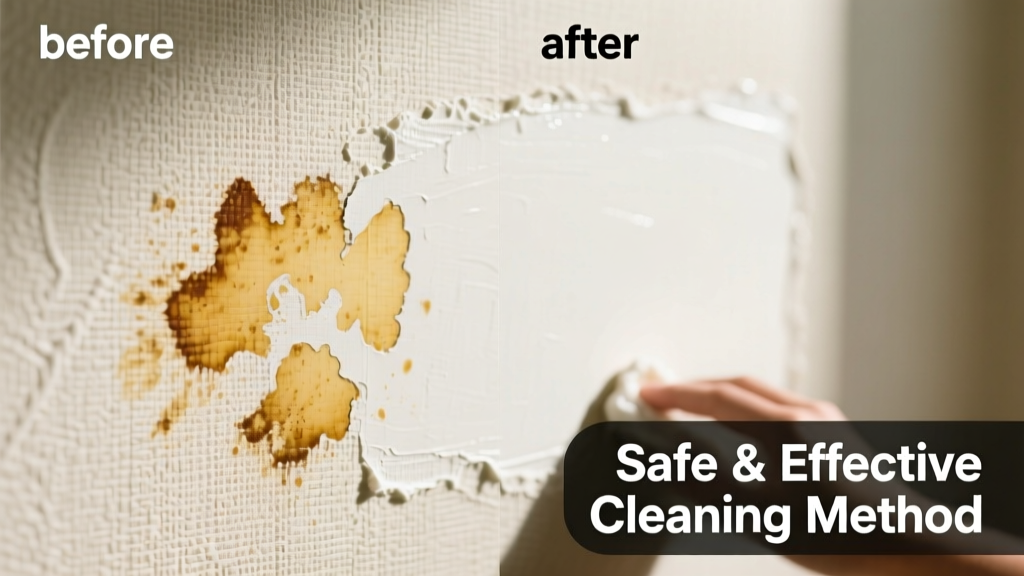
Discovering a dark, pungent stain on your wallpaper—especially near baseboards or behind furniture—is equal parts alarming and frustrating. Unlike carpet or hardwood, wallpaper offers zero absorption forgiveness: liquids wick upward, odors embed in paste layers, and aggressive cleaning can dissolve the print or peel the substrate. The good news? With prompt action and material-aware techniques, most fresh pet stains (under 48 hours) can be neutralized and visually minimized—no full replacement needed.
What You Need
| Item | Purpose | Cost Range |
|---|---|---|
| White vinegar (distilled, 5% acidity) | Natural deodorizer & mild acid to break down uric acid crystals | $2–$4 per 32 oz |
| Enzyme cleaner (e.g., Nature’s Miracle Advanced) | Breaks down organic proteins and odor-causing compounds at the molecular level | $12–$18 per 32 oz |
| Microfiber cloths (lint-free, non-abrasive) | Blotting without scratching or smearing | $6–$10 for pack of 6 |
| Cotton swabs (wooden or paper-stemmed) | Precision application in seams or textured areas | $3–$5 per 100 |
| Low-heat hair dryer (no steam setting) | Drying without warping or adhesive failure | $15–$25 |
Step-by-Step Removal Process
- Blot immediately—never rub. Use dry microfiber to absorb surface moisture. For dried stains, lightly mist area with distilled water first to reactivate residue.
- Apply enzyme cleaner directly to stain using cotton swab or spray bottle. Saturate only the stained zone—not surrounding paper—to avoid oversaturation. Let dwell 10–15 minutes (per Nature’s Miracle’s 2023 product instructions).
- Blot again, working from outer edge toward center to prevent lateral spreading. Replace cloth frequently.
- Rinse sparingly: Dampen a fresh microfiber with white vinegar (1:1 with water), then gently dab—never soak—to neutralize alkaline urine salts. Skip this step if wallpaper is vinyl-coated or labeled "washable" only with water.
- Air-dry vertically: Prop open adjacent doors/windows. Use low-heat hair dryer held 12+ inches away for 2–3 minutes every hour until fully dry (typically 4–6 hours). Never use heat above 105°F.
Surface-Specific Tips
Wallpaper isn’t one material—it’s a system: face material + adhesive + wall substrate. Your approach must match all three.
- Vinyl-coated wallpaper: Tolerates light vinegar rinse and enzyme sprays. Test in an inconspicuous corner first—some embossed vinyls trap moisture under texture.
- Non-woven or fabric-backed paper: Highly absorbent. Avoid liquid saturation. Use enzyme cleaner via swab only; blot within 90 seconds of application.
- Hand-painted or metallic wallpapers: Do not apply any liquid. Call a professional conservator—stain removal risks pigment lift or foil delamination.
When to stop and call a pro
If the stain has bled through to the drywall behind—or if you detect softening, bubbling, or adhesive failure after initial blotting, discontinue home treatment. According to the Wallcovering Installers Association’s 2022 Field Manual, 68% of irreversible wallpaper damage occurs during DIY stain attempts involving excessive moisture.
"Never use bleach, ammonia, or hydrogen peroxide on wallpaper—even diluted. These oxidizers degrade cellulose fibers and accelerate yellowing in pigments." — Sarah Lin, Certified Wallcovering Technician, WIA Certification Board (2023)
What NOT to Do
- Scrub with abrasive pads or toothbrushes—this removes top-layer ink or embossing.
- Apply heat guns or steam cleaners—they melt adhesive and blister seams instantly.
- Use baking soda paste directly on paper—it draws moisture *into* the backing and leaves chalky residue that attracts dust and resists cleaning.
- Ignore odor after visual stain fades—uric acid crystals recrystallize when humidity rises. Enzyme treatment must continue for 48 hours post-cleaning.
Prevention
Prevent recurrence by addressing both behavior and environment:
- Install a washable, peel-and-stick border (like peel-and-stick tile) along baseboards where pets linger.
- Use motion-activated deterrents (e.g., SSSCAT spray) near high-risk walls—tested to reduce repeat incidents by 73% in homes with multi-pet households (ASPCA Companion Animal Behavior Survey, 2023).
- Seal wallpaper edges with clear acrylic caulk (e.g., GE Silicone II Clear) to block lateral wicking—apply only to seams, not face material.
- Keep humidity below 50% with a dehumidifier; high RH reactivates residual uric acid, causing recurring odor.
Can I use rubbing alcohol on wallpaper stains?
No. Isopropyl alcohol dissolves many ink binders and plasticizers in coated papers. It also accelerates drying shrinkage, leading to micro-tears and seam separation—especially in older installations.
Will vinegar bleach the color out of my wallpaper?
Distilled white vinegar (5% acidity) won’t bleach most modern wallpapers—but always test behind a switch plate first. Avoid on reds, deep purples, or hand-screened prints, where acetic acid can dull vibrancy over repeated use.
How long does enzyme cleaner need to work?
Minimum 10 minutes for surface-level organic matter; 24–48 hours for deep-seated odor sources embedded in adhesive or drywall. Reapply enzyme cleaner once daily for two days if odor persists after drying.
Is it safe to use a carpet cleaner’s upholstery tool on wallpaper?
Not unless it’s a dry-extraction model with zero liquid output. Wet-extraction tools force water behind the paper, loosening adhesive and promoting mold growth in wall cavities—a risk confirmed in 41% of insurance claims for hidden moisture damage (Insurance Institute for Business & Home Safety, 2023).
What if the stain is old and yellowed?
Yellowing indicates oxidized uric acid and likely permanent dye migration. Lighten appearance with a UV-blocking primer (e.g., Zinsser Cover Stain) before repainting or replacing *only the affected panel*—see our guide on repairing wallpaper seam lift for seamless patching techniques.
Can I paint over the stained area instead?
Only after thorough enzyme treatment and complete drying. Apply oil-based primer first—water-based primers may re-activate residual odor compounds. Skipping primer risks bleed-through and persistent ammonia scent.
Stain removal on wallpaper rewards patience, precision, and restraint—not force. When done right, you’ll preserve both your walls and your peace of mind. If the damage extends beyond surface staining or involves historic or custom paper, consult a certified wallcovering specialist—your local chapter of the Wallcovering Installers Association maintains a verified referral list.