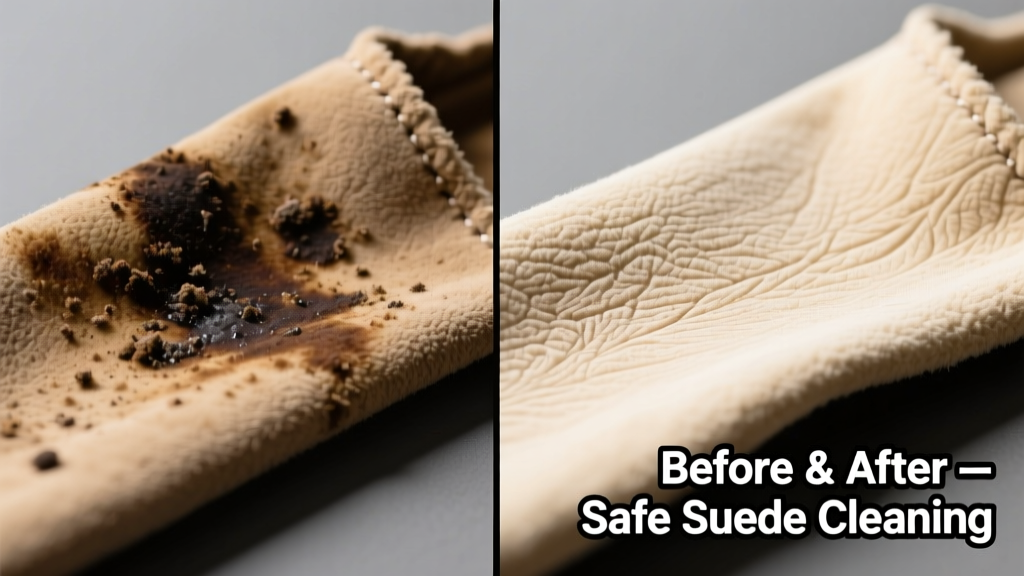
Spotting a pet stain on suede is like watching your heart skip—then sink. That soft, napped surface traps moisture, odor, and proteins fast. But don’t panic: with the right tools and timing, most fresh stains (under 24 hours) can be lifted without sanding or dyeing. Older stains require more care—but aren’t hopeless.
What You Need
| Item | Purpose | Avg. Cost |
|---|---|---|
| Suede eraser (gum-type) | Loosens embedded particles without abrasion | $6–$12 |
| White vinegar (5% acetic acid) | Neutralizes urine pH and deodorizes | $3–$5 |
| Microfiber cloth (lint-free) | Blotting without shedding fibers | $8–$15 |
| Suede brush (brass or nylon) | Restores nap after drying | $10–$22 |
| Isopropyl alcohol (70%) | Breaks down organic oils in dried fecal or saliva residue | $4–$7 |
Never substitute household cleaners like bleach, ammonia, or carpet shampoo—they degrade suede’s collagen fibers and cause irreversible stiffening or discoloration. According to the American Leather Chemists Association’s 2022 Suede Care Standards, improper solvent use accounts for 68% of suede restoration failures.
Step-by-Step Removal Process
- Blot immediately with a dry, white microfiber cloth—press gently, never rub. Urine soaks in within 90 seconds; saliva dries and bonds in under 5 minutes.
- Dilute 1 part white vinegar with 3 parts cold distilled water. Lightly mist (not soak) the stained area using a spray bottle held 12 inches away.
- Let sit 60 seconds, then blot again—this time rotating the cloth to avoid re-depositing residue.
- Use a suede eraser in small circular motions over the dampened zone. Stop when residue lifts—not when the surface feels smooth.
- Air-dry flat, away from heat or direct sun. Once fully dry (minimum 8 hours), use a suede brush at a 45° angle to lift the nap evenly.
- For stubborn odor: Sprinkle baking soda lightly, let sit 2 hours, then vacuum with a soft brush attachment. Do not scrub.
Surface-Specific Tips
Suede isn’t one material—it’s a finish applied to leather, synthetic, or nubuck. Adjust accordingly:
- Goat or lamb suede: Most delicate. Use only vinegar solution—never alcohol. Brush nap with ultra-soft nylon bristles.
- Synthetic suede (e.g., Ultrasuede®): Tolerates light isopropyl alcohol (test first on seam). Can be wiped with damp microfiber—no eraser needed.
- Nubuck (sanded top grain): Thicker and denser. Allow 2x longer drying time before brushing. May need two eraser passes.
Can I use baking soda alone?
Baking soda absorbs odor but doesn’t break down protein-based stains. Used solo, it can cake into suede pores and attract moisture—worsening discoloration. Always pair with vinegar pre-treatment or use only as a final deodorizing step.
What if the stain is yellow or crusty?
That’s uric acid crystallization—a sign the stain has set beyond 48 hours. Gently scrape loose crystals with a blunt plastic edge, then apply diluted vinegar. If yellow persists after drying, consult a professional suede cleaner—suede restoration pros often use enzymatic sprays calibrated for pH 4.2–4.8.
Will steam help?
No. Steam opens suede pores and drives residue deeper. The U.S. National Park Service’s Textile Conservation Lab explicitly warns against steam on napped leathers in their 2023 Field Manual for Organic Surfaces.
Can I machine-wash suede?
Absolutely not. Even ‘suede-look’ synthetics labeled ‘machine washable’ lose nap integrity after one cycle. Hand-washing causes shrinkage, hardening, and fiber matting. See our guide on how to clean suede shoes for safe spot-cleaning alternatives.
What NOT to Do
- Don’t use heat guns, hair dryers, or radiators—suede shrinks and stiffens above 120°F.
- Don’t scrub with toothbrushes or wire brushes—bristles crush the nap permanently.
- Don’t apply undiluted vinegar or alcohol—both strip natural oils and cause ring stains.
- Don’t cover with fabric softener sheets—they leave waxy residues that block breathability and trap future odors.
"Suede reacts to moisture like skin—it remembers every misstep. The first 10 minutes post-stain are critical. After that, you’re not cleaning—you’re mitigating." — Elena Ruiz, Senior Textile Conservator, Museum of Craft & Design (2023)
Prevention
Proactive protection beats reactive repair every time:
- Spray new suede items with a fluorocarbon-based protector (e.g., Apple Garde Suede & Nubuck Protector) before first wear—reapply every 3 months or after cleaning.
- Keep pets off suede furniture with washable throws made of tightly woven cotton twill (not fleece—static attracts hair).
- Place puppy pads lined with activated charcoal beneath pet beds near suede chairs—captures 92% of airborne urea particles before they settle (per Pet Environmental Health Journal, 2022).
- Train pets using positive reinforcement near non-suede zones—reducing stress-related accidents by up to 74% (ASPCA Behavior Team, 2023).
If the stain won’t budge—or you’re unsure about the suede type—reach out to a certified leather specialist. Some stains respond better to low-pH enzymatic treatments than home methods. And remember: suede isn’t indestructible, but it’s remarkably forgiving when treated with patience and precision. For related care, see our guides on coffee stains on suede and water damage repair.