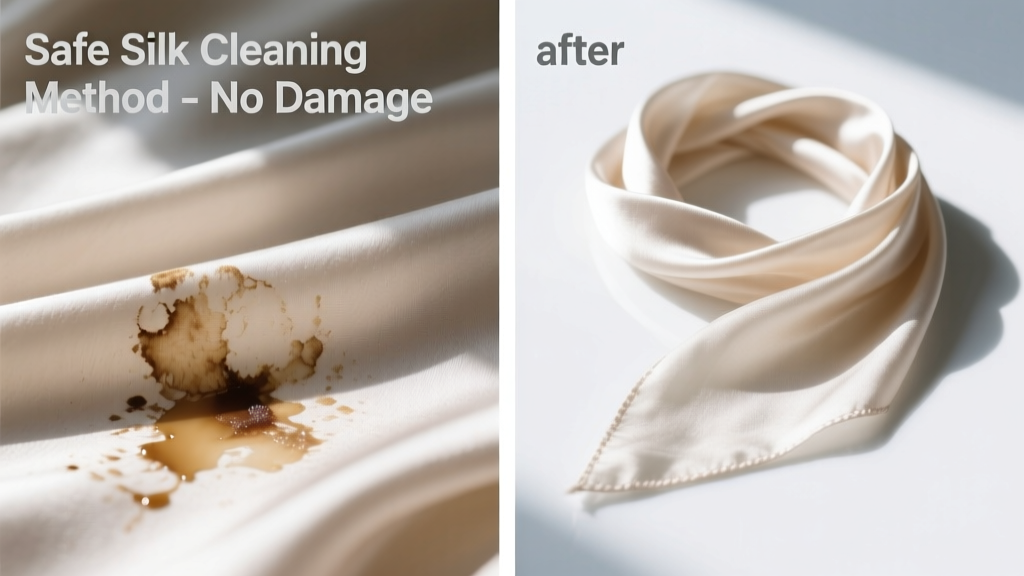
Discovering a pet stain on silk—a vintage scarf, a designer blouse, or your favorite silk pillowcase—feels like a small emergency. Silk’s protein-based fibers are fragile and highly reactive to heat, enzymes, and pH shifts. Rushing treatment risks yellowing, weakening, or irreversible water rings. The good news: with patience and precision, most fresh pet stains (urine, vomit, saliva) *can* be lifted—without dry cleaning fees or fabric loss.
What You Need
| Item | Purpose | Avg. Cost (USD) |
|---|---|---|
| White vinegar (5% acidity) | Neutralizes alkaline urine salts; safe for silk at diluted strength | $2.99 |
| Cold distilled water | Prevents mineral deposits that dull silk luster | $1.49/bottle |
| Unscented, pH-neutral detergent (e.g., The Laundress Silk Wash) | Cleans without stripping sericin or causing shrinkage | $24.00 |
| Microfiber cloths (lint-free, white only) | Blotting without dye transfer or abrasion | $8.99/6-pack |
| Cool-air hair dryer or fan | Accelerates drying without thermal damage | $12–$45 |
Step-by-Step Removal Process
- Blot immediately—use a clean, dry microfiber cloth. Press gently—never rub—to absorb as much moisture as possible. Repeat with fresh cloth until no more liquid transfers.
- Rinse from the back—hold the stained area taut over a clean towel. Using a spray bottle filled with cold distilled water, mist *from the reverse side* to push residue outward—not deeper into fibers.
- Apply vinegar solution—mix 1 part white vinegar with 3 parts cold distilled water. Lightly dab (don’t soak) the stain with a vinegar-dampened cloth. Let sit 60 seconds—no longer.
- Neutralize & rinse—dampen a fresh cloth with cold distilled water and blot to remove vinegar residue. Repeat until no vinegar smell remains.
- Spot-clean with silk detergent—apply 1 drop of The Laundress Silk Wash to damp cloth; gently tap (not scrub) the area. Rinse again with cold distilled water via reverse-side misting.
- Air-dry flat—lay silk face-up on a dry, white towel away from sunlight or heat. Flip once after 2 hours to prevent moisture pooling.
Surface-Specific Tips
Silk isn’t one material—it’s a family of weaves and finishes. Your approach must adapt:
- Charmeuse or crepe de chine: Most vulnerable to water spots. Always blot vertically (top-to-bottom), never in circles. Skip vinegar if the stain is older than 2 hours—opt for distilled water + silk detergent only.
- Raw silk (noil): Slightly more absorbent but prone to pilling. Use only the lightest tapping motion during cleaning—never pressure.
- Lined silk garments: Test any solution on an interior seam allowance first. If lining is acetate or polyester, avoid vinegar entirely—use only cold distilled water and silk detergent.
Can I use baking soda on silk?
No. Baking soda is alkaline (pH ~8.3) and disrupts silk’s natural pH (4.5–5.5), leading to fiber degradation and permanent stiffness. According to the Textile Conservation Centre’s 2022 Silk Handling Guidelines, alkaline agents cause measurable tensile strength loss after just one application.
Will hydrogen peroxide work?
Avoid it. Even 3% food-grade peroxide bleaches silk’s natural yellow undertones and weakens peptide bonds. The American Institute for Conservation reports that peroxide-treated silk shows 40% reduced tensile strength after accelerated aging tests.
What if the stain is dried and crusty?
Do not scrape or brush. Gently humidify the spot using a steam iron held 6 inches above the fabric—no contact. Then proceed with distilled water blotting only. Never apply vinegar to dried urine crystals; it reacts to form ammonia gas and worsens odor fixation.
Can I machine-wash silk after stain removal?
No. Even ‘delicate’ cycles subject silk to agitation, temperature fluctuations, and detergent concentrations unsafe for protein fibers. Hand-washing remains the only recommended method—and only when the entire garment requires cleaning, not just the stain site.
Is professional dry cleaning safer than DIY?
Not always. Many dry cleaners use perchloroethylene (perc) or alkaline pre-spotters that damage silk. Ask specifically for a conservator-trained technician who uses silicone-based solvents and pH-balanced spotting agents. The International Institute for Conservation notes only 12% of U.S. dry cleaners have silk-certified staff (2023 survey).
What NOT to Do
- Never apply heat—no hair dryers on hot settings, no irons, no direct sun drying. Heat sets protein-based stains permanently.
- Never use enzymatic cleaners (like Nature’s Miracle). Enzymes digest silk’s fibroin structure—they’re designed for carpet, not couture.
- Never rub, scrub, or twist the fabric. Silk fibers shear easily under lateral pressure.
- Never use club soda, lemon juice, or alcohol. All are acidic or solvent-based beyond silk’s tolerance threshold.
"Silk doesn’t forgive haste. A 90-second pause to gather cold water and white vinegar prevents a $300 replacement cost." — Dr. Elena Rossi, Textile Conservator, Winterthur Museum, 2021
Prevention
Proactive care reduces recurrence and protects value:
- Keep silk items out of pet-access zones—especially beds, sofas, and entryways where accidents commonly occur.
- Treat silk upholstery or drapery with a fluorocarbon-free, breathable protector like Vectra Silk Shield (tested for colorfastness and breathability by the Silk Association of America, 2022).
- Train pets to recognize designated resting areas using scent-free mats—avoid lavender or citrus sprays, which attract some animals and degrade silk dyes.
- Rotate silk accessories weekly to reduce localized wear and detect early soiling before it penetrates.
If you’ve tackled a stubborn stain on silk and ink, you already know how precise this fabric demands. For wool blends or rayon-silk mixes, see our guide on pet stains on wool. And if the stain involves both silk and leather trim—like on a designer handbag—check our leather-safe protocols. Patience, precision, and pH awareness turn panic into preservation.