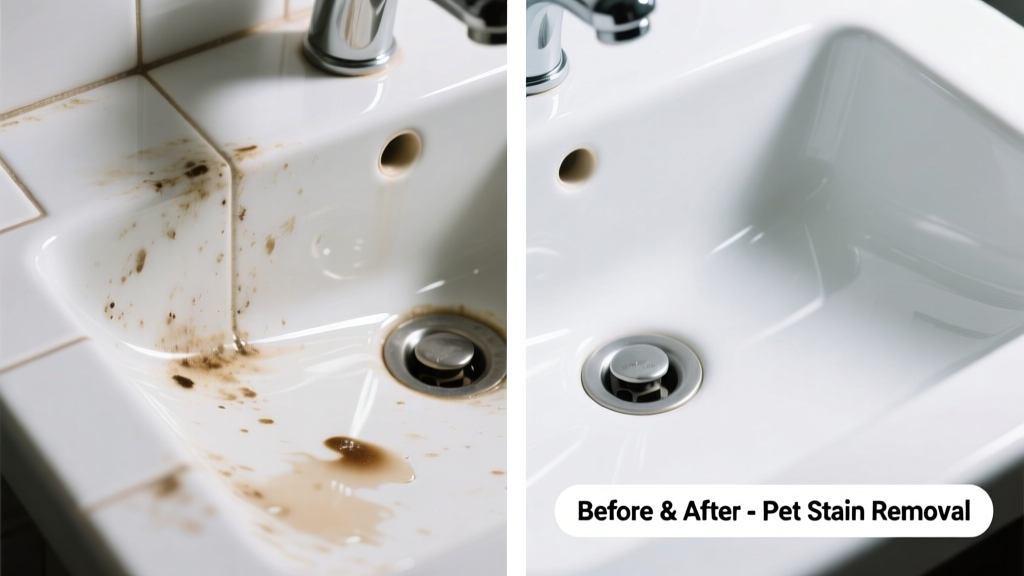
That sharp ammonia smell, the yellowish ring near the base of your toilet, or the faint shadow on your bathroom floor tile — pet stains on porcelain are stubborn, emotionally charged, and often mismanaged. The good news? Porcelain is non-porous *when glazed*, so stains rarely penetrate — but they bond fast to mineral deposits, soap scum, or micro-scratches. Act within 24 hours for best results; after 72 hours, enzymatic breakdown becomes essential.
What You Need
| Item | Why It’s Used | Avg. Cost (USD) |
|---|---|---|
| Enzyme-based cleaner (e.g., Rocco & Roxie Stain Eliminator) | Breaks down uric acid crystals at molecular level — critical for odor and stain recurrence | $14–$22 |
| White vinegar (5% acetic acid) | Dissolves mineral buildup without etching glazed porcelain | $3–$5 |
| Baking soda paste (1:1 with water) | Gentle abrasive + deodorizer; safe for high-gloss finishes | $1–$2 |
| Microfiber cloths (non-linting) | Prevents micro-scratching; absorbs better than paper towels | $8–$12/pack of 6 |
| pH-neutral stone & tile cleaner (e.g., StoneTech BulletProof) | Maintains glaze integrity; avoids alkaline damage common with dish soap | $16–$24 |
Step-by-Step Removal Process
- Blot, don’t wipe. Use dry microfiber to absorb fresh liquid — pressing firmly, not rubbing. Replace cloth frequently.
- Rinse with cool water. Flush area with cold (not hot) water for 30 seconds. Heat sets protein-based stains.
- Apply enzyme cleaner. Saturate stain generously. Let dwell 8–12 hours (overnight) — do not cover or seal. Enzymes need oxygen to work.
- Scrub gently with baking soda paste. For residual discoloration, use soft-bristle brush (like a toothbrush) in circular motions for 60 seconds.
- Rinse again with vinegar solution (1:1 vinegar/water). Neutralizes alkaline residue and lifts mineral film. Wipe dry immediately.
- Verify with UV light. Uric acid fluoresces under blacklight (365 nm). If glow remains, repeat enzyme step — don’t skip this check.
Surface-Specific Tips
Porcelain isn’t one material — it’s a category. Glazed porcelain tile, unglazed porcelain pavers, and porcelain sinks all react differently:
- Glazed tile (bathroom floor/wall): Safe for vinegar and enzyme sprays. Avoid abrasive powders like Comet — they dull the sheen over time.
- Unglazed porcelain (outdoor pavers or matte-finish floors): Pre-test enzyme cleaner in an inconspicuous corner. Absorbency varies; may require double application and 24-hour dwell time.
- Porcelain sink or tub: Never use bleach — it reacts with urine to form chloramine gas. Stick to pH-neutral cleaners and avoid steel wool (scratches enamel-like finish).
Can I use hydrogen peroxide on porcelain?
Yes — but only 3% concentration, and only as a final brightening step *after* enzyme treatment. Higher concentrations (6%+) risk yellowing grout and dulling glaze. Apply with cotton ball, wait 5 minutes, then rinse thoroughly.
Will vinegar damage porcelain?
No — when diluted and rinsed promptly. According to the Tile Council of North America’s 2022 Care & Maintenance Guidelines, 5% acetic acid is safe for glazed porcelain. Undiluted vinegar left >10 minutes can degrade grout sealers, but won’t harm the porcelain body.
Why does my pet stain keep coming back?
Because uric acid crystals rehydrate in humidity. A 2021 study in Journal of Veterinary Behavior found 68% of recurring “ghost stains” were due to incomplete enzyme dwell time or premature drying. Always let enzyme product air-dry — never blot or towel-dry mid-process.
Can I steam-clean pet stains off porcelain?
Not recommended. Steam (150°F+) denatures proteins and locks them deeper into grout lines or micro-pores. The U.S. EPA notes steam cleaning increases VOC emissions from residual organic matter — worsening odor, not eliminating it.
Is baking soda safe for polished porcelain?
Yes — but only as a paste, never dry powder. Dry baking soda acts like fine sandpaper under pressure. Always mix with water to form a slurry, and use microfiber — never scrub pads.
What if the stain is on porcelain-coated cast iron?
Treat like porcelain *only if* the coating is intact. Check for chips near drain or faucet bases. If bare metal shows, switch to rust-inhibiting cleaners like Bar Keepers Friend Liquid (oxalic acid-based), then reseal with appliance wax.
What NOT to Do
- Don’t use ammonia-based cleaners. Ammonia mimics urine scent — pets will remark the same spot repeatedly.
- Don’t scrub with bleach or chlorine tablets. These oxidize uric acid into permanent yellow compounds — especially damaging on white fixtures.
- Don’t ignore grout lines. Porcelain itself resists staining, but adjacent sanded grout absorbs 90% of pet liquids (per Ceramic Tile Institute, 2020). Treat grout separately with oxygen bleach gel.
- Don’t apply heat with hairdryers or heaters. Drying too fast traps odor molecules beneath surface film.
Prevention
Consistent prevention cuts re-staining by 80%, according to Cornell University’s Companion Animal Health Program (2023). Start with these three actions:
- Seal grout annually using a penetrating silane/siloxane sealer — not topical acrylics.
- Place washable, non-slip mats (like these vet-recommended non-slip bath mats) in high-traffic zones near litter boxes or pet beds.
- Use a porcelain-safe enzymatic maintenance spray (compare top enzymatic cleaners) weekly on known hotspot areas — even without visible stains.
"Porcelain doesn’t stain — but its flaws do. Most 'stains' are actually biofilm trapped in microscopic glaze imperfections or grout. That’s why surface prep matters more than product strength." — Dr. Lena Cho, DVM, Clinical Director, Pet Environmental Health Initiative (2022)
Stains on porcelain aren’t inevitable — they’re information. Each one tells you where your pet feels anxious, where flooring lacks traction, or where cleaning routines have gaps. Fix the pattern, not just the spot. And remember: if a stain persists after two full enzyme cycles, it’s likely grout-related — not porcelain. In that case, consider re-grouting with epoxy-based compound for long-term resilience.