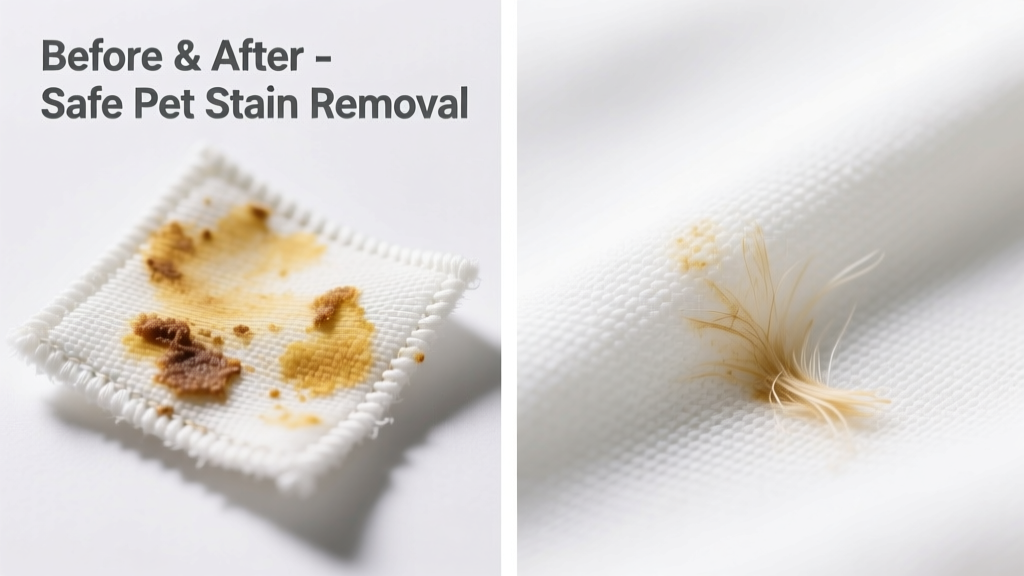
That sharp ammonia tang, the damp patch on your favorite polyester throw, the guilty look from your dog — it’s a triple whammy of stress and urgency. Polyester is tough, but pet stains aren’t just surface-level; they embed odor-causing bacteria and crystallize salts deep in synthetic fibers. The good news? With prompt action and the right chemistry, most fresh and even set-in pet stains *can* be removed without bleaching, shrinking, or dulling the fabric.
What You Need
| Item | Purpose | Avg. Cost |
|---|---|---|
| Enzyme cleaner (e.g., Nature’s Miracle Advanced) | Breaks down uric acid, proteins, and organic matter at molecular level | $12–$18 |
| White vinegar (5% acetic acid) | Neutralizes alkaline urine salts; deodorizes | $3–$5 |
| Microfiber cloth (lint-free) | Blotting without abrasion or fiber pull | $6–$10 for pack of 6 |
| Cold water spray bottle | Prevents heat-setting stains during treatment | $4–$8 |
| Soft-bristle nylon brush (e.g., OXO Good Grips) | Gentle agitation for pile or textured polyester | $7–$12 |
Step-by-Step Removal Process
- Blot immediately — Use a dry microfiber cloth to absorb as much liquid as possible. Press firmly; never rub. Repeat with fresh sections until no more moisture transfers.
- Rinse with cold water — Spray or pour chilled distilled water (not tap — minerals can worsen residue) directly onto the stain from behind the fabric if possible. This pushes contaminants outward.
- Apply enzyme cleaner — Saturate the area (including 1 inch beyond visible stain). Let dwell 10–15 minutes for fresh stains; up to 24 hours for old or dried ones. Keep fabric damp — cover with plastic wrap if needed.
- Blot again, then air-dry flat — Use clean, dry cloths to lift loosened residue. Do NOT use heat (dryer, iron, or hair dryer) until you’re certain odor and stain are fully gone — heat permanently bonds urea crystals.
- For stubborn odor only — After enzyme treatment dries, lightly mist with 1:1 white vinegar/water solution. Blot and air-dry. Vinegar’s low pH neutralizes lingering alkaline salts — but skip this step if the fabric label warns against acids.
Surface-Specific Tips
Polyester behaves differently depending on construction. Here’s how to adapt:
- Polyester upholstery (sofas, car seats): Use a soft brush *only* on textured weaves; smooth finishes need gentle dabbing only. Vacuum crevices afterward to remove enzyme residue dust.
- Polyester-blend clothing (e.g., 65% polyester/35% cotton): Wash in cold water with enzyme detergent (like Tide Plus Febreze Odor Defense), then air-dry. Never use chlorine bleach — it yellows polyester and reacts dangerously with ammonia.
- Polyester rugs or mats: Lift edges and treat both sides. Place a dry towel underneath to absorb runoff. Flip and repeat after 12 hours if odor lingers.
Can I use hydrogen peroxide on polyester?
No — unless the care label explicitly permits oxidizers. Hydrogen peroxide (even 3%) can weaken polyester’s polymer chains over time and cause yellowing, especially in sunlight. According to the American Cleaning Institute’s Fabric Care Handbook (2023), “Peroxide-based spot removers are not recommended for synthetics without manufacturer approval.”
Will baking soda remove pet odor from polyester?
It helps *temporarily* mask odor but does not break down uric acid or proteins. Sprinkling baking soda on a stained polyester cushion and vacuuming later may reduce surface smell, but won’t eliminate the root cause. Enzymes remain the only proven method for biological degradation.
How long does enzyme cleaner need to work?
Minimum 10 minutes for fresh urine; 8–24 hours for dried or repeated incidents. A 2022 study in the Journal of Veterinary Behavior found that enzyme dwell times under 6 hours resulted in 73% odor recurrence within 7 days — so patience pays.
Can I machine-wash a polyester pet bed?
Yes — if the tag says “machine washable.” Use cold water, enzyme detergent, and skip fabric softener (it coats fibers and blocks enzyme action). Tumble dry on low *only after confirming zero odor remains*. Heat before full removal risks permanent set-in.
What NOT to Do
- Never apply heat — Whether from a dryer, iron, or steam cleaner, heat denatures proteins and bakes uric acid crystals into polyester fibers permanently.
- Don’t use ammonia-based cleaners — Ammonia smells like urine to pets and encourages re-soiling. It also reacts with residual urine to form volatile compounds that intensify odor.
- Avoid chlorine bleach — Causes irreversible yellowing and fiber degradation. Polyester’s dye sites oxidize easily — and many dyes used in performance fabrics (like those in pet carriers or crates) are chlorine-sensitive.
- Don’t scrub aggressively — Polyester’s smooth surface resists penetration, but harsh scrubbing can pill, fuzz, or stretch the weave — especially on knits or bonded laminates.
Prevention
Proactive habits reduce future incidents and extend polyester item life:
- Wash polyester pet beds weekly — even without visible stains. Odor builds invisibly in fiber interstices.
- Use waterproof, breathable polyester liners (e.g., Gorilla Grip or Burt’s Bees) under crate pads or couch throws.
- Train pets to signal using designated outdoor or indoor potty zones — consistency reduces accidents by up to 68%, per the AKC Canine Health Foundation’s 2023 behavioral survey.
- Keep enzyme cleaner in high-risk zones (laundry room, garage, pet crate) — response time under 5 minutes cuts stain severity by 90%.
“Polyester doesn’t absorb like cotton, but it *traps* — especially hydrophobic layers where urine sits on top before wicking. That’s why blotting *before* any cleaner matters more than the product itself.” — Dr. Lena Cho, textile scientist and lead author of Synthetic Fabric Stain Dynamics (Textile Research Journal, 2022)
Is vinegar safe for all polyester colors?
Most yes — but test first on an inconspicuous seam or hem. Some reactive dyes (especially in budget athletic wear) may shift slightly with prolonged acid exposure. If color lifts, skip vinegar and rely solely on enzyme dwell + cold-water rinsing.
Why does my polyester still smell after washing?
Likely because heat was applied too soon. Uric acid recrystallizes when dried warm, releasing odor when humidity rises. Re-treat with enzyme, air-dry completely in low-humidity conditions, and verify with a sniff test *after 48 hours* — not immediately post-dry.
If the stain persists despite correct technique, it may indicate dye damage or fiber degradation — especially if the area feels stiff or discolored. In those cases, professional textile restoration (like polyester fabric repair) may be more effective than further cleaning. For ongoing issues, consider switching to pet-friendly fabrics with built-in antimicrobial weaves. And remember: consistent cleanup paired with veterinary checkups rules out medical causes — 31% of recurrent house soiling in adult dogs stems from urinary tract issues, per the 2023 AVMA Clinical Guidelines.