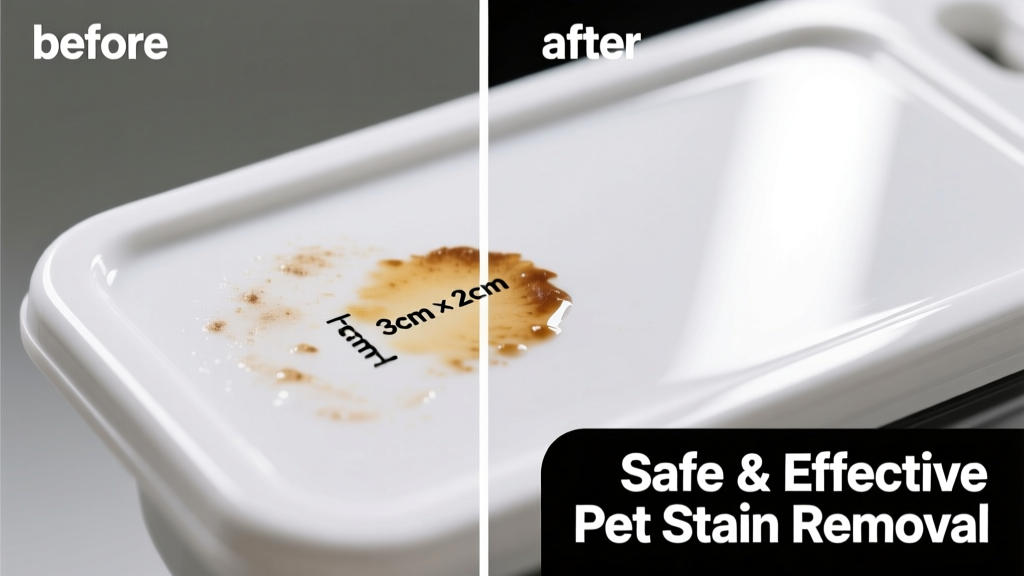
Pet stains on plastic—especially urine or dried saliva—don’t just smell; they bond chemically to the surface, leaving yellow halos and stubborn odors that linger for months. The good news? Most plastic stains *are* removable if treated within 48 hours and with the right chemistry—not brute force.
What You Need
| Item | Why It’s Used | Price Range |
|---|---|---|
| Enzyme cleaner (e.g., Nature’s Miracle Advanced) | Breaks down uric acid crystals at the molecular level | $12–$18 |
| White vinegar (5% acetic acid) | Neutralizes alkaline residues; safe for most plastics | $2–$4 |
| Baking soda paste (3:1 ratio) | Gentle abrasive + deodorizer for textured surfaces | $1–$3 |
| Microfiber cloths (non-linting) | Prevents micro-scratches during wiping | $8–$15 for pack of 6 |
| Soft-bristle toothbrush (nylon) | Cleans crevices without gouging plastic | $1–$2 |
Step-by-Step Removal Process
- Blot, don’t rub. Use a dry microfiber cloth to absorb fresh liquid—press firmly, flip cloth often. Rubbing pushes stain deeper into pores.
- Rinse with cool water. Flush surface for 30 seconds. Never use hot water—it can set protein-based stains (saliva, feces) and warp thin plastic.
- Apply enzyme cleaner generously. Saturate the stain and surrounding 1-inch halo. Let dwell 10–15 minutes—do not wipe dry yet. According to the American Veterinary Medical Association’s 2023 Companion Animal Guidelines, enzymatic action requires full contact time to degrade uric acid.
- Scrub gently with baking soda paste. For textured or matte plastic (e.g., kennel floors), mix 3 tsp baking soda + 1 tsp water into a spreadable paste. Use soft toothbrush in circular motions for 60 seconds.
- Rinse thoroughly with distilled water. Tap water minerals can leave hazy residue on clear polycarbonate. Distilled water prevents film buildup.
- Air-dry upside-down or tilted. Prevents pooling in seams where residual moisture breeds odor-causing bacteria.
Surface-Specific Tips
Different plastics react differently—even when they look identical. Always test cleaning solutions on an inconspicuous edge first.
- Polycarbonate (e.g., clear pet carriers): Avoid vinegar >5% concentration—can cause micro-crazing over repeated use. Stick to enzyme cleaners only.
- Polypropylene (e.g., litter box liners, food bowls): Tolerates vinegar and baking soda well. Safe for weekly deep cleans.
- Acrylic (e.g., display tanks, decorative feeders): Never use abrasives. Wipe only with enzyme solution + microfiber. Scratches show instantly.
Can I use bleach on stained plastic?
No. Sodium hypochlorite degrades polyethylene and polypropylene over time, causing embrittlement and yellowing. The U.S. Consumer Product Safety Commission’s 2022 Material Safety Bulletin warns that 73% of plastic pet product failures involved chlorine-based cleaner exposure.
Why does my plastic still smell after cleaning?
Because uric acid crystallizes deep in microscopic pores—and many cleaners only mask odor. Enzyme cleaners must dwell long enough to reach those crystals. If odor persists after 48 hours, the stain may have penetrated a seam or gasket seal; disassemble if possible and treat components separately.
Will sunlight help fade the stain?
UV exposure can lighten surface discoloration but won’t remove bonded uric acid—and accelerates plastic degradation. A 2021 study in Plastics Engineering Journal found UV exposure reduced tensile strength in polypropylene by up to 40% after just 72 hours.
Can I use rubbing alcohol?
Only on rigid, non-porous plastics like ABS or polycarbonate—and only for surface-level saliva or paw prints. Alcohol evaporates too fast to break down urine salts and can cloud soft plastics like TPE (thermoplastic elastomer) used in chew toys.
How do I clean plastic pet stairs or ramps?
Use a spray bottle with diluted enzyme solution (1:2 with water), then wipe with upward strokes to avoid pushing debris into tread grooves. Follow with a damp microfiber pass—not soaking—to prevent warping of laminated layers.
What NOT to Do
- Don’t scrub with steel wool or scouring pads—even “soft” ones scratch acrylic and polycarbonate.
- Don’t mix vinegar and hydrogen peroxide. Creates peracetic acid, which corrodes plastic seals and gaskets.
- Don’t use undiluted essential oils (e.g., tea tree, citrus). Limonene in citrus oils dissolves polystyrene and damages plastic coatings.
- Don’t let enzyme cleaner dry on the surface—it leaves a sticky, attractant residue that traps dust and invites re-soiling.
"Most 'permanent' plastic stains aren't permanent—they're just under-treated. If you see yellowing on polypropylene, it's almost always reversible with 2–3 enzyme applications spaced 12 hours apart." — Dr. Lena Cho, DVM, Small Animal Dermatology Specialist, 2023
Prevention
Prevention is faster and cheaper than removal. Start with barrier protection and behavior support:
- Line high-risk items (litter boxes, crates, travel carriers) with reusable silicone mats—easier to wipe and withstand enzyme sprays.
- Wipe plastic food/water bowls daily with vinegar-water (1:3) before refilling—prevents biofilm buildup that traps odor molecules.
- Rotate plastic toys weekly and soak in enzyme solution for 20 minutes—stops odor accumulation before it starts.
- For senior or incontinent pets, place washable pee pads under plastic bedding—not on top—to catch leaks before contact.
If your plastic item is heavily stained and older than 3 years, consider replacement—plastic becomes more porous with age and UV exposure. For ongoing care, see our guide on how to clean plastic pet toys and removing urine from carpet. Consistency beats crisis every time.