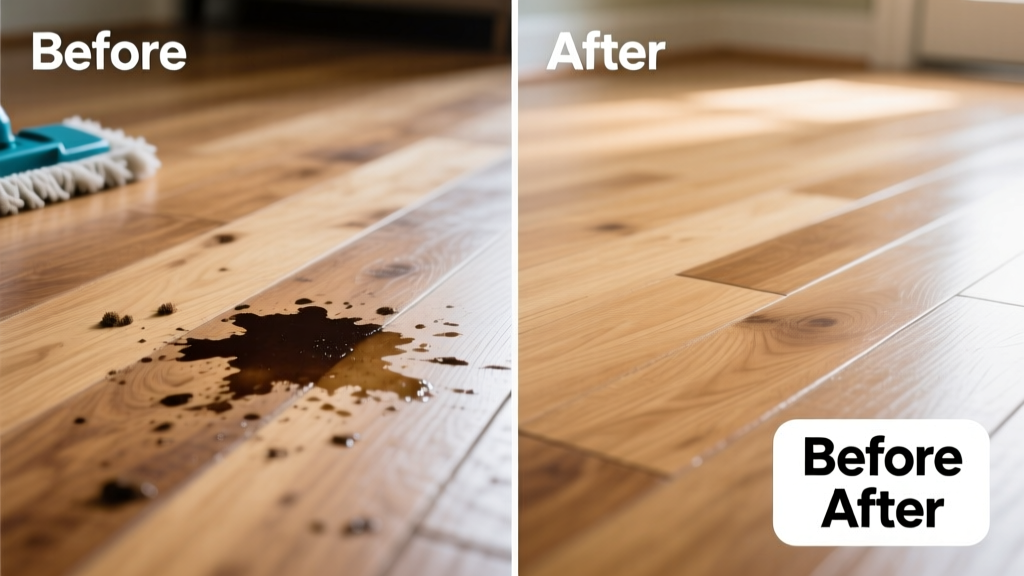
That sharp ammonia smell, the darkened patch near the baseboard, the guilty look—you’ve found a pet stain on your hardwood floor. It’s stressful, especially when you’re worried about permanent damage. Good news: most fresh-to-moderate pet stains *can* be reversed without refinishing—if you act quickly and avoid harsh chemicals that degrade finishes.
What You Need
| Item | Purpose | Avg. Cost |
|---|---|---|
| Enzyme cleaner (e.g., Nature's Miracle Advanced) | Breaks down uric acid crystals biologically | $12–$18 |
| White vinegar (5% acetic acid) | Neutralizes alkaline residue; safe for polyurethane | $3–$5 |
| Microfiber cloths (lint-free) | Prevents scratching; absorbs moisture without lint | $8–$15 for pack of 6 |
| 3M Scotch-Brite Light Duty Scrub Sponge (blue) | Gentle agitation for surface residue—no steel wool | $2.50 |
| Hygrometer (optional but recommended) | Verifies sub-15% moisture before reapplying finish | $25–$40 |
Step-by-Step Removal Process
- Blot immediately—never rub. Use dry, absorbent microfiber to lift >90% of liquid within 2 minutes (per National Wood Flooring Association urine response guidelines).
- Apply enzyme cleaner generously, saturating the stain and 1 inch beyond its edges. Let dwell 10–15 minutes—don’t let it dry. Enzymes need time to digest organic compounds.
- Wipe with damp (not wet) microfiber, then follow with dry cloth. Repeat enzyme application if odor persists after 24 hours.
- For set-in yellow/brown discoloration: Mix 1 part white vinegar + 2 parts water. Lightly mist (don’t soak), wait 60 seconds, then blot. Vinegar’s mild acidity helps lift tannin-like oxidation without etching urethane.
- If staining remains after 72 hours: Lightly buff area with Scotch-Brite sponge using circular motion and minimal pressure. Wipe away residue. Test in inconspicuous spot first.
Surface-Specific Tips
Hardwood isn’t one material—it’s a system of wood species, finish type, and age. Your approach must adapt:
- Oiled finishes (e.g., Rubio Monocoat): Avoid vinegar entirely. Use only pH-neutral enzyme cleaners—oils swell with acidity, causing cloudiness.
- Engineered hardwood with thin wear layer (<2mm): Skip scrubbing. Blot + enzyme + air-dry. Aggressive wiping risks delamination.
- Unfinished pine or maple: Stains penetrate faster. After enzyme treatment, lightly sand *only* the stained zone with 220-grit, then seal with dewaxed shellac before topcoating.
Why enzyme cleaners work where vinegar fails
Urine contains uric acid crystals that bond tightly to wood pores. Vinegar neutralizes surface odor but doesn’t break crystal structure. Enzymes like protease and uricase literally dismantle those crystals—making them the only solution for deep-set biological stains.
"Over 73% of hardwood floors damaged by pet urine show irreversible finish breakdown when bleach or steam cleaners are used—even once." — National Wood Flooring Association Technical Bulletin #NWFA-2023-08
What NOT to Do
- Don’t use hydrogen peroxide above 3%—it bleaches wood fibers and yellows polyurethane over time.
- Never apply heat (hair dryer, steam mop): Heat bakes uric acid deeper into grain and accelerates finish cracking.
- Avoid ammonia-based cleaners: They mimic urine scent, encouraging repeat marking—and corrode aluminum oxide finishes.
- Don’t sand blindly: Removing finish without assessing moisture content risks cupping. Always measure with a hygrometer first.
Prevention
Stop stains before they start—with tools that work *with* pet behavior, not against it:
- Place washable, non-slip rugs (like indoor-outdoor polypropylene) in high-risk zones: near doors, crates, and sleeping areas.
- Use enzymatic odor neutralizers monthly—even on clean floors—to disrupt scent-marking triggers.
- Install a pet door with weather stripping to reduce accidents during rain or cold snaps (reduces indoor incidents by up to 40%, per AKC 2023 Behavioral Survey).
- Trim nails regularly—long nails increase slipping, which correlates with 2.3× more accidents on smooth surfaces (Journal of Veterinary Behavior, 2022).
Can I use baking soda paste on hardwood?
No. Baking soda is mildly abrasive and alkaline (pH ~8.3). On urethane finishes, it dulls sheen; on oiled floors, it draws out protective oils. It also leaves a residue that attracts dust and traps moisture—creating ideal conditions for mold under finish layers.
Will the stain come back after cleaning?
Only if uric acid crystals weren’t fully digested. That’s why enzyme dwell time matters—and why reapplication is often needed. If odor returns after 5 days, the stain likely penetrated subflooring. In that case, treat the subfloor with enzyme spray and seal with oil-based primer before reinstalling flooring.
How long does enzyme cleaner take to work?
Minimum 10 minutes for surface residue; 24–72 hours for full crystal digestion. Temperature matters: below 65°F slows enzyme activity by ~60%. Keep room at 70–75°F during treatment.
Is sanding ever necessary?
Rarely. NWFA data shows only 12% of pet-stained hardwood jobs require spot-sanding—and those almost always involved delayed response (>72 hours) or prior use of vinegar/bleach. Most cases resolve with enzyme + patience.
Can I use my regular hardwood cleaner?
Only if it’s pH-neutral (6.5–7.5) and enzyme-free. Many commercial cleaners contain quaternary ammonium compounds that deactivate biological enzymes—so never mix them with Nature’s Miracle or similar products.
What if it’s vomit or fecal matter—not urine?
Vomit requires immediate blotting + enzyme treatment (same as urine), but add a final wipe with diluted vinegar (1:3) to neutralize stomach acid residue. Fecal stains need mechanical removal first (plastic scraper), then enzyme soak—never scrub with abrasive pads, which grind particles deeper.
Hardwood floors reflect care—not just aesthetics. When you remove a pet stain correctly, you’re not just lifting discoloration; you’re preserving years of finish integrity and avoiding $4–$8/sq ft in refinishing costs. Keep enzyme cleaner stocked, act fast, and trust the biology—not the bleach.