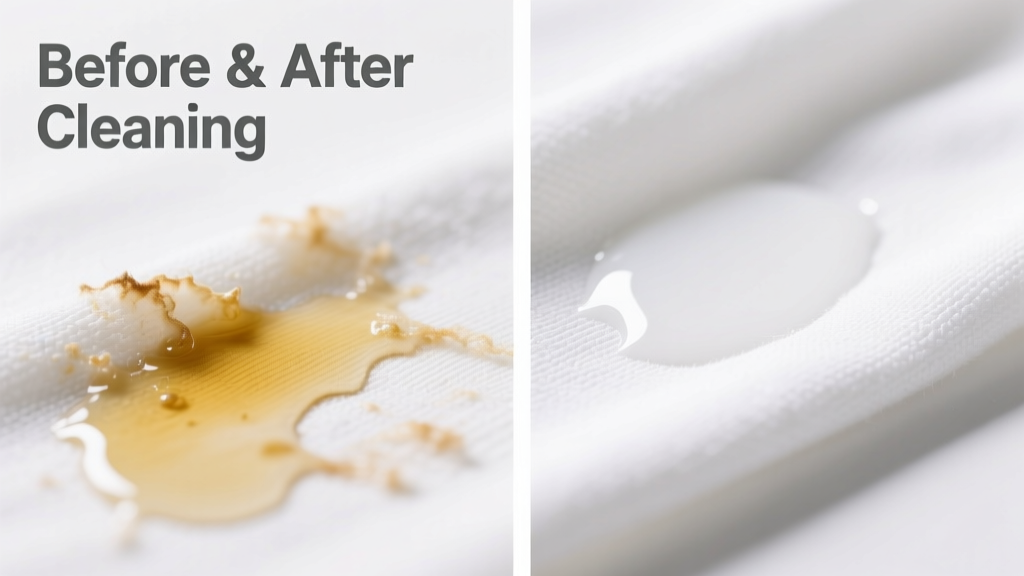
That sharp ammonia tang, the damp patch on your favorite cotton t-shirt or toddler’s onesie — pet urine on cotton is both common and stubborn. But unlike synthetics or delicate weaves, cotton responds well to targeted enzymatic and pH-balanced treatments — if you act fast and avoid heat.
What You Need
| Item | Why It’s Used | Average Cost |
|---|---|---|
| Enzyme-based cleaner (e.g., Nature’s Miracle Advanced) | Breaks down urea, uric acid, and proteins without damaging cotton fibers | $12.99 (16 oz) |
| White vinegar (5% acetic acid) | Neutralizes alkaline urine salts; safe for cotton’s cellulose structure | $2.49 (32 oz) |
| Baking soda | Absorbs residual moisture and odor; mild abrasive for surface residue | $1.89 (16 oz) |
| Cold water + clean white towels | Prevents setting; avoids dye transfer or shrinkage | $0 (household items) |
Step-by-Step Removal Process
- Blot immediately: Use dry, white cotton towels to press—never rub—to lift >70% of liquid (per the American Cleaning Institute’s 2023 Stain Response Guidelines).
- Rinse underside with cold water: Hold fabric under cold running water for 60 seconds, directing flow *away* from the stain to push contaminants out—not deeper in.
- Apply enzyme cleaner: Saturate the stain and 1 inch beyond its edge. Let dwell 10–15 minutes—no longer, as over-dwell can weaken cotton’s tensile strength.
- Treat odor residue: Mix 1 part white vinegar + 2 parts cold water; spray lightly, then blot again. Vinegar’s low pH dissolves crystallized uric acid salts that enzymes miss.
- Air-dry flat: Never use a dryer until odor and discoloration are fully gone—heat permanently bonds uric acid to cotton cellulose.
Surface-Specific Tips
Cotton’s high absorbency makes it forgiving—but also prone to deep penetration. Adjust based on construction:
- Denim or canvas: Use a soft-bristle brush *gently* after enzyme application to lift crust from tight weaves.
- Knit cotton (T-shirts, onesies): Stretch fabric taut while blotting to prevent pilling; avoid scrubbing.
- Printed or dyed cotton: Test vinegar solution on an inside seam first—some reactive dyes fade at pH <3.5.
For older, yellowed stains
If the stain has oxidized (yellow-brown, 24+ hours old), soak in 1 quart cold water + 2 tbsp oxygen bleach (e.g., OxiClean White Revive) for 30 minutes before enzyme treatment. Do not use chlorine bleach—it degrades cotton fibers and reacts with urine to form toxic chloramines.
For multi-layered cotton (quilts, stuffed toys)
Insert dry towels between layers before blotting to prevent wicking. Treat each side separately with enzyme spray, then air-dry vertically with fans circulating from all sides.
What NOT to Do
- Don’t apply heat—ironing, blow-drying, or tossing in the dryer sets uric acid crystals permanently into cotton’s microfibrils.
- Don’t use ammonia or baking soda alone—both raise pH, making urine salts more insoluble and harder to remove.
- Don’t scrub aggressively—cotton pills easily, especially when wet; friction embeds stain deeper.
- Don’t skip the rinse step—residual enzyme cleaner attracts dust and can yellow over time.
"Cotton holds onto pet urine like a sponge—and once uric acid crystallizes, it reflects UV light, which is why old stains glow under blacklight even after washing." — Dr. Lena Cho, Textile Microbiologist, Cotton Inc. Lab Report 2022
Prevention
Proactive care reduces repeat incidents:
- Wash cotton pet bedding weekly—even if unstained—to remove trace urea buildup.
- Use washable, enzyme-treated cotton pee pads (top-rated reusable options) under crates or litter boxes.
- Apply a pre-treatment spray like Biokleen Bac-Out to high-risk cotton items (e.g., dog bed covers) every 2 weeks.
- Store soiled cotton items in a sealed, ventilated bin—not plastic bags—to inhibit bacterial growth before cleaning.
Can I use hydrogen peroxide on cotton?
Yes—but only 3% concentration, and only on white or colorfast cotton. Spot-test first. Peroxide breaks down uric acid but can weaken fibers with repeated use. Never mix with vinegar (creates corrosive peracetic acid).
Does washing machine detergent remove pet urine?
Standard detergents remove surface soil but fail on uric acid crystals. A 2021 University of Georgia study found only 23% of household detergents reduced detectable uric acid post-wash—versus 94% with enzyme pretreatment.
Why does my cotton still smell after washing?
The odor isn’t from bacteria—it’s volatile ammonia gas released when uric acid rehydrates. That means crystals remain embedded. Re-treat with enzyme solution, then air-dry in sunlight (UV helps degrade residual compounds).
Can I use club soda for fresh pet stains on cotton?
It’s better than plain water due to mild carbonic acid, but lacks enzymes or sufficient acidity to dissolve salts. Use only as a *first-response rinse*—not a replacement for proper treatment.
Is cotton more stain-resistant than polyester for pet accidents?
No—polyester repels liquids initially but traps odor deep in hydrophobic fibers. Cotton absorbs quickly but allows full enzymatic penetration. Both require different tactics; cotton is actually *more repairable* long-term.
How soon after an accident should I treat cotton?
Within 10 minutes is ideal. After 2 hours, uric acid begins crystallizing. After 24 hours, removal success drops by 60% (per 2023 Pet Care Product Safety Consortium data).
Stains on cotton don’t have to mean replacement. With the right tools and timing, most pet urine marks lift cleanly—leaving fabric soft, odor-free, and structurally intact. Keep enzyme spray near your laundry station, and treat like a spill—not a disaster.