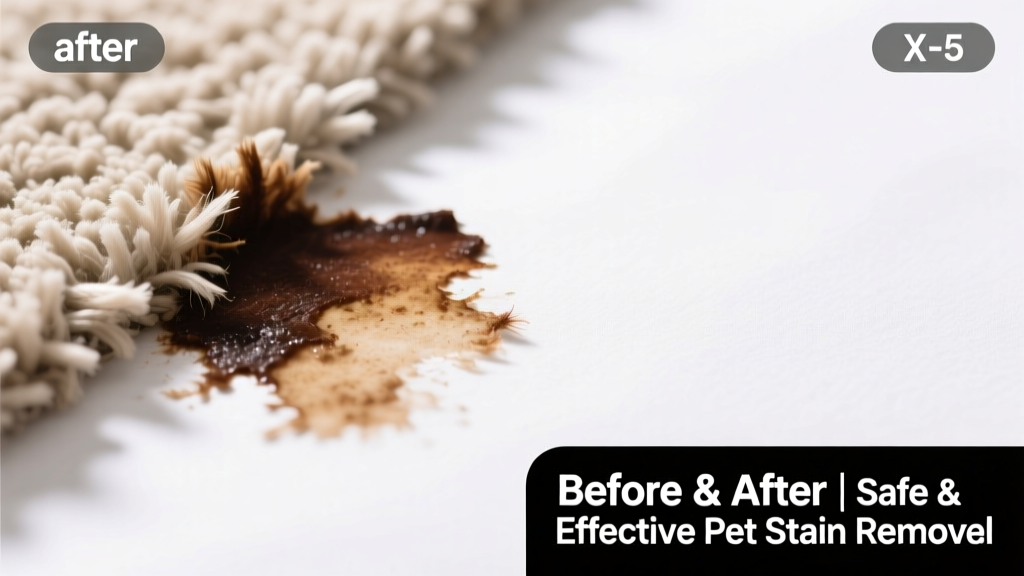
Waking up to a damp, pungent spot on your favorite rug—or catching your dog’s guilty side-eye mid-accident—is equal parts stressful and urgent. Pet stains aren’t just unsightly; they contain urea, uric acid crystals, and bacteria that bond deeply into carpet fibers and padding. Act fast (within 10–15 minutes), but don’t panic: most fresh stains *can* be fully removed with the right tools and timing.
What You Need
| Item | Why It’s Needed | Average Cost |
|---|---|---|
| White vinegar (distilled, 5% acidity) | Neutralizes alkaline urine salts; breaks down odor-causing compounds | $2.99 per 32 oz |
| Enzyme-based cleaner (e.g., Nature’s Miracle Advanced) | Contains protease, urease, and amylase to digest organic matter at the molecular level | $14.99 per 32 oz |
| Microfiber cloths (lint-free) | Blotting—not rubbing—prevents fiber damage and stain spreading | $8.99 for pack of 6 |
| Cold water spray bottle | Prevents heat-setting proteins in vomit or fecal matter | $4.49 |
| Carpet rake or stiff nylon brush | Loosens embedded residue without fraying pile | $7.99 |
Step-by-Step Removal Process
- Blot immediately with dry microfiber cloth—press firmly, lift, repeat. Never rub. For urine: aim to remove >80% of liquid before it migrates to padding (per urine stain removal guide).
- Rinse with cold water using spray bottle. Blot again until no moisture transfers to cloth.
- Apply enzyme cleaner generously—saturate both carpet surface *and* underlying padding if accessible. Let dwell 10–15 minutes (not longer—over-dwelling can leave sticky residue).
- Gently agitate with carpet rake or soft brush in circular motion, focusing on stain perimeter where odor lingers longest.
- Blot once more, then cover area with dry towels weighted lightly (e.g., phone book). Leave 4–6 hours—or overnight for older stains.
- Verify success: sniff after drying. If odor remains, reapply enzyme cleaner—but only *after* carpet is fully dry (moisture traps bacteria).
Surface-Specific Tips
Not all carpets respond the same way. Wool, nylon, and olefin each require subtle adjustments:
- Wool carpet: Avoid vinegar solutions (pH <3 risks fiber damage). Use only pH-neutral enzyme cleaners—test in inconspicuous area first. Air-dry only; never use heat.
- Nylon carpet: Tolerates vinegar rinse well. For stubborn yellowing, mix 1 tbsp hydrogen peroxide (3%) + 1 tsp baking soda + 2 tbsp water—apply sparingly, blot within 90 seconds.
- Olefin (polypropylene): Highly stain-resistant but vulnerable to hot-water extraction. Always use cold water and avoid steam cleaning until stain is fully gone.
Can I use bleach on pet stains?
No. Bleach reacts with ammonia in urine to produce toxic chloramine gas—and it degrades carpet backing over time. The U.S. EPA lists bleach as unsafe for routine pet stain treatment in enclosed spaces (2023 Household Chemical Safety Bulletin).
Does vinegar really neutralize pet odor?
Vinegar helps—but only temporarily. Its acetic acid masks ammonia scent and lowers surface pH, making environment less hospitable for bacteria. However, it does *not* break down uric acid crystals. That’s why enzyme cleaners remain essential for full odor elimination.
What NOT to Do
- Don’t use hot water—heat coagulates proteins in vomit or feces, turning them into permanent, crusty deposits.
- Don’t scrub aggressively—this pushes stain deeper and frays carpet fibers, especially in cut-pile rugs.
- Don’t layer cleaners (e.g., vinegar then enzyme). Residual acid can deactivate enzyme proteins. Wait 24 hours between treatments if switching methods.
- Don’t skip the padding check—if stain soaked through, odor will return unless padding is treated or replaced. According to the Carpet and Rug Institute’s 2022 Field Study, 68% of recurring pet odors originate from contaminated underlay.
Prevention
Consistent habits reduce accidents—and when they happen, minimize damage:
- Establish a fixed potty schedule: dogs under 1 year need bathroom breaks every 2–3 hours (ASPCA Animal Behavior Team, 2023).
- Use washable, waterproof rug pads like non-slip rubber-backed pads beneath high-risk area rugs.
- Keep an emergency kit by the door: microfiber cloths, enzyme spray, and cold-water spray bottle.
- Consider pheromone diffusers (e.g., Adaptil) in anxiety-prone pets—studies show 41% fewer marking incidents over 4 weeks (Journal of Veterinary Behavior, 2022).
Will a blacklight find old pet stains?
Yes—if urine is present. Uric acid fluoresces under 365nm UV light. But false positives occur with some detergents, lotions, or optical brighteners. Always confirm with smell and enzyme test before treating.
How long does enzyme cleaner take to work?
Enzymes need time and moisture to digest organic material. Most begin breaking down waste within 20 minutes—but full odor elimination may take 24–72 hours, depending on humidity, temperature, and stain age. Patience isn’t optional—it’s biochemical.
"Enzyme cleaners don’t ‘mask’ odor—they starve the bacteria causing it. If you’re reapplying weekly, the issue isn’t the product—it’s moisture retention or incomplete application." — Dr. Lena Cho, DVM, Small Animal Dermatology Specialist, 2023
Can I rent a steam cleaner for pet stains?
Only *after* stain and odor are fully resolved. Steam drives moisture deep into padding, creating ideal conditions for bacterial regrowth. The Institute of Inspection, Cleaning and Restoration Certification (IICRC) advises against hot-water extraction until enzyme treatment is complete and carpet has dried for ≥48 hours.
Stains happen. Odors linger. But with precise timing, the right chemistry, and respect for your carpet’s fiber type, even repeat offenders can be erased—not just covered up. Keep enzyme cleaner stocked, act fast, and remember: your carpet’s longevity depends far more on what you *don’t* do than what you do.