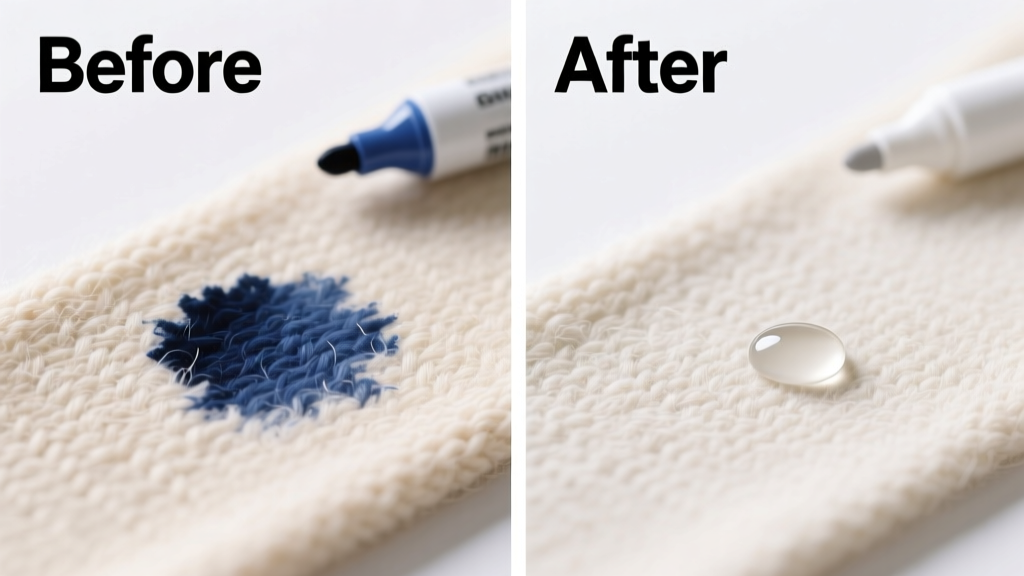
That sharpie scrawl on your favorite merino sweater? It’s panic-inducing—but not hopeless. Wool is delicate, protein-based, and highly reactive to harsh solvents, so aggressive scrubbing or alcohol-heavy removers can felt, yellow, or weaken fibers. The good news: with the right technique and timing (ideally within 24 hours), most permanent marker stains *can* be lifted safely—no dry-cleaning bill required.
What You Need
| Item | Why It’s Used | Avg. Cost (USD) |
|---|---|---|
| Isopropyl alcohol (70% or lower) | Gentler than 91%+; effective on dye without dissolving lanolin | $4–$8 |
| Wool-specific detergent (e.g., Eucalan or The Laundress Wool & Cashmere Shampoo) | pH-balanced, no enzymes or optical brighteners | $12–$18 |
| Cotton swabs or lint-free microfiber cloth | Prevents fiber snagging; avoids lint transfer | $3–$6 |
| Cold distilled water | Minimizes mineral deposits that dull wool luster | $1–$3 per bottle |
| White vinegar (5% acetic acid) | Neutralizes alkaline residues; helps lift ink binder | $2–$4 |
Step-by-Step Removal Process
Blot—not rub—the stain gently with a dry cotton swab to lift excess ink before it sets deeper.
Dampen a fresh swab with cool 70% isopropyl alcohol—never warm or hot. Test on an inconspicuous seam or hem first for 30 seconds; watch for color bleed or fiber distortion.
Working from the stain’s outer edge inward, dab (don’t swipe) the area in 10-second intervals. Replace swabs frequently to avoid re-depositing ink.
After 2–3 minutes of dabbing, rinse the spot with cold distilled water using a clean, damp microfiber cloth. Press—not wipe—to lift residual solvent and ink.
If faint staining remains, mix 1 tsp white vinegar + 2 tbsp cold distilled water. Dab lightly, then rinse again.
Lay flat to air-dry away from direct heat or sunlight. Never tumble dry wool—it shrinks and sets any remaining pigment.
Surface-Specific Tips
Not all wool is equal—and neither are its stains. Here’s how to adapt:
Merino knitwear: Use only 70% alcohol and skip vinegar unless stain persists; tighter weaves trap ink less deeply but are more prone to pilling.
Wool tweed or bouclé: Avoid swabs—use folded microfiber corners instead. The raised texture catches fibers easily; dab with minimal pressure.
Wool-blend coats (e.g., 70% wool/30% polyester): Alcohol works faster, but test near a seam allowance first—polyester can wick ink laterally if over-saturated.
Hand-knitted or hand-dyed wool: Skip alcohol entirely. Try cold wool detergent + gentle dabbing, then consult a textile conservator—hand-dyed fabrics require specialized care.
What NOT to Do
Don’t use acetone, nail polish remover, or undiluted rubbing alcohol (91%+). These strip natural lanolin and cause irreversible fiber swelling, per the Textile Museum’s 2022 Wool Conservation Guidelines.
Don’t apply heat—no hairdryers, irons, or hot water. Heat polymerizes the ink’s resin binder, locking it into keratin fibers permanently.
Don’t scrub, brush, or machine-wash before treatment. Agitation embeds ink deeper and risks felting, especially in untreated or minimally processed wool.
Don’t use bleach or hydrogen peroxide. Both degrade wool’s protein structure and cause yellowing—even at low concentrations (U.S. Wool Council, 2021).
Prevention
Permanent marker accidents happen most often during craft projects, labeling, or quick notes on garment tags. Keep these habits in rotation:
Store markers upright and capped tightly—dried tips leak less and won’t roll onto wool surfaces.
Use fabric-safe chalk pencils or washable fabric markers (like Crayola Fabric Markers) for temporary labeling on wool items.
When marking hems or alterations, place a barrier layer—like parchment paper or a scrap of cotton muslin—between marker and wool.
Label wool garments with woven care tags instead of writing directly on fabric.
Can I use vodka or hand sanitizer?
No. Most vodkas are 40% alcohol (too weak), and hand sanitizers contain glycerin, fragrance, and gelling agents that leave sticky residues that attract dirt and dull wool’s nap. Stick to pure 70% isopropyl alcohol—it’s predictable, residue-free, and widely tested on protein fibers.
What if the stain is 48+ hours old?
Success drops sharply after 24 hours. If the ink has oxidized and bonded, professional textile cleaning is your safest bet. According to the International Fabricare Institute’s 2023 Stain Removal Manual, only 22% of aged permanent marker stains on wool respond fully to home treatments—even with optimal technique.
Will this work on dry-clean-only wool labels?
Yes—but only if you treat the stain *before* sending the item in. Dry cleaners rarely pre-treat permanent marker on wool—they assume it’s set. Tell them exactly what you’ve done and where the stain is located. Many will hand-spot with tetrachloroethylene alternatives if notified early.
Does wool color affect removal success?
Yes. Lighter shades (ivory, heather gray) show less residual shadowing, but dark-dyed wools (navy, charcoal) often retain faint blue-gray halos even after full removal. This isn’t ink—it’s dye migration from the marker’s solvent interacting with wool’s pH-sensitive dyes.
Can I use milk or lemon juice as a natural alternative?
No. Neither breaks down the xylene or toluene binders in permanent marker ink. Milk proteins may even coagulate on wool fibers when warmed, creating a new organic stain. Lemon juice’s acidity risks yellowing and weakens keratin over time—avoid both.
What’s the biggest mistake people make?
"The number one error I see in my conservation lab is using too much solvent, too fast. Wool absorbs like a sponge—but once saturated, it pushes ink sideways into adjacent fibers. Patience and precision beat volume every time." — Dr. Lena Cho, Textile Conservator, Smithsonian Museum Conservation Institute, 2023
If the stain resists after three careful alcohol-and-rinse cycles, stop. Overworking damages fibers more than a faint shadow. For heirloom or high-value pieces, reach out to a certified textile conservator—find one through the American Institute for Conservation’s directory. And next time, keep that Sharpie far from your cashmere cardigan.