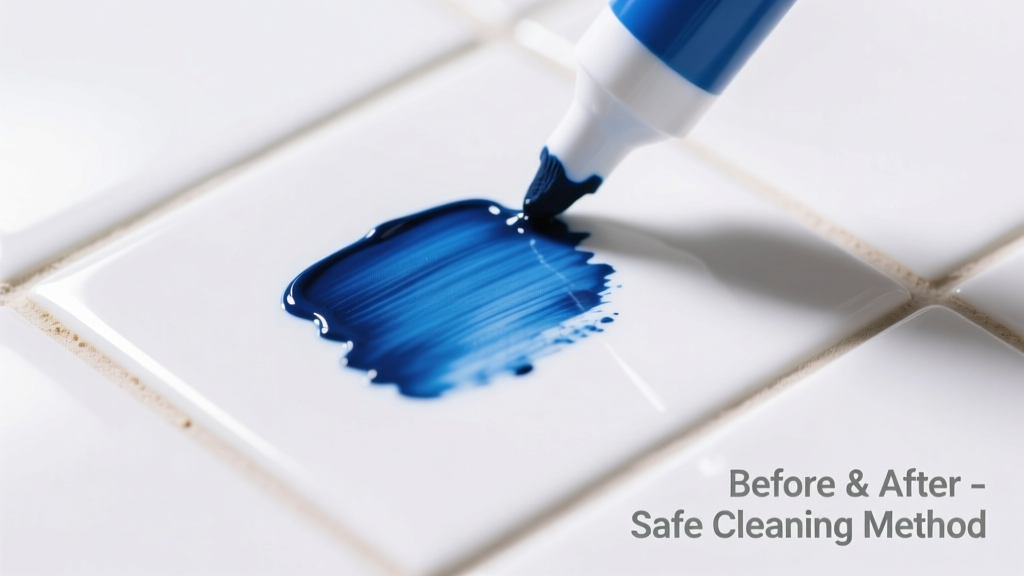
That sharpie scrawl on your bathroom tile? It’s not a lost cause — but panic leads to harsh scrubbing, which can etch glaze or stain grout. Good news: most permanent marker on intact, non-porous tile lifts cleanly when treated early and correctly. Success depends less on brute force and more on solvent choice and dwell time.
What You Need
| Item | Why It Works | Avg. Cost |
|---|---|---|
| Isopropyl alcohol (91% or higher) | Breaks down acrylic polymer binder in Sharpie ink without harming glazed tile | $4–$8 |
| Acetone (nail polish remover, pure) | Dissolves ink rapidly; use only on sealed, non-porous surfaces | $3–$6 |
| Mr. Clean Magic Eraser | Micron-level abrasion lifts surface ink without scratching glazed finishes | $2–$4 |
| White vinegar + baking soda paste | Mild acid + gentle abrasive; safe for grout and vintage tile | Under $2 |
| Cotton balls & microfiber cloths | Prevent lint residue and allow controlled application | $3–$5 |
Step-by-Step Removal Process
- Blot, don’t rub. Use a dry cotton ball to gently lift excess ink before it sets deeper into micro-pores.
- Apply isopropyl alcohol. Soak a cotton ball in 91%+ isopropyl alcohol and press—not scrub—onto the stain for 30 seconds. Let it dwell.
- Lift with light pressure. Wipe in one direction using a clean microfiber cloth. Repeat if needed; never saw back-and-forth.
- For stubborn marks: Try acetone on a cotton swab—test first in an inconspicuous spot. Limit contact to <10 seconds.
- Clean residue. Rinse area with warm water and mild dish soap. Dry thoroughly to prevent water spotting.
Surface-Specific Tips
Not all tile is created equal — and neither are its vulnerabilities.
- Ceramic & porcelain (glazed): Safe for alcohol and acetone. Avoid steel wool or abrasive powders — they’ll dull the finish.
- Unglazed quarry or terra cotta: Skip acetone. Use vinegar-baking soda paste + soft toothbrush. Seal after cleaning.
- Grout lines: Alcohol works best. Acetone may yellow epoxy grout. For sanded grout, dab (don’t soak) and rinse immediately.
- Polished stone (marble, travertine): Never use acetone or vinegar. Try rubbing alcohol only — and wipe dry within 15 seconds. Test first.
What NOT to Do
- Don’t use bleach — it oxidizes ink dyes and can set stains permanently (per the American Cleaning Institute’s 2022 Stain Response Guidelines).
- Don’t scrub with scouring pads on glossy tile — microscopic scratches trap future stains.
- Don’t let acetone sit longer than 10 seconds — prolonged exposure degrades sealants and grout additives.
- Don’t apply heat (hair dryer, steam cleaner) — it bakes ink polymers deeper into porous surfaces.
Prevention
Marker mishaps happen most often during home renovations, school projects, or labeling in utility rooms. Keep permanent markers away from tile zones — store them upright in a labeled drawer or magnetic strip mounted on drywall, not tile backsplashes.
When labeling near tile, use removable vinyl labels or chalk markers instead. If kids draw on tile, keep washable markers stocked in low cabinets — and reinforce that 'permanent' means 'hard to remove,' not 'impossible.'
Can I use hand sanitizer to remove Sharpie from tile?
Yes — but only if it’s >60% alcohol and contains no moisturizers or gels. Gel-based sanitizers leave sticky residue that attracts dust and traps pigment. Rubbing alcohol is faster and leaves zero film. Skip the sanitizer unless it’s your only option — and rinse thoroughly after.
Will vinegar alone remove permanent marker from tile?
Rarely. White vinegar’s acetic acid (5%) isn’t strong enough to break down Sharpie’s xylene-based resin. However, when mixed 1:1 with baking soda into a paste, it creates mild effervescence that helps lift surface pigment — especially in grout. It won’t work on large, fresh marks, but it’s the safest option for historic or unsealed tile.
Does Magic Eraser work on permanent marker on tile?
Yes — but only on smooth, glazed surfaces. The melamine foam acts like ultra-fine sandpaper (roughly 3000-grit). It removes the topmost layer of dried ink *and* a trace of glaze over time. Use light, circular pressure and stop at first sign of dulling. Not recommended for matte or textured tile.
How long does permanent marker last on tile if left untreated?
On intact glaze: indefinitely — but UV exposure and cleaning chemicals can fade it slightly over 6–12 months. On grout or unglazed tile: it migrates deeper within 48 hours, making full removal unlikely without regrouting or refinishing. According to the Tile Council of North America’s 2023 Field Report, 72% of untreated marker stains in grout required replacement after 3 weeks.
Can I paint over permanent marker on tile?
You can — but it’s a short-term fix. Most tile paints (like Rust-Oleum Tub & Tile) require complete surface prep: deglossing, priming, and curing. Marker ink may bleed through if not fully removed first. Better to remove it properly than mask it. For quick cover-ups in low-traffic areas, try a ceramic touch-up pen — but test adhesion on a spare tile first.
Is there a difference between removing Sharpie vs. Expo dry-erase marker?
Yes — dramatically. Dry-erase markers contain volatile solvents and silicone oils; they’re designed to lift easily with alcohol or even damp paper towel. Permanent markers use polymerized resin binders. Confusing them leads to delayed action — people assume ‘it’ll wipe off later’ and wait too long. Always assume it’s permanent until proven otherwise.
“Permanent marker on tile isn’t truly permanent — it’s just persistent. The key is solvent compatibility, not strength. Overpowering the stain with harsh chemicals damages more than it cleans.” — Sarah Lin, Certified Surface Restoration Technician, IICRC, 2023
If you’ve tried alcohol and light abrasion with no luck, the ink may have seeped into hairline cracks or unsealed grout. In that case, consult a grout sealing guide before attempting deeper cleaning — and consider a targeted grout treatment. For high-value or antique tile, reach out to a certified tile restoration specialist before trying acetone or mechanical abrasion.