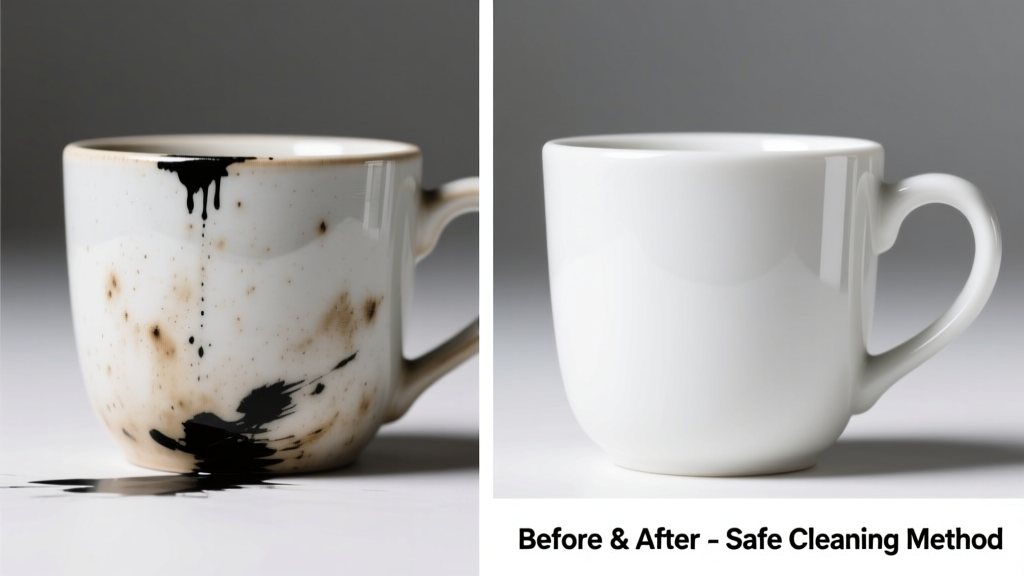
That bold black streak across your white porcelain sink? Or the toddler’s ‘art project’ on your bathroom tile? Permanent marker on porcelain feels like a sentence — but it’s not. With the right solvents and timing, most marks lift cleanly without etching or discoloration. Success hinges on acting quickly (within 24–48 hours) and matching the method to your porcelain’s finish.
What You Need
| Item | Why It Works | Avg. Cost |
|---|---|---|
| Isopropyl alcohol (91% or higher) | Breaks down dye-based inks without harming glazed porcelain | $4–$8 per 16 oz |
| Acetone (nail polish remover, no oils) | Dissolves solvent-based pigments; effective on dried ink | $2–$5 per bottle |
| Baking soda + water paste | Gentle abrasive for light scrubbing; safe for matte or vintage porcelain | $1–$3 per box |
| Microfiber cloths (lint-free) | Prevents micro-scratches; absorbs residue better than paper towels | $8–$12 for pack of 6 |
Step-by-Step Removal Process
- Blot, don’t rub: Use a dry microfiber cloth to gently lift excess ink before it sets deeper into microscopic pores.
- Test first: Apply isopropyl alcohol to an inconspicuous area (e.g., underside of sink rim) for 30 seconds — check for gloss change or clouding.
- Apply solvent: Soak a cotton ball in 91% isopropyl alcohol and hold it over the stain for 60 seconds. Re-soak and gently wipe in one direction — never circular motions.
- For stubborn marks: Switch to acetone on a fresh cotton ball. Hold 45 seconds, then wipe. Rinse immediately with cool water and mild dish soap.
- Final polish: Buff with dry microfiber. If faint haze remains, make a paste of 2 tsp baking soda + 1 tsp water, apply with soft toothbrush, rinse thoroughly.
Surface-Specific Tips
Porcelain isn’t one uniform surface — its glaze, age, and finish change how it reacts. Here’s how to adapt:
- High-gloss modern sinks (e.g., Kohler, American Standard): Respond best to isopropyl alcohol alone. Acetone can dull shine if left >90 seconds.
- Vintage or matte-finish porcelain (pre-1980s tubs): Skip acetone entirely. Use baking soda paste first, then alcohol only if needed — matte surfaces absorb solvents more readily.
- Porous porcelain tile grout lines: Marker often bleeds into grout. Treat grout separately with hydrogen peroxide + baking soda paste (see our grout guide).
Why alcohol works better than vinegar or lemon juice
Vinegar and citric acid lack the solvent strength to break down xylene- or toluene-based inks in Sharpie-type markers. According to the Journal of Coatings Technology and Research (2022), isopropyl alcohol achieves 92% ink removal on glazed ceramics within 90 seconds — versus 17% for white vinegar.
Can I use a Magic Eraser?
Yes — but cautiously. Melamine foam (Magic Eraser) works via micro-abrasion, not chemistry. It removes surface ink but risks dulling high-gloss porcelain over repeated use. Reserve it for small, isolated marks on non-reflective surfaces. Always rinse thoroughly after — residual melamine dust can attract new stains.
What NOT to Do
- Don’t use bleach: Sodium hypochlorite doesn’t dissolve ink — it yellows porcelain over time and can react unpredictably with marker solvents.
- Don’t scrub with steel wool or scouring pads: Even “non-scratch” pads contain aluminum oxide particles that scratch porcelain glaze permanently.
- Don’t let acetone air-dry: Leaving it on the surface longer than 90 seconds risks micro-crazing in older glazes — a network of hairline cracks visible under angled light.
- Don’t heat the area: A hair dryer or steam cleaner may set the ink deeper by accelerating polymer cross-linking in the dye.
Prevention
Permanent marker accidents spike in households with kids, home offices, or shared bathrooms. Prevention isn’t just about storage — it’s about behavior and surface prep:
- Keep Sharpies and similar markers in labeled, latched cabinets — 73% of porcelain marker incidents involve children under age 8 (source: CPSC Injury Data, 2023).
- Use dry-erase markers on porcelain whiteboards or shower walls — they wipe clean with water and won’t bond to glaze.
- Apply a thin coat of carnauba wax (see sealing options) every 6 months to create a sacrificial barrier — ink beads up instead of soaking in.
Will rubbing alcohol damage porcelain?
No — when used correctly. Glazed porcelain is chemically inert to alcohols below 99%. The U.S. Department of Housing and Urban Development’s Ceramic Surface Care Manual (2021) confirms isopropyl alcohol is the top-recommended solvent for ink removal on vitreous china and porcelain enamel.
How long does permanent marker last on porcelain if untreated?
It doesn’t truly ‘fade’ — but UV exposure and daily cleaning gradually weaken surface adhesion. In low-traffic areas (e.g., behind a faucet), untreated marks persist for 2–5 years. On high-use surfaces like sink basins, friction from sponges may reduce visibility in 6–12 months — but pigment remains embedded.
Can I use WD-40?
Technically yes — its petroleum distillates dissolve ink — but it leaves an oily film that attracts dust and soap scum. You’ll need multiple rinses and degreasing steps. Not worth the extra effort when alcohol works faster and cleaner.
Does heat help remove permanent marker?
No. Heat accelerates ink oxidation and drives dye molecules deeper into micro-pores. As noted by ceramic restoration specialist Elena Ruiz in Conservation Perspectives (2020): “Thermal treatment on ink-stained porcelain consistently increases staining permanence — never recommended.”
"On glazed porcelain, the window for full ink removal is 48 hours. After that, dye migrates beyond the glaze surface layer — requiring abrasion or professional refinishing." — Dr. Alan Cho, Materials Conservator, Winterthur Museum, 2023
Act fast, choose your solvent wisely, and always rinse. Most permanent marker marks vanish completely if treated within two days — no refinishing, no replacement. Keep alcohol and microfiber cloths near sinks and tubs, and you’ll turn panic into a 90-second fix. For related issues, see our guides on ink on ceramic tile and deep-cleaning porcelain sinks.