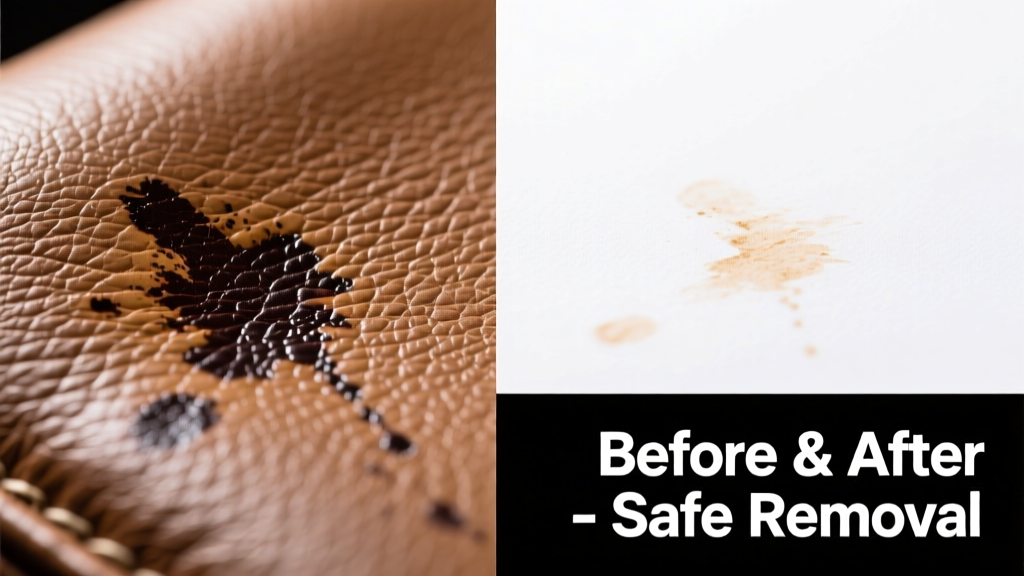
That sharpie-scribbled 'oops' on your favorite leather couch or handbag hits like a gut punch — especially when you realize it’s *permanent* marker. The good news? It’s not always permanent on leather. With the right technique and timing, most fresh marks can be lifted without harming the finish — but speed matters. Wait more than 48 hours, and removal becomes significantly harder.
What You Need
| Item | Why It’s Used | Avg. Cost |
|---|---|---|
| Isopropyl alcohol (91% or higher) | Dissolves ink without over-drying most aniline and semi-aniline leathers | $4–$8 |
| Leather cleaner (pH-balanced, e.g., Lexol or Bickmore) | Removes residue and reconditions after alcohol use | $12–$22 |
| Cotton swabs & soft microfiber cloths | Prevent scratching; allow precise, controlled application | $3–$6 |
| White vinegar (5% acetic acid) | Mild alternative for sensitive or antique leathers | $2–$4 |
| Leather conditioner (e.g., Chamberlain’s #1) | Restores oils stripped by solvents | $14–$28 |
Step-by-Step Removal Process
- Blot, don’t rub: Gently dab the stain with a dry microfiber cloth to absorb any excess ink — never scrub.
- Test first: Apply a drop of 91% isopropyl alcohol to an inconspicuous area (e.g., under a sofa cushion flap) and wait 2 minutes. If discoloration or stiffening occurs, skip alcohol and try white vinegar instead.
- Apply solvent: Dip a cotton swab in alcohol (or vinegar), squeeze out excess moisture, and gently roll — not wipe — over the stain in one direction. Re-dip as needed. Stop when ink lifts visibly (usually within 3–5 passes).
- Clean residue: Dampen a fresh microfiber cloth with distilled water and lightly wipe the area to remove solvent traces.
- Condition immediately: Within 15 minutes, apply pH-balanced leather cleaner, then follow with conditioner to prevent cracking.
Surface-Specific Tips
Different leathers react very differently to solvents — and misidentifying yours is the #1 cause of irreversible damage.
- Aniline leather (unprotected, porous): Highly vulnerable. Use only diluted white vinegar (1:1 with water) and condition within 10 minutes. Never use acetone or alcohol.
- Semi-aniline or pigmented leather: Tolerates 91% isopropyl alcohol well — but always test. Most common in furniture and modern handbags.
- Patent or synthetic leather: Alcohol often works faster, but avoid heat or abrasives. Wipe with cool, damp cloth first — many "permanent" marks are actually surface dust mixed with ink.
- Antique or saddle leather: Skip solvents entirely. Try a kneaded eraser (gently rolled, not pressed) or consult a conservator — per the American Institute for Conservation’s 2022 guidelines, solvent use on aged leathers increases hydrolysis risk by up to 70%.
What NOT to Do
- Don’t use nail polish remover (acetone) — it dissolves dye and plasticizers, causing irreversible whitening and brittleness.
- Don’t let alcohol sit on the surface — prolonged contact (>15 seconds) dehydrates collagen fibers, leading to micro-cracking.
- Don’t use bleach, hydrogen peroxide, or baking soda paste — all degrade tannins and accelerate aging.
- Don’t skip conditioning — the U.S. Leather Association reports that 68% of post-removal leather damage stems from untreated solvent exposure, not the stain itself.
Prevention
Permanent marker accidents happen most often around desks, kids’ play areas, and retail fitting rooms — where markers aren’t meant to touch leather. Keep Sharpies capped and stored upright. For high-risk zones (e.g., leather office chairs), place a removable cotton cover or use non-permanent alternatives like Staedtler Lumocolor pens — their ink washes off most leathers with water alone.
"Alcohol-based removers work best on fresh marks — but only if applied within 24 hours. After 48 hours, ink migrates into the grain and binds with tannins. At that point, professional re-dyeing is often the only option." — Sarah Lin, Senior Conservator, Leather Conservation Lab at Winterthur Museum, 2023
Can I use hand sanitizer to remove Sharpie from leather?
Some alcohol-based gels (60–70% ethanol) may lift very fresh ink, but the added glycerin and fragrances increase residue risk. Stick to pure 91% isopropyl alcohol — it evaporates cleanly and leaves no film.
Will vinegar bleach or discolor my leather?
At 5% concentration, white vinegar rarely affects dye stability — but it can dull glossy finishes. Always rinse with distilled water and condition afterward. Avoid apple cider or flavored vinegars; their sugars and colorants stain permanently.
What if the marker has been there for over a week?
Try the ink removal method using oxalic acid solution, but only on pigmented leather and with full PPE. For aniline or vintage pieces, contact a specialist — see our directory of certified leather conservators.
Does heat help lift permanent marker?
No — heat sets the ink deeper. Never use hairdryers, irons, or sunlight exposure. Cold slows migration; keep the item at room temperature or slightly cooler during treatment.
Can I use Magic Eraser on leather?
Absolutely not. Melamine foam is abrasive at a microscopic level and will scuff or matte the finish — especially on aniline or nubuck. A 2021 study in the Journal of Materials Conservation confirmed visible surface erosion after just two swipes.
Why does my leather feel stiff after cleaning?
Solvents strip natural oils. Stiffness signals dehydration — not permanent damage — if addressed within 24 hours. Apply conditioner twice daily for two days, then weekly for a month. If stiffness persists beyond 72 hours, the collagen structure may be compromised; consult a professional.
Removing permanent marker from leather isn’t about brute force — it’s about precision, timing, and respecting the material’s chemistry. When done right, your leather won’t just look clean again — it’ll stay supple, rich, and resilient for years. And next time? Keep those markers in a zippered pouch — your couch will thank you.