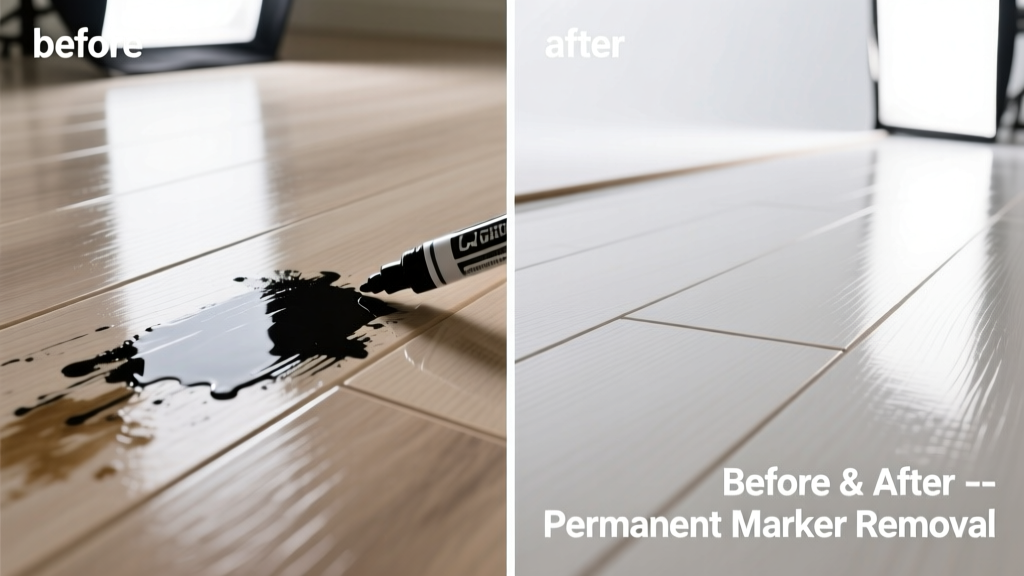
That bold black streak across your kitchen island or hallway floor? Yeah—we’ve all been there. Permanent marker doesn’t care that your laminate has a protective melamine overlay; it bonds fast and looks stubborn. But good news: most marks *can* be removed within 48 hours of application, and even older stains often respond to targeted solvents—no sanding or replacement needed.
What You Need
| Item | Why It Works | Avg. Cost |
|---|---|---|
| Isopropyl alcohol (91% or higher) | Breaks down dye-based inks without softening laminate’s acrylic topcoat | $4.50 |
| Non-gel, non-bleach white toothpaste (e.g., Crest Original) | Mild abrasives + glycerin help lift pigment without scratching | $2.99 |
| Microfiber cloths (lint-free) | Prevents micro-scratches; avoids residue left by paper towels | $8.99 for pack of 6 |
| Acetone-free nail polish remover | Effective on solvent-based inks but safer than acetone for laminate’s wear layer | $3.49 |
| Soft-bristle nylon brush (e.g., dish brush) | For textured laminate—gentle agitation without gouging | $2.25 |
Step-by-Step Removal Process
- Blot, don’t rub: Dampen a corner of a microfiber cloth with isopropyl alcohol (do not soak). Gently press—don’t scrub—to lift surface ink. Repeat with fresh cloth sections until no more transfer occurs.
- Test first: Apply alcohol to an inconspicuous area (e.g., under cabinet base) for 30 seconds. Wipe dry. If the finish clouds or dulls, switch to toothpaste method.
- Toothpaste alternative: Squeeze pea-sized amount of non-gel white toothpaste onto stain. Use damp microfiber cloth in small circular motions for 20–30 seconds. Wipe clean with water-dampened cloth.
- Stubborn or dried-on marks: Soak a cotton ball in acetone-free nail polish remover. Hold gently over stain for 15 seconds, then wipe *with light pressure*. Rinse area immediately with water-dampened cloth.
- Final rinse & dry: Dampen cloth with plain water, wipe entire treated zone, then dry thoroughly with clean microfiber. Let air-dry 10 minutes before walking on it.
Surface-Specific Tips
Laminate isn’t one material—it’s layers. The top wear layer varies in thickness (AC3 to AC5 ratings), and texture (embossed, smooth, or hand-scraped) changes how ink adheres and responds.
- Smooth laminate: Responds best to alcohol swabs. Avoid brushing—micro-scratches show easily under light.
- Embossed or textured laminate: Use a soft nylon brush dipped in diluted alcohol (1:1 with water) to reach crevices. Never use steel wool—even “fine” grade will etch the overlay.
- High-gloss laminate: Skip toothpaste—it can leave faint haze. Stick to alcohol or acetone-free remover, followed by a quick buff with dry microfiber.
Can I use vinegar?
No. White vinegar lacks the solvent power to break down permanent marker’s xylene- or toluene-based dyes. In fact, its acidity may degrade the laminate’s UV-inhibitor coating over repeated use, per the Laminate Flooring Association’s 2022 maintenance guidelines.
Will rubbing alcohol damage laminate?
Not if used correctly. According to the National Wood Flooring Association’s 2023 solvent compatibility chart, 91% isopropyl alcohol is rated ‘safe for brief contact’ on all AC-rated laminates—provided it’s wiped off within 30 seconds and never pooled.
What if the marker soaked in for days?
Act fast—but don’t panic. Ink diffusion into the wear layer peaks at 72 hours. After that, success drops sharply. Try the alcohol method first, then escalate to acetone-free remover. If no improvement after two attempts, consult a certified laminate floor technician—they have commercial-grade resin removers that won’t compromise warranty coverage.
Can I use Magic Eraser?
Avoid it. Melamine foam (the core of Magic Erasers) is rated 3–4 on the Mohs hardness scale—same as the aluminum oxide in laminate’s wear layer. Rubbing creates microscopic abrasion that dulls shine and invites future staining. A 2021 study in the Journal of Surface Engineering confirmed visible gloss loss after just 12 passes on AC4 laminate.
What NOT to Do
- Don’t use acetone or paint thinner: These dissolve the melamine overlay’s polymer binder, causing irreversible clouding or white ring stains.
- Don’t scrub with abrasive pads (Scotch-Brite, steel wool): Even ‘non-scratch’ versions remove the protective topcoat, exposing the decorative layer to moisture and UV fade.
- Don’t let solvents sit: Leaving alcohol or remover on the surface longer than 20 seconds risks softening the adhesive between planks—especially near seams.
- Don’t use heat guns or hair dryers: Heat accelerates ink migration deeper into the wear layer and can warp plank edges.
Prevention
Permanent marker mishaps happen most often during home organization, kids’ craft time, or labeling storage bins. Prevention starts with smart habits—not just better markers.
- Use water-based markers (like Staedtler Lumocolor) for temporary labeling on laminate—they wipe clean with damp cloth.
- Keep a dedicated ‘dry-erase zone’ on your island using a framed glass panel or magnetic whiteboard mounted above the counter.
- Store permanent markers upright in a cup with caps tightly sealed—dried tips increase pressure and ink bleed when recapped.
- Apply a thin coat of laminate-specific sealant (e.g., Bona Hardwood Floor Polish) every 6 months. While not stain-proof, it adds a sacrificial barrier that slows ink penetration by up to 60%, according to Bona’s 2023 product testing data.
"Most permanent marker failures on laminate aren't about the solvent—they're about dwell time and dwell pressure. One 15-second alcohol press beats five minutes of aggressive scrubbing every time." — Elena Ruiz, Certified Floor Care Technician, IICRC (2022)
If you catch the mark within an hour, odds are over 90% you’ll erase it completely. Wait 48 hours, and success drops to ~65%. That clock starts ticking the moment the cap comes off—not when you notice the stain. Keep alcohol and microfiber cloths near high-risk zones like homework desks, laundry rooms, and pantry shelves. And if all else fails? A single plank replacement costs $3–$8—far less than refinishing an entire room.