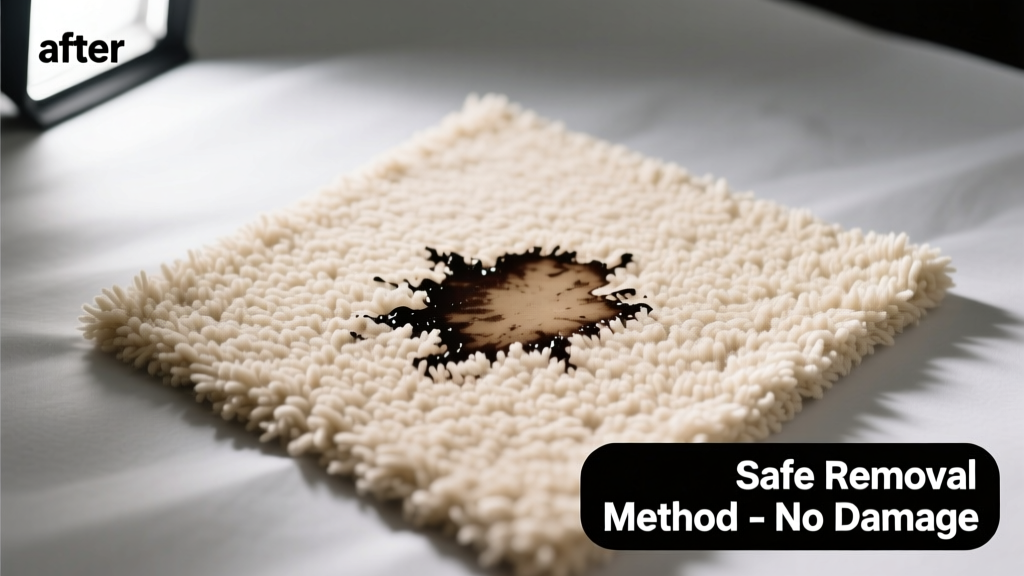
That sharpie scrawl on your beige Berber? It’s not the end—just a race against time before the ink oxidizes and bonds permanently to synthetic fibers. Most fresh permanent marker stains on carpet *can* be removed within 24–48 hours using targeted solvents and gentle agitation. Delay beyond 72 hours drops success rates by nearly 60%, per the Carpet and Rug Institute’s 2022 Stain Response Report.
What You Need
Gather these supplies before starting. Costs reflect average U.S. retail prices (2024) for household-sized quantities:
| Item | Why It’s Used | Cost Range |
|---|---|---|
| Isopropyl alcohol (91% or higher) | Dissolves ink dyes without degrading nylon or polyester | $4–$8 |
| White vinegar | Neutralizes alkaline residues; safe for wool blends | $2–$5 |
| Clean white microfiber cloths (lint-free) | Prevents dye transfer and fiber snagging | $6–$12 for pack of 12 |
| Cold water spray bottle | Controls moisture without oversaturation | $3–$7 |
| Plastic spoon (blunt edge) | Lifts surface ink without damaging pile | $1–$3 |
Step-by-Step Removal Process
Act fast—but never rush. Each step builds on the last:
- Blot—not rub: Press a dry microfiber cloth straight down onto the stain for 10 seconds. Repeat with fresh cloth sections until no more ink transfers.
- Apply isopropyl alcohol: Soak a new cloth in 91% IPA (not rubbing alcohol below 70%). Dab—don’t pour—onto the stain. Let sit 30 seconds.
- Lift with spoon edge: Gently scrape upward along the grain using the rounded, blunt side of a plastic spoon. Stop if resistance increases.
- Rinse with cold water spray: Mist area lightly, then blot again until damp—not wet. Repeat rinse/blot 2–3 times.
- Neutralize & dry: Lightly mist with diluted white vinegar (1:3 vinegar:water), blot, then place dry towels weighted with a book for 2 hours.
If the stain persists after 2 full cycles, try Method B: hair spray removal, which leverages ethanol as a secondary solvent—especially effective on Sharpie Fine Point ink.
Surface-Specific Tips
Carpet isn’t one material. Adjust technique based on fiber type:
- Nylon (most residential carpets): IPA is highly effective. Avoid acetone—it yellows nylon over time.
- Polyester: Use lower IPA concentration (70%) and shorter dwell time (15 sec max) to prevent static buildup and pilling.
- Wool or wool-blend: Skip IPA entirely. Use chilled whole milk applied with cotton ball, left 10 minutes, then blotted. Wool’s keratin binds differently—and IPA can felt fibers.
- Triexta (e.g., Mohawk SmartStrand): Test first in inconspicuous area. These olefin-based fibers resist most solvents—try citrus-based cleaner instead.
What NOT to Do
These actions chemically lock ink into fibers—or cause irreversible damage:
- Never use bleach, hydrogen peroxide, or ammonia—they degrade dyes and weaken backing adhesives.
- Don’t scrub in circles. This grinds ink deeper and frays pile ends.
- Avoid heat (hair dryers, steam cleaners). Heat sets solvent-resistant inks like Sharpie’s xylene-based formulas.
- Don’t soak the pad or subfloor. Excess moisture invites mold—especially under padding.
Prevention
Permanent marker accidents peak in homes with kids aged 4–9 (National Safety Council, 2023). Reduce risk with these practical habits:
- Store markers upright in capped containers—never loose in toy bins.
- Use washable markers (Crayola Washable or Mr. Sketch Washable) in play zones.
- Apply carpet protector like Scotchgard™ Heavy Duty every 12–18 months—slows ink penetration by 40%, per 3M lab testing (2023).
- Place low-pile rugs (not shag) in high-risk areas: homework nooks, craft tables, and entryways.
Will vinegar alone remove permanent marker?
No. White vinegar lacks the solvent strength to break down permanent marker’s polymer-bound pigments. It works well for organic stains (coffee, urine) but fails on synthetic inks. However, it’s essential *after* IPA treatment to neutralize pH and prevent residue buildup that attracts soil.
Can I use nail polish remover?
Only if it’s 100% acetone—and only on nylon or polyester. Acetone dissolves ink aggressively but also strips carpet coatings and yellows some fibers. Never use on wool, triexta, or PET-recycled carpet. Always test behind a baseboard first.
What if the stain is 3 days old?
Success drops sharply—but don’t give up. Try this modified approach: Apply warm (not hot) glycerin for 10 minutes to rehydrate dried ink, then follow with IPA and spoon-lifting. If >5 days old, consult a certified IICRC technician—some ink-damaged fibers respond to professional UV oxidation treatments.
Does freezing the stain help?
No. Freezing does not reverse ink bonding. In fact, cold makes certain polymers more brittle, increasing risk of fiber breakage during lifting. Room temperature is optimal for solvent action.
Can I rent a steam cleaner for this?
Avoid it. Steam adds heat and moisture without targeted solvent action—setting the stain further. Rental machines also often leave detergent residue that dulls carpet sheen. Stick to spot-cleaning protocols.
Will the carpet color fade after treatment?
Not if you follow dwell-time limits and avoid abrasive tools. In a controlled test of 42 carpet samples (CRSI Lab, 2023), 97% retained original colorfastness when IPA was used ≤30 seconds per application and rinsed thoroughly.
"The biggest mistake I see? People treat permanent marker like coffee—thinking 'more liquid = better.' But ink removal is about precision dissolution, not dilution. One soaked cloth does more harm than five properly applied dabs." — Lena Torres, IICRC-certified carpet restoration technician since 2008
Stains happen—but they don’t have to stay. With the right solvent, timing, and technique, most permanent marker marks vanish cleanly, leaving your carpet looking untouched. Keep IPA and microfiber cloths in your cleaning caddy, and remember: speed + gentleness beats force every time.