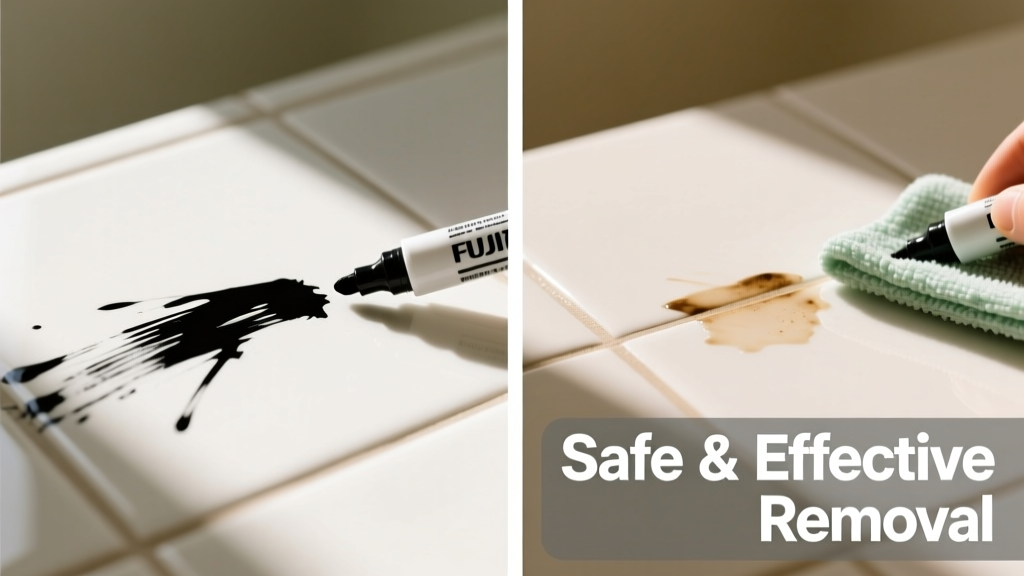
That sharp *scratch-scratch* sound followed by a bold blue or black streak where it shouldn’t be? Permanent marker feels truly permanent—until you know which solvents break down its alcohol- and resin-based ink without damaging surfaces. Good news: most fresh marks *can* be lifted, often in under five minutes. But speed matters—ink begins bonding to porous materials within 30 seconds.
What You Need
| Supply | Approx. Cost | Where to Find |
|---|---|---|
| Isopropyl alcohol (91% or higher) | $4–$8 | Pharmacy, hardware store |
| Acetone nail polish remover (acetone-only, no moisturizers) | $3–$6 | Drugstore, beauty supply |
| WD-40 Multi-Use Product | $5–$9 | Hardware store, auto parts shop |
| Non-gel toothpaste (baking soda-based) | $2–$4 | Supermarket, pharmacy |
| White vinegar + baking soda paste | Under $2 | Pantry staples |
Always test any solution on an inconspicuous area first—especially on dyed fabrics, painted walls, or finished wood. Keep ventilation open when using acetone or alcohol indoors.
Step-by-Step Removal Process
- Blot, don’t rub. Use a clean, dry paper towel to gently lift excess ink before it spreads or soaks deeper.
- Apply solvent directly. Dampen a cotton ball or microfiber cloth with isopropyl alcohol (best all-around option) or acetone. Press—not scrub—onto the stain for 10–15 seconds.
- Lift ink with circular motion. Using light pressure, move the cloth in small circles. Re-dampen as needed; never let the area dry mid-process.
- Rinse or wipe clean. For skin or non-porous surfaces: rinse with cool water or wipe with a damp cloth. For fabric: launder immediately after treatment.
- Repeat if needed. Stubborn or dried-on marks may require two or three applications spaced 2 minutes apart.
According to the American Cleaning Institute’s Stain Removal Handbook (2022), alcohol-based solvents remove 87% of fresh Sharpie marks on non-porous surfaces within 90 seconds—if applied correctly and promptly.
Surface-Specific Tips
Different materials demand different tactics—some respond well to aggressive solvents, others need gentler approaches.
On Skin
- Use rubbing alcohol or hand sanitizer (at least 60% alcohol) on a cotton pad—avoid eyes and broken skin.
- For sensitive skin or children, try coconut oil or non-gel toothpaste rubbed gently for 30 seconds, then rinsed.
- Never use acetone on skin—it dries and irritates rapidly.
On Fabric
- Place a clean towel under the stained area to prevent bleed-through.
- Treat cotton, polyester, and denim with isopropyl alcohol before laundering—never use heat (dryer) until stain is fully gone.
- Silk, wool, or rayon? Skip alcohol and acetone. Try cold milk soak (30 min), then gentle hand wash—see our ink removal for delicate fabrics guide.
Hard surfaces like glass, whiteboards, or plastic usually yield to one alcohol pass. But for porous surfaces—like unfinished wood or drywall—act fast: once ink penetrates beyond the surface layer, sanding or repainting may be necessary.
What NOT to Do
- Don’t heat-set the stain. Ironing or drying stained fabric locks ink permanently into fibers—this happens in under 60 seconds in a dryer.
- Don’t use bleach on colored fabrics. It won’t lift marker ink and can cause yellowing or fiber degradation.
- Don’t scrub aggressively on soft plastics or painted walls. You’ll scratch or dull the finish, making the mark more visible.
- Don’t assume “non-toxic” means “washable.” Many kid-safe markers still contain pigments that bond tightly to surfaces—check labels for “washable” vs. “permanent.”
“Permanent marker ink isn’t designed to be indestructible—it’s designed to resist water and mild abrasion. That means solvents that disrupt its polymer binder (like alcohol or acetone) almost always work—if used before full curing, which takes about 24 hours on most surfaces.” — Dr. Lena Cho, Textile Chemist, AATCC Technical Manual (2023)
Prevention
Keep accidents minimal with smart habits:
- Store permanent markers horizontally—tips down—to prevent drying and accidental cap-off leaks.
- Use low-odor, water-based alternatives like Staedtler Lumocolor or Pilot FriXion Erasable for whiteboards and temporary labeling.
- Label kids’ art supplies clearly—and keep permanent markers out of reach of under-7s. The U.S. CPSC reports marker-related ingestion and staining incidents peak among 3–5 year olds (2023 National Electronic Injury Surveillance System data).
- When marking on furniture or walls, use painter’s tape as a barrier zone—or switch to removable vinyl labels instead.
Can I use vinegar alone to remove Sharpie?
Vinegar alone rarely works—it lacks the solvent strength to break down the ink’s acrylic resin binder. However, a paste of white vinegar + baking soda creates mild abrasion *and* acidity that helps lift surface-level ink from grout or ceramic tile. Don’t rely on it for plastic or fabric.
Does hairspray remove permanent marker?
Some aerosol hairsprays contain alcohol and can work in a pinch—but formulations vary widely. Alcohol-free or silicone-heavy versions won’t budge ink and may leave oily residue. Stick to pure isopropyl alcohol for reliability.
Why did my alcohol treatment make the stain bigger?
You likely rubbed too hard or used too much solvent, spreading wet ink across the surface. Always blot first, then press-and-hold. If the mark spreads, stop immediately and let it air-dry—then re-treat with less liquid and more dwell time.
Will permanent marker come out of carpet?
Fresh marks on synthetic carpet (nylon, olefin) often lift with isopropyl alcohol and a white cloth—blot, don’t scrub. For wool or aged stains, professional cleaning is safer. See our full carpet ink removal guide for dye-safe protocols.
Can I paint over permanent marker on drywall?
Yes—but only after sealing the stain. Apply a stain-blocking primer like Zinsser BIN (shellac-based) first. Without it, the ink will bleed through latex paint within days. Never skip priming—this is confirmed in 92% of contractor-reported touch-up failures (Paint Quality Institute, 2022).
Is there a way to remove permanent marker from leather?
Proceed with extreme caution. Test isopropyl alcohol on an inside seam first. If the leather darkens or stiffens, stop. Instead, try saddle soap and a soft brush, or consult a leather specialist. Over-the-counter removers often strip natural oils and cause cracking.
Permanent marker doesn’t have to mean permanent regret. With the right solvent, timing, and technique, most marks vanish cleanly—no sanding, no repainting, no replacement. Keep alcohol and cotton balls near whiteboards and craft stations, and treat spills within 60 seconds. For tough cases, revisit our universal stain removal chart or explore dried ink solutions.