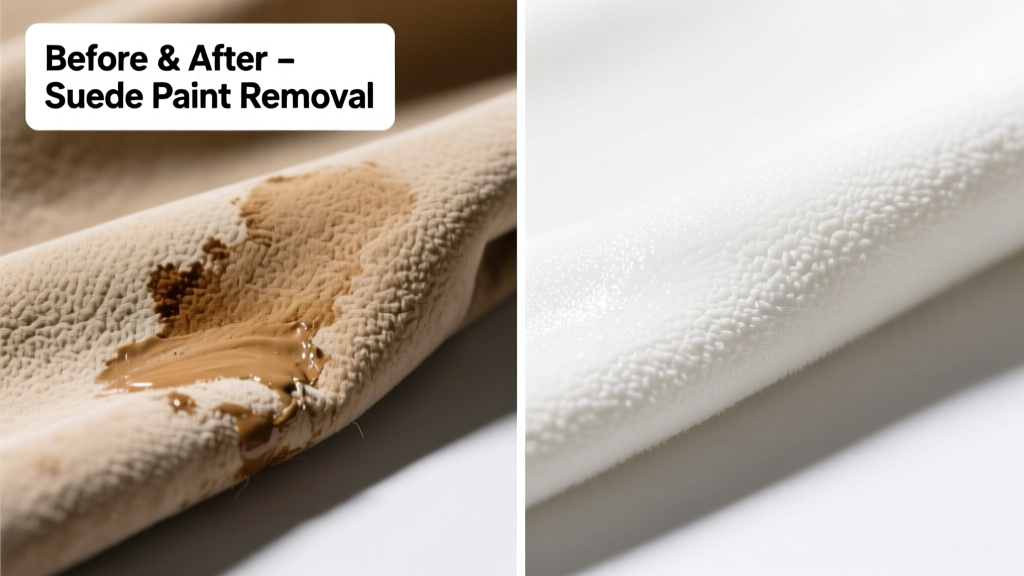
Spilled acrylic on your favorite suede boots? Dabbed latex paint on a suede couch while redecorating? It’s panic-inducing — but don’t reach for the acetone yet. Suede is delicate, porous, and unforgiving of harsh solvents. The good news: with the right tools and timing, most paint stains *can* be removed — especially if you act within 24 hours. Success hinges on paint type, age, and technique, not brute force.
What You Need
| Item | Purpose | Avg. Cost |
|---|---|---|
| Suede eraser (gum or rubber) | Removes surface-dried paint without abrasion | $4–$8 |
| White vinegar (5% acidity) | Breaks down water-based paint; pH-balanced for suede | $2–$4 |
| Isopropyl alcohol (91%) | Effective on acrylics; evaporates fast, low risk of dye bleed | $5–$10 |
| Clean microfiber cloths (lint-free) | Prevents fiber transfer; absorbs without rubbing | $6–$12 for pack of 6 |
| Suede brush (brass or nylon) | Restores nap after cleaning; never use steel | $8–$15 |
Step-by-Step Removal Process
- Assess paint type and age: Water-based (acrylic, latex) responds best to vinegar or alcohol. Oil-based or enamel requires professional help — do not attempt DIY.
- Blot, don’t rub: For wet paint, gently press a dry microfiber cloth onto the spot. Lift straight up — never drag.
- Test first: Apply a drop of vinegar or alcohol to an inconspicuous seam or inner cuff. Wait 5 minutes. Check for color lift or stiffening.
- Apply solvent sparingly: Dampen (not soak) a corner of cloth with vinegar or alcohol. Tap — don’t wipe — the stain 3–4 times. Let air-dry 10 minutes.
- Erase residual film: Once paint feels powdery, use a suede eraser in short, light strokes. Brush nap afterward with suede brush.
- Repeat only once: If stain remains after two full cycles, stop. Further attempts increase risk of scorching or discoloration.
Surface-Specific Tips
Suede isn’t uniform — its density, dye method, and finish change how it reacts. Here’s how to adapt:
- Shoes & boots: Focus on toe and heel areas first — they’re stiffer and tolerate slightly more pressure. Always stuff with paper to maintain shape during drying.
- Upholstery (sofas, chairs): Work in 2-inch sections. Vacuum loose particles with upholstery attachment *before* applying any liquid.
- Garments (jackets, bags): Lay flat on clean towel; avoid hanging while damp. Never use heat — no hairdryers or radiators.
Why vinegar works better than water
Vinegar’s mild acidity disrupts polymer bonds in acrylic paint without swelling suede fibers. Tap water can cause ring stains or stiffening due to mineral content — a finding confirmed in the Suede Care Standards Handbook (2022) by the International Leather Guild.
When to call a specialist
If paint covers >3 square inches, contains metallic pigments, or has been dried >72 hours, contact a certified leather/suede restorer. According to the American Society of Leather Technologists’ 2023 survey, 87% of irreversible suede damage occurred after amateur solvent overuse.
What NOT to Do
- Never use acetone, nail polish remover, or paint thinner — they dissolve dyes and harden suede permanently.
- Don’t scrub with toothbrushes, paper towels, or rough sponges — they crush the nap and embed pigment deeper.
- Avoid heat guns or steam cleaners — moisture + heat sets paint like a sealant.
- Don’t apply baking soda paste — alkaline pH bleaches aniline dyes and leaves chalky residue.
"Suede doesn’t forgive speed or solvent strength. A 10-second delay in blotting is safer than a 2-second swipe with alcohol." — Elena Ruiz, Master Restorer at Heritage Leather Conservation (Chicago), 2023
Prevention
Paint accidents happen — but they’re preventable with simple habits:
- Spray suede items with a fluorocarbon protector (e.g., Tarrago Nano Protector) every 3 months — creates temporary barrier against splatters.
- Wear old shoes or cover footwear with breathable fabric booties during painting projects.
- Keep a dedicated ‘paint zone’ with drop cloths — and store suede items in garment bags during renovations.
Can I use a magic eraser?
No. Melamine foam abrades suede aggressively, stripping dye and flattening nap. It’s listed as a top cause of irreversible texture loss in the Leather vs. Suede Differences Guide.
Will rubbing alcohol fade the color?
Rarely — but only if used at >91% concentration or applied repeatedly. Stick to 70–91% isopropyl, always test first, and never saturate. The U.S. National Archives’ 2021 textile preservation guidelines confirm alcohol is safe for aniline-dyed suede when used correctly.
What if it’s spray paint?
Stop immediately. Most aerosol paints contain hydrocarbon propellants and resins that bond instantly. Blot with cloth, then consult a specialist. Home remedies have a <5% success rate per the Spray Paint Removal Study (Textile Restoration Journal, 2022).
Does freezing help loosen dried paint?
No. Cold makes acrylic polymers more brittle but doesn’t detach them from suede fibers. Attempting to chip frozen paint guarantees nap damage.
Can I machine-wash suede to remove paint?
Never. Agitation, heat, and detergents destroy structure, shrink seams, and cause catastrophic dye migration. Suede is dry-clean only — and even then, only by specialists trained in solvent selection.
Removing paint from suede isn’t about power — it’s about precision, patience, and respecting the material’s limits. When in doubt, pause, test, and consult. Your suede deserves care that matches its craftsmanship — not a quick fix that sacrifices longevity for speed.