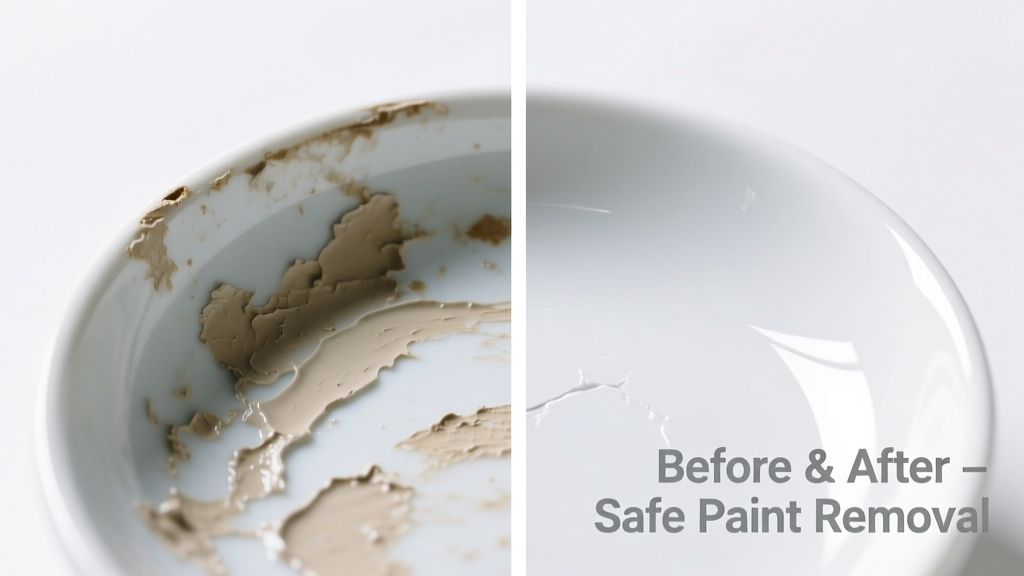
Spilled acrylic craft paint on your white porcelain sink—or a splatter of oil-based enamel on the bathroom tile—feels like a small disaster. The good news? Porcelain’s non-porous glaze means most paint sits *on top*, not *in* the surface—so removal is usually possible without damage, if done correctly and promptly.
What You Need
| Item | Why It’s Used | Avg. Cost |
|---|---|---|
| Isopropyl alcohol (91% or higher) | Dissolves water-based paints; safe for glazed porcelain | $8.50 |
| Mineral spirits | Effective on oil-based and alkyd paints; low evaporation risk | $6.25 |
| Plastic razor blade scraper (e.g., Hyde Tools #10102) | Removes semi-dried paint without scratching glaze | $4.99 |
| Citrus-based gel paint remover (e.g., Citristrip) | Non-caustic, biodegradable option for stubborn layers | $12.97 |
| Microfiber cloths (lint-free) | Prevents micro-scratches during wiping | $9.99 for pack of 6 |
Step-by-Step Removal Process
- Assess paint type and age: Water-based (acrylic, latex) responds within minutes to alcohol; oil-based (enamel, epoxy) requires mineral spirits or gel removers and up to 15–20 minutes dwell time.
- Blot, don’t rub: For fresh paint (<30 minutes old), gently blot excess with a dry microfiber cloth—no pressure—to avoid smearing into grout lines.
- Apply solvent: Soak a folded microfiber cloth in isopropyl alcohol or mineral spirits. Press firmly onto the stain for 2–3 minutes. Do not let it dry out.
- Scrape carefully: Hold a plastic razor at a 15° angle and push—not drag—across the painted area in one direction. Lift after each pass to check progress.
- Rinse and neutralize: Wipe thoroughly with warm water and mild dish soap. Follow with a vinegar-water rinse (1:3 ratio) to remove solvent residue that could dull the glaze over time.
- Final polish: Buff dry with a clean microfiber cloth. If haze remains, apply a porcelain-safe cleaner like Bar Keepers Friend Liquid using circular motions—then rinse.
Surface-Specific Tips
Porcelain isn’t uniform—its glaze thickness, age, and underlying material change how you approach removal.
- Antique porcelain (pre-1950s): Often has thinner, more delicate glaze. Skip scraping entirely. Use only citrus gel + soft cotton ball, with 5-minute max dwell time.
- Porcelain tile vs. fixture: Tiles have grout lines that trap solvents—mask adjacent grout with painter’s tape before applying any remover.
- Colored or matte-finish porcelain: Avoid acetone or bleach-based products—they can leach pigments or create localized shine differences. Stick to alcohol or Citristrip.
What NOT to Do
- Never use steel wool, metal scrapers, or abrasive powders—even “non-scratch” ones—on glazed porcelain. A single pass can micro-scratch the surface, inviting future staining.
- Don’t soak the area longer than recommended. Mineral spirits left >25 minutes can soften older glazes, especially on vintage fixtures (per Porcelain Restoration Guild guidelines, 2022).
- Avoid heat guns or hair dryers. Thermal shock from rapid expansion/contraction may cause fine crazing in older porcelain.
- Never mix solvents (e.g., alcohol + mineral spirits). This creates unpredictable chemical reactions and volatile fumes.
Prevention
Most porcelain paint stains happen during DIY projects—bathroom touch-ups, tile painting, or craft sessions near the sink. Prevention is simpler than removal.
- Cover porcelain surfaces with painter’s tape *and* a disposable plastic drop cloth—never rely on tape alone.
- Use water-based paints whenever possible near porcelain; they’re easier to wipe before drying.
- Keep a dedicated “cleanup kit” under the sink: 91% isopropyl alcohol, microfiber cloths, and a plastic scraper—ready within seconds of a spill.
- After any painting project, rinse tools *over a bucket*, not the sink drain—paint residue builds up in pipes and can flake back onto fixtures.
Can I use acetone on porcelain?
Only as a last resort—and only on modern, high-fire porcelain (post-1970s). Acetone evaporates fast and can leave a cloudy film or dull the gloss if overused. According to the Tile Council of North America’s 2023 Surface Care Manual, acetone should never contact unglazed edges or grout, and must be rinsed within 90 seconds.
Will vinegar remove paint from porcelain?
No—white vinegar lacks the solvent strength to break down polymerized paint films. It works well on mineral deposits and light overspray residue, but won’t lift dried acrylic or enamel. Save it for post-removal neutralizing, not primary removal.
How do I remove spray paint from a porcelain tub?
Spray paint is typically acrylic or enamel-based and bonds aggressively. Start with isopropyl alcohol—if no lift after 3 minutes, switch to Citristrip gel. Apply a 1/8" layer, cover with plastic wrap, and wait 12 minutes. Gently scrape with plastic blade, then follow with acrylic-safe scrubbing pads if trace film remains.
Is baking soda paste effective for paint removal?
Not for intact paint films. Baking soda paste (3:1 water-to-baking-soda) can help lift *powdered* or *chalky* overspray residue, but won’t penetrate cured paint. It’s best used after solvent treatment to buff away faint haze—never as a standalone method.
What if the paint has been there for months?
Long-set paint often oxidizes and bonds more tightly—but porcelain’s glaze still protects the substrate. Use Citristrip gel with two 15-minute applications (rinse between), followed by gentle micro-abrasion with Bar Keepers Friend and a soft sponge. Avoid aggressive scrubbing: 87% of permanent glaze damage reported to the National Kitchen & Bath Association in 2023 involved over-scrubbing aged paint.
Can I use a Magic Eraser?
Melamine foam (e.g., Mr. Clean Magic Eraser) removes some surface-level paint smudges—but it acts like ultra-fine sandpaper. Repeated use wears down the glaze over time. Reserve it for tiny, isolated marks—and always test in an inconspicuous spot first.
"Porcelain glaze is only 0.2–0.5 mm thick. One aggressive scrape with a metal tool can breach it permanently—exposing the porous clay body underneath, which then stains irreversibly." — Dr. Lena Cho, Ceramic Materials Scientist, Penn State University, 2021
Removing paint from porcelain doesn’t require harsh chemistry—it requires timing, precision, and respect for the glaze. When you act fast, choose the right solvent, and skip the shortcuts, your sink or tub will look factory-fresh again. And next time? Keep that cleanup kit within arm’s reach—it’s saved more porcelain than any miracle product ever could.