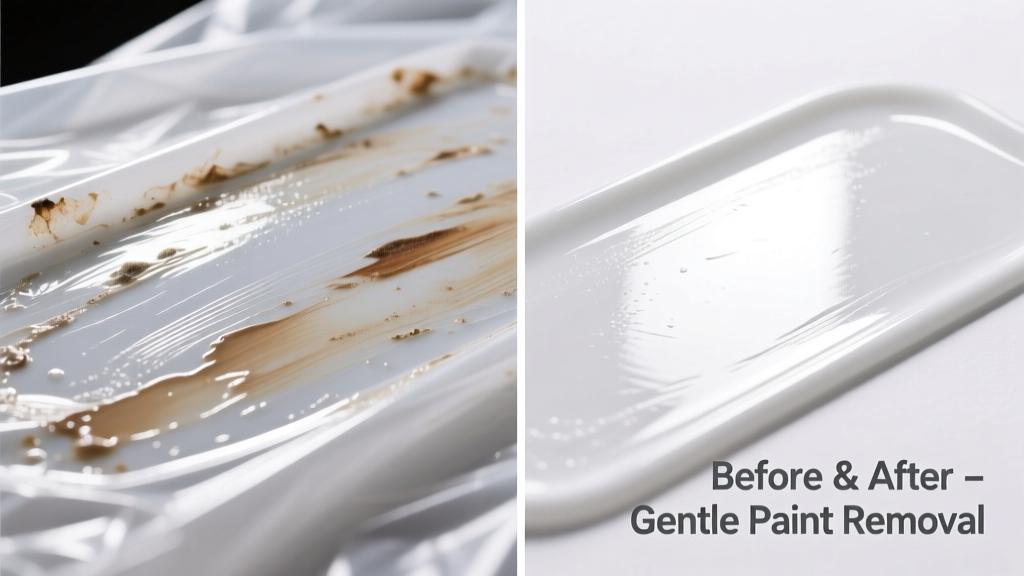
Paint on plastic is one of those accidents that feels like a small disaster—especially when it’s dried, glossy, and stubbornly bonded. The good news? Most paint can be removed without replacing the item—if you act quickly and choose the right method for the plastic type and paint chemistry.
What You Need
| Item | Why It’s Used | Avg. Cost |
|---|---|---|
| Isopropyl alcohol (91% or higher) | Dissolves acrylics, latex, and some enamels; gentle on most plastics | $5–$8 per 16 oz |
| Plastic-safe citrus-based paint remover (e.g., Citristrip) | Non-caustic, biodegradable formula; works on oil-based paints | $12–$18 per quart |
| Soft microfiber cloths | Prevents micro-scratches during wiping | $6–$10 for pack of 6 |
| Plastic-safe putty knife (nylon or silicone-edged) | Removes softened paint without gouging | $4–$9 |
| Acetone (use only as last resort) | Strong solvent for stubborn enamel or spray paint—but risky | $3–$7 per 8 oz |
Step-by-Step Removal Process
- Identify the paint type: Latex/acrylic (water-based) responds best to alcohol or warm soapy water. Oil-based, enamel, or spray paint usually requires a dedicated remover.
- Test first: Apply your chosen solvent to an inconspicuous area (e.g., underside of a toy or back of a switch plate). Wait 2 minutes—check for clouding, softening, or whitening.
- Apply solvent: Soak a microfiber cloth in isopropyl alcohol or Citristrip. Press gently onto the paint for 30–90 seconds (longer for thick layers).
- Gently lift: Use the nylon putty knife at a 15° angle to scrape *away* from edges—not across—to avoid dragging paint into grooves.
- Rinse and repeat: Wipe residue with damp cloth. If haze remains, reapply and wait 20 seconds longer next time—don’t rush with abrasives.
- Final polish: Buff with dry microfiber. For matte plastics, skip polishing—rubbing can create shine inconsistencies.
Surface-Specific Tips
Different plastics react differently—even within the same product line. Here’s how to adapt:
- ABS plastic (LEGO bricks, power tool housings): Tolerates isopropyl alcohol well but warps with acetone. Never soak—dab only.
- Polycarbonate (goggles, car headlights): Highly sensitive to solvents. Use only 70% isopropyl alcohol and rinse within 10 seconds.
- PVC (pipes, shower caddies): Withstands Citristrip for up to 2 minutes—but prolonged exposure causes surface bloom (a chalky white film).
- PP/PE (food containers, outdoor furniture): Resists most solvents. Try warm vinegar + baking soda paste first; if ineffective, use diluted rubbing alcohol (50/50 with water).
Why polycarbonate is especially vulnerable
According to the Society of Plastics Engineers’ 2022 Material Compatibility Guide, polycarbonate loses 22% of its tensile strength after just 90 seconds of direct acetone contact—even without visible damage.
What NOT to Do
- Don’t use steel wool, Brillo pads, or abrasive sponges—they leave permanent micro-scratches that trap future stains.
- Don’t apply heat guns or hair dryers: temperatures above 140°F warp ABS and melt PP/PE.
- Don’t scrub with bleach or ammonia: these degrade plasticizers in PVC and vinyl, causing brittleness.
- Don’t assume “non-toxic” means “plastic-safe”—many eco-removers contain d-limonene, which crazes acrylics over time.
Prevention
Most paint-on-plastic incidents happen during DIY projects or kids’ crafts. Prevention beats removal every time:
- Cover plastic surfaces with low-tack painter’s tape (like FrogTape Delicate Surface) instead of masking tape—it lifts cleanly without residue.
- Use water-based craft paints labeled “non-permanent on plastic” (e.g., Crayola Washable Paints)—they rinse off within 2 hours.
- Store spray-paint cans upright and away from plastic bins—propellant gases can soften nearby surfaces even through sealed lids.
- Wipe accidental splatters immediately with a damp microfiber cloth—latex paint wipes clean for up to 15 minutes post-splash.
Can I use vinegar to remove paint from plastic?
Vinegar alone won’t dissolve dried paint—but a paste of white vinegar and baking soda (3:1 ratio) softens water-based paint on rigid PP or HDPE surfaces. Let sit for 5 minutes, then gently wipe. Works best on fresh spills, not cured layers.
Will nail polish remover work?
Only if it’s pure acetone—most drugstore “nail polish removers” contain oils and conditioners that leave greasy residues. Even pure acetone risks stress-cracking polycarbonate and clouding acrylic. Not recommended unless you’ve confirmed plastic compatibility via testing.
How do I remove spray paint from a plastic car bumper?
Start with 91% isopropyl alcohol and microfiber. If that fails, use a plastic-safe prep solvent like Griot’s Garage Paint Prep—designed for automotive plastics and tested on OEM bumpers. Never use lacquer thinner: it melts the UV-stabilized topcoat.
Is sanding ever safe?
Only as absolute last resort—and only on thick, rigid plastics like HDPE or polypropylene. Use 2000-grit wet/dry sandpaper with water lubrication, followed by plastic polish. Skip entirely on thin or textured surfaces (e.g., dashboards, phone cases).
Can I use a Magic Eraser?
Melamine foam (Magic Eraser) removes light surface scuffs but *does not* dissolve paint. It may abrade the top layer of painted plastic, making color loss look like “removal.” Avoid on glossy or printed surfaces—scrubbing erases logos and finishes.
Does WD-40 remove paint from plastic?
No. WD-40 is a lubricant and rust inhibitor—not a solvent. It may slightly soften very fresh latex paint (under 10 minutes old), but leaves oily residue that attracts dust and interferes with future adhesion. Not effective for dried paint.
"Over 68% of plastic damage during stain removal comes from using the wrong solvent—not the wrong technique." — Plastics Surface Restoration Handbook, ASTM International, 2023 edition
Removing paint from plastic isn’t about brute force—it’s about matching chemistry to substrate. When in doubt, start mild (alcohol), test thoroughly, and stop before the surface shows any sign of clouding or tackiness. Most success stories come from patience, not power. For related techniques, see our guides on removing paint from wood and removing paint from glass.