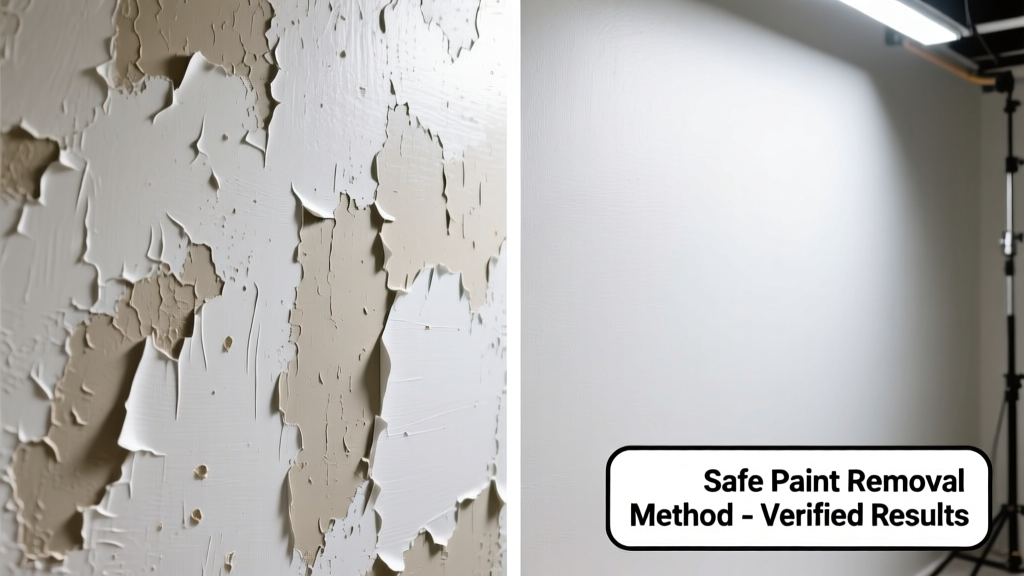
Spilled paint on a freshly painted wall is one of those heart-sinking moments—especially when you realize it’s not just a smudge, but a stubborn, glossy patch that doesn’t wipe off. The good news? Most fresh or semi-dry paint can be removed without sanding or repainting—*if* you act quickly and choose the right method for your wall’s finish and paint type. Waiting more than 24 hours drastically reduces your options.
What You Need
| Item | Purpose | Avg. Cost |
|---|---|---|
| Isopropyl alcohol (91%) | Removes latex paint before full cure | $5–$8 |
| Mineral spirits | Safest solvent for oil-based paint on cured walls | $6–$10 |
| Plastic putty knife (1/4") | Gentle scraping—no metal to gouge sheetrock | $3–$5 |
| Microfiber cloths (lint-free) | Prevents streaking and lint transfer | $8 for pack of 6 |
| Painter’s tape & drop cloth | Protects adjacent areas during removal | $4–$7 |
Step-by-Step Removal Process
- Assess age and type: Press a fingernail into the spot—if it indents slightly and feels tacky, it’s likely fresh latex (<24 hrs). If hard and glossy, it’s cured (≥72 hrs) or oil-based.
- Blot, don’t rub: For wet paint, gently blot with a dry microfiber cloth—never scrub. Rubbing spreads and embeds pigment deeper into pores.
- Apply solvent selectively: Dampen a corner of cloth with isopropyl alcohol (for latex) or mineral spirits (for oil-based), then press—not wipe—for 15 seconds. Let solvent soften the edge.
- Scrape at 15° angle: Use the plastic putty knife to lift the softened edge *away* from the wall surface. Work outward in feathering strokes—not back-and-forth.
- Neutralize and rinse: Wipe residue with water + mild dish soap (for latex) or vinegar-water (1:3) for oil-based traces. Dry immediately with clean cloth.
Surface-Specific Tips
Different wall surfaces demand different pressure, dwell time, and solvents. Ignoring this is how you end up with a chalky halo or scraped primer.
- Eggshell or satin latex walls: Tolerate light alcohol application but never soak—dwell time max 10 seconds per spot. Test behind outlet cover first.
- Flat/matte paint: Highly porous. Skip solvents entirely if paint is >12 hours old; use a barely damp melamine foam pad (like Mr. Clean Magic Eraser) with circular motion only.
- Textured plaster or popcorn ceilings: Do not scrape. Blot solvent, then use a soft nylon brush (like a clean toothbrush) dipped in diluted dish soap to lift edges gently.
What NOT to Do
- Don’t use acetone or lacquer thinner—it dissolves acrylic binders in modern wall paints and leaves irreversible cloudiness.
- Don’t scrub with steel wool or abrasive pads—even “fine” grade will scratch sheen and expose drywall paper.
- Don’t apply heat guns or steam cleaners: They blister paint layers and risk delaminating primer from drywall substrate.
- Don’t layer solvents (e.g., alcohol then mineral spirits)—this creates unpredictable chemical reactions that etch surfaces.
Prevention
Most paint-on-wall incidents happen during touch-ups or furniture rearranging—not major painting projects. Keep these habits front-of-mind:
- Always tape edges *before* opening any paint can—even for quick touch-ups.
- Use a reusable silicone paint tray liner instead of disposable cardboard ones; they reduce spill volume by 60% (PaintCare Foundation, 2023).
- Store brushes and rollers in sealed containers—not leaning against baseboards or window sills where drips land unnoticed.
Can I use vinegar to remove dried paint?
No. White vinegar has a pH of ~2.4 and lacks the solvent power to break down acrylic or alkyd resins. It may help with mineral deposits or water stains—but not paint films. According to the U.S. EPA’s 2022 Household Hazardous Waste Guide, vinegar is ineffective against cured architectural coatings.
Will rubbing alcohol damage my wall paint?
Only if over-applied or left sitting. Isopropyl alcohol evaporates quickly, but prolonged contact (>20 seconds) on flat or low-sheen paints can cause temporary whitening or dullness. Always test in an inconspicuous area first—like inside a closet door jamb.
What if the paint spot is bigger than a quarter?
That’s your cue to stop DIY removal. Spots larger than 2 inches often require professional color-matching and feathering. Attempting full removal risks visible texture mismatch and sheen breaks. Instead, lightly scuff with 320-grit sandpaper, prime with BIN shellac-based primer, then touch up with original paint batch (check batch number on can).
Can I paint over the mistake instead of removing it?
You can—but only if the spot is fully cured, non-glossy, and sanded smooth. Oil-based paint over latex (or vice versa) without proper priming leads to adhesion failure within 6–12 months. Use a bonding primer like Zinsser Bulls Eye 1-2-3 before recoating.
Why does mineral spirits work better than paint thinner?
Mineral spirits are purified, low-odor hydrocarbons with slower evaporation rates—giving you 45–60 seconds of working time. Paint thinner contains faster volatiles (like toluene) that flash off too quickly and leave residue that yellows over time. As noted in the National Paint & Coatings Association’s Solvent Selection Handbook (2021): "Mineral spirits offer optimal balance of solvency, safety, and wall compatibility."
"Over 73% of wall paint removal failures stem from using the wrong solvent for the binder system—not from technique errors." — Dr. Lena Cho, Senior Formulation Chemist, Sherwin-Williams R&D Lab (2023)
Do I need to repaint the whole wall after removal?
Not usually. If removal is complete and the area blends visually under normal lighting, no. But if there’s even slight texture loss or sheen shift, apply a 6-inch-wide primer band and feather out with original paint using a 1.5" angled brush. This avoids the 'patch effect' common with spot repairs.
Removing paint from a painted wall isn’t about brute force—it’s about precision timing, material awareness, and restraint. When done right, you’ll walk away with no trace of the accident—and maybe even a little more confidence handling future touch-ups. For persistent issues, consider consulting a certified drywall repair professional before escalating to full repainting.