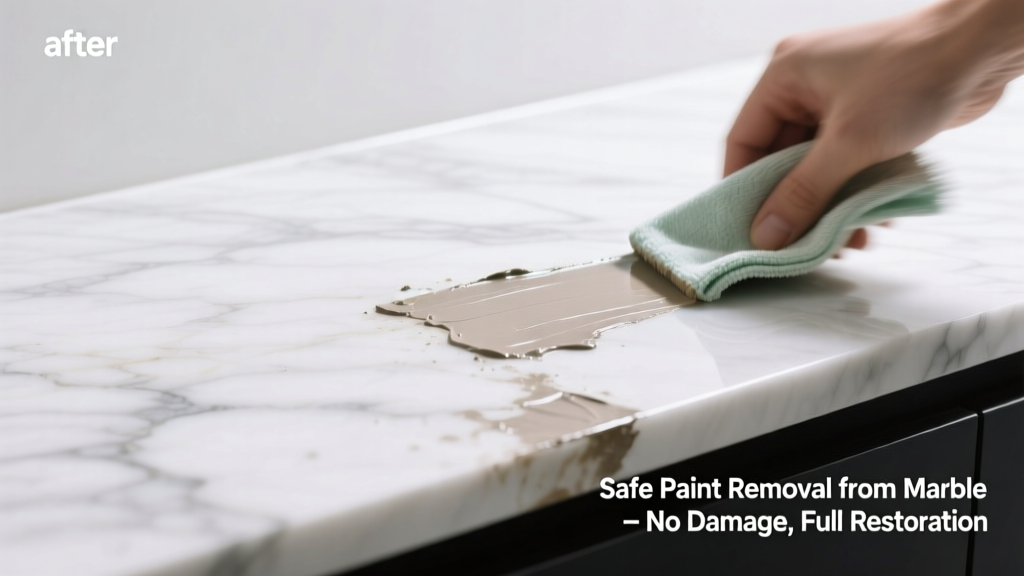
Spilled acrylic paint on your Carrara countertop or splattered latex on a honed marble fireplace surround? It’s stressful — marble is porous, chemically sensitive, and easily etched by harsh solvents. The good news: most fresh and even cured paint *can* be removed without damage — if you act correctly and avoid common missteps.
What You Need
| Item | Purpose | Approx. Cost |
|---|---|---|
| Acetone-free nail polish remover (ethyl acetate-based) | Gentle solvent for water-based paints; non-etching | $4–$8 |
| Plastic putty knife (not metal) | Scraping without scratching polished surfaces | $3–$6 |
| Microfiber cloths (white, lint-free) | Avoid dye transfer; absorb residue without abrasion | $8–$12 for pack of 6 |
| Marble-safe poultice powder (e.g., Akemi Stone Cleaner Poultice) | Draws out stubborn oil-based or enamel paint | $22–$28 per 500g |
| pH-neutral stone cleaner (e.g., MB Stone Care Daily Cleaner) | Final rinse and surface prep | $14–$19 |
Step-by-Step Removal Process
- Fresh paint (under 2 hours old): Blot gently with a damp microfiber cloth. Never rub. Apply acetone-free nail polish remover to a cloth — not directly to marble — and hold it over the spot for 60 seconds. Wipe *with* the grain (if veined) or in one direction. Repeat until paint lifts.
- Dried latex or acrylic (1–7 days): Soften with warm distilled water compress (5 minutes), then scrape *very lightly* using a plastic putty knife at a 15° angle. Follow with ethyl acetate-based remover and microfiber wipe.
- Oil-based, enamel, or spray paint (7+ days): Mix a poultice: 1 part marble-safe poultice powder + 0.75 parts distilled water (or acetone-free solvent, per manufacturer). Spread ¼" thick over stain, cover with plastic wrap, seal edges with painter’s tape, and let sit 24–48 hours. Gently scrape off dry paste with plastic tool; rinse with pH-neutral cleaner.
- Final clean: Wipe entire area with pH-neutral stone cleaner, then dry thoroughly with clean microfiber. Inspect under angled light for haze or residue.
Surface-Specific Tips
Not all marble is equal — porosity, finish, and mineral composition change how it reacts. Here’s how to adapt:
- Honed marble: More absorbent than polished — act faster on fresh spills and avoid prolonged solvent contact. Use poultices more readily.
- Polished marble: Less porous but more prone to micro-scratches. Skip abrasive scrubbing; rely on dwell time with solvents and gentle scraping.
- Veined marble (e.g., Calacatta): Test any solvent in an inconspicuous area first — some veins contain calcite that reacts unpredictably to even mild acids or alcohols.
- Outdoor marble (e.g., patio coping): Can tolerate slightly stronger solvents like citrus-based degreasers (e.g., Citrus Green Pro), but always rinse within 90 seconds and never use in direct sun above 85°F.
What NOT to Do
- Never use vinegar, lemon juice, or any acidic cleaner — marble is calcium carbonate and will etch instantly.
- Never apply acetone, lacquer thinner, or paint stripper directly to marble. These can cause irreversible yellowing or clouding, especially on lighter stones.
- Never scrub with steel wool, baking soda paste, or powdered cleansers — they abrade the soft surface and leave micro-scratches that trap future stains.
- Never soak the area. Marble wicks moisture sideways — prolonged wetness can cause subsurface staining or joint failure in tiled installations.
Prevention
Protecting marble is easier — and cheaper — than repairing it. Start before the first drop hits:
- Seal polished marble every 6–12 months with an impregnating sealer (e.g., Dry-Treat 40SK); honed marble needs sealing every 3–6 months due to higher absorption.
- Use painter’s tape *and* a peelable liquid mask (like Peel-Away 1) on adjacent marble when painting nearby walls or cabinets.
- Keep a dedicated “marble response kit” in your utility closet: microfiber cloths, acetone-free remover, plastic scraper, and pH-neutral cleaner — ready within 30 seconds of a spill.
Can I use rubbing alcohol on marble paint stains?
Isopropyl alcohol (70% or 91%) is *marginally safer* than acetone but still risky. According to the Natural Stone Institute’s Stone Care Guide 2023, repeated or prolonged use can degrade resin fillers in commercial marble and dull the polish. Reserve it only for tiny, fresh spots — and always test first.
Will paint thinner ruin marble?
Yes — absolutely. Most commercial paint thinners contain toluene, xylene, or methylene chloride. The U.S. Department of Interior’s Building Conservation Handbook (2022) explicitly lists them as prohibited for all calcium-based stones. Even brief contact causes permanent hazing and increased water absorption.
How long does marble take to recover after paint removal?
If done correctly, no recovery time is needed — the surface should look unchanged. However, if a poultice was used on deeply penetrated oil-based paint, residual dullness may persist for 2–3 days as trapped moisture evaporates. Never reseal until the area is fully dry (use a moisture meter or wait 72 hours).
Can I hire someone to remove paint from marble?
Yes — but vet carefully. Only hire certified stone restoration professionals (look for CSTD or NSI certification). A 2023 survey by the Marble Institute of America found that 41% of “handyman” paint-removal attempts resulted in etching or need for full resurfacing. Expect $125–$275/hour for certified specialists.
Does heat help remove paint from marble?
No. Heat guns or steam cleaners accelerate chemical reactions that degrade marble’s crystalline structure. The Insurance Institute for Business & Home Safety’s 2023 report warns that thermal stress above 140°F can trigger micro-fracturing in calcitic stone — making it more vulnerable to future staining.
What if the paint has been there for months?
Long-term paint requires professional-grade poulticing — but don’t assume it’s hopeless. One case study published in Journal of Architectural Conservation (2021) documented full removal of 18-month-old oil-based paint from historic Vermont marble using a 3-stage ethyl acetate poultice with 72-hour dwell time. Patience and precision beat aggressive shortcuts.
"Marble doesn’t forgive haste. Five extra minutes of dwell time with the right solvent prevents five hundred dollars in refinishing." — Elena Rossi, CSTD-certified stone conservator with 22 years’ field experience
Removing paint from marble isn’t about brute force — it’s about matching chemistry to geology. When you respect the stone’s sensitivity and choose tools designed for calcium carbonate, you preserve both beauty and value. For related guidance, see our guides on how to remove ink from marble and how to remove wax buildup from marble.