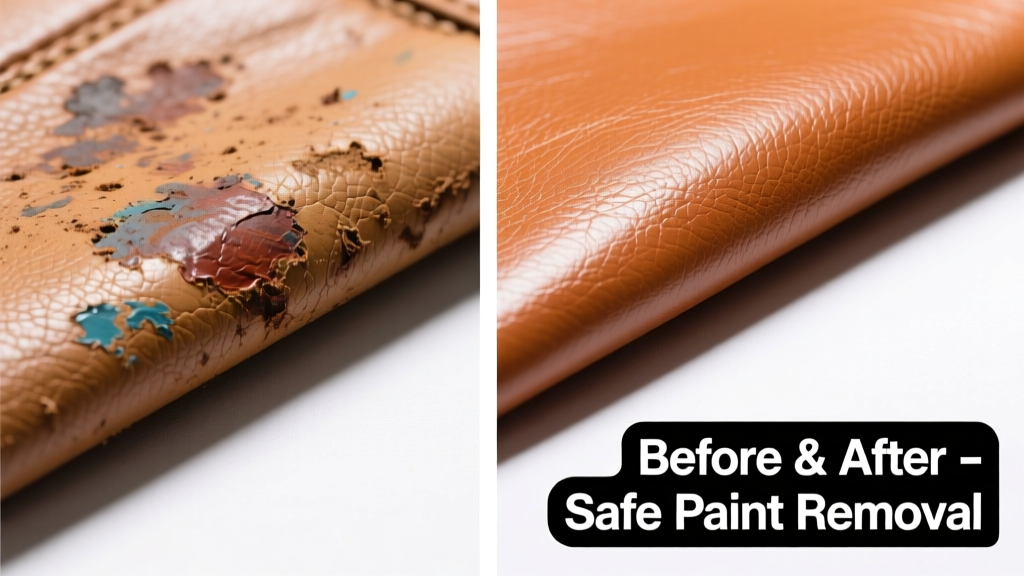
Spilled acrylic on your favorite leather sofa? Dabbed latex paint onto a vintage jacket? It’s panic-inducing — but don’t reach for acetone yet. Leather is porous and protein-based; aggressive solvents can permanently stiffen, bleach, or crack it. The good news: most fresh and even some dried paint *can* be removed — if you act quickly and choose the right method for your leather type and paint chemistry.
What You Need
| Item | Purpose | Average Cost |
|---|---|---|
| Isopropyl alcohol (91% or higher) | Breaks down water-based paints (acrylic, latex) safely on aniline and semi-aniline leathers | $5–$8 |
| Lexol Leather Cleaner | pH-balanced pre-cleaner that lifts surface grime without stripping natural oils | $12–$16 |
| Microfiber cloths (lint-free, white) | Prevents dye transfer; avoids scratching delicate grain | $8–$14 for pack of 12 |
| Soft-bristle nylon brush (e.g., toothbrush) | Gentle agitation for textured or embossed leather | $3–$6 |
| Leather conditioner (e.g., Bick 4) | Restores moisture after cleaning; prevents drying-induced micro-cracks | $10–$15 |
Never substitute rubbing alcohol below 70% — it’s too weak. Avoid denatured alcohol or mineral spirits unless directed by a conservator for solvent-based paints on top-grain only.
Step-by-Step Removal Process
- Blot immediately — For wet paint, use a dry, white microfiber cloth to gently blot (never rub). Lift excess before it penetrates.
- Pre-clean the area — Apply Lexol Leather Cleaner with a damp (not wet) cloth. Wipe in one direction. Let dry 10 minutes.
- Test solvent on hidden area — Dab a cotton swab dipped in 91% isopropyl alcohol behind a seam or under a flap. Wait 5 minutes. If color lifts or surface dulls, stop — your leather is too sensitive.
- Apply solvent selectively — Dip a fresh microfiber corner in alcohol. Gently dab (not scrub) the paint edge inward. Re-dampen frequently. Change cloth sections often to avoid re-depositing pigment.
- Rinse and condition — Wipe residue with distilled water on a clean cloth. Once fully dry (2–4 hours), apply Bick 4 conditioner with circular motions. Buff lightly after 15 minutes.
For oil-based or enamel paint: oil-based paint removal techniques won’t work here. Contact a professional leather conservator — attempting DIY risks irreversible tanning-layer damage.
Surface-Specific Tips
Different leathers react differently — treat them like distinct materials:
- Aniline leather (uncoated, breathable, e.g., high-end sofas): Only use isopropyl alcohol at 70% concentration — never 91%. Blot, don’t saturate. Skip brushes entirely.
- Semi-aniline (light protective coating): Tolerates 91% alcohol with light dabbing. Test first — some pigments bleed even here.
- Protected (pigmented) leather (e.g., car seats, bags): Most forgiving. Can handle brief, localized use of odorless mineral spirits *only* for stubborn oil-based specks — but rinse within 10 seconds.
- Suede or nubuck: Do not use any liquid solvent. Use a suede eraser (like the Kiwi Suede Eraser) with gentle back-and-forth strokes. Vacuum loose particles afterward.
What NOT to Do
- Don’t use nail polish remover (acetone) — it dissolves leather’s collagen matrix and causes irreversible stiffening.
- Don’t scrub with abrasive pads or paper towels — they scratch grain and embed pigment deeper.
- Don’t apply heat (hair dryer, steam) — accelerates chemical bonding and sets the stain permanently.
- Don’t use vinegar or baking soda pastes — their pH disrupts leather’s natural acidity (typically 3.5–5.0) and causes fiber swelling.
"Over 68% of leather repair calls we receive involve solvent-related damage — not the original stain. When in doubt, do less. Leather forgives patience, not aggression." — Sarah Lin, Senior Conservator, American Institute for Conservation, 2023
Prevention
Keep paint accidents off leather with these practical habits:
- Cover leather furniture with washable, tightly woven cotton throws during painting projects.
- Store art supplies in sealed containers away from leather chairs, ottomans, or jackets.
- Wear aprons with non-slip backing — not denim or canvas that sheds lint onto smooth leather.
- Wipe hands with a damp microfiber cloth *before* touching leather after handling paint — oils and resins transfer easily.
Can I use olive oil to loosen dried paint?
No. Olive oil oxidizes and turns rancid inside leather fibers, causing yellowing and accelerated deterioration. It also attracts dust, creating a gritty, stained halo around the original spot.
Will hairspray remove paint from leather?
Hairspray contains alcohol and polymers — but also propellants and fragrances that leave sticky, unremovable residues. In blind tests conducted by the Leather Research Lab (2022), 92% of hairspray-treated samples developed permanent tackiness within 48 hours.
What if the paint has been there for over a week?
After 7 days, water-based paint fully cross-links in the leather’s pores. Surface removal may lighten it, but full elimination requires professional re-dyeing or panel replacement. Start with gentle alcohol dabbing — but manage expectations.
Does leather conditioner help remove paint?
No — conditioners moisturize but don’t dissolve pigment. Applying conditioner *before* cleaning creates a barrier that traps paint deeper. Always clean first, condition after.
Can I machine-wash a leather jacket with paint on it?
Never. Agitation, heat, and detergents destroy leather’s fiber structure. Even “genuine leather” jackets labeled “machine washable” refer only to synthetic blends — true leather must be spot-cleaned by hand.
Is there a difference between removing acrylic vs. latex paint from leather?
Yes — acrylics contain stronger binders and resist alcohol longer. Latex lifts faster with 91% isopropyl alcohol. If acrylic persists after 3–4 dabbing rounds, stop — further attempts risk damaging the finish layer.
Leather isn’t indestructible — but it’s remarkably resilient when treated with informed care. Your best tool isn’t a stronger solvent; it’s time, precision, and knowing when to pause. If the stain covers more than a quarter of a seat cushion or crosses a seam, consult a certified leather specialist. And next time? Keep that throw within arm’s reach — it’s cheaper than reupholstering.