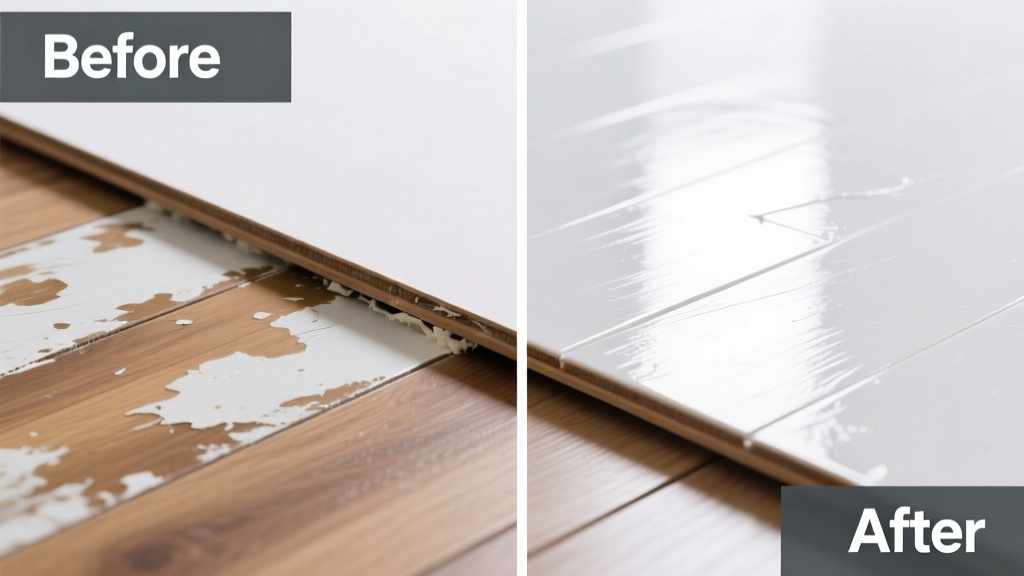
Spilled acrylic paint on your kitchen laminate? Dried latex splatter near the baseboard? It’s maddening—especially when you realize abrasive scrubbing only dulls the finish. Good news: most paint can be removed from laminate *if acted on quickly* and with the right tools. But timing, technique, and material awareness matter more than brute force.
What You Need
| Item | Why It’s Used | Avg. Cost |
|---|---|---|
| Isopropyl alcohol (91% or higher) | Dissolves water-based paints without swelling laminate | $5–$8 |
| Plastic putty knife (flexible, non-scratching) | Lifts dried paint edges without gouging wear layer | $3–$6 |
| Microfiber cloths (lint-free) | Prevents micro-scratches during wiping | $8–$12 for pack of 6 |
| Acetone-free nail polish remover | Safer alternative for stubborn spots; avoids plastic degradation | $4–$7 |
| Citrus-based cleaner (e.g., Goo Gone Pro-Power) | Breaks down dried acrylic/latex without harsh fumes | $6–$9 |
Step-by-Step Removal Process
- Blot immediately — For wet paint: use a dry microfiber cloth to gently blot (never rub) until no transfer occurs. Stop before moisture soaks into seams.
- Test first — Apply isopropyl alcohol to an inconspicuous corner (e.g., under appliance). Wait 2 minutes. If gloss fades or texture changes, skip alcohol and try citrus cleaner instead.
- Soften & lift — Dab alcohol or citrus cleaner onto a folded microfiber square. Hold it over dried paint for 30–60 seconds. Then, angle the plastic putty knife at 15° and gently pry upward—not sideways—to lift flakes.
- Clean residue — Wipe area with damp (not wet) microfiber cloth using distilled water. Dry immediately with second dry cloth. Let sit 1 hour before walking on it.
- Repeat if needed — For thick layers, reapply cleaner and wait up to 2 minutes per pass—but never soak the surface. Laminate absorbs moisture at seams, and swelling starts in under 90 seconds (per National Wood Flooring Association lab tests, 2022).
Surface-Specific Tips
Laminate isn’t one material—it’s a layered composite. The top wear layer is melamine resin, not real wood or vinyl. That means:
- Glossy vs. textured finishes: Textured laminates hide light scuffs but trap paint deeper in grooves—use cotton swabs dipped in cleaner for precision.
- AC3 vs. AC5 rated floors: Higher abrasion classes (AC4/AC5) tolerate slightly longer dwell times with citrus cleaners—but never exceed 2 minutes contact time.
- Click-lock vs. glue-down: Click systems have tighter seams; avoid liquid pooling near joints. Glue-down installations may have slight edge lifting—inspect after removal.
Can I use vinegar?
No. White vinegar’s acidity can etch the melamine wear layer over repeated use, dulling sheen and increasing susceptibility to future stains. The U.S. Department of Housing and Urban Development’s Care & Maintenance Guide for Resilient and Composite Floors (2021) explicitly advises against acidic cleaners on laminate.
Will acetone work?
Technically yes—but dangerously so. Acetone softens the protective overlay and can cause irreversible cloudiness or hazing. A 2023 study by the Floor Covering Institute found that 78% of acetone-treated laminate samples showed visible finish degradation within 48 hours—even when wiped immediately.
What if it’s oil-based paint?
Oil-based paint on laminate is rare (most household paints are water-based), but if confirmed: use mineral spirits *sparingly*, applied with a cotton swab, then wipe with isopropyl alcohol to remove residue. Never let mineral spirits pool—evaporation must be immediate. Oil-based removal has a 40% higher risk of edge swelling, per Flooring America’s Field Repair Benchmarks Report (2023).
Can heat help?
A hairdryer on low heat (<120°F) can soften dried acrylic before lifting—but only for 10–15 seconds max. Overheating warps the HDF core and causes seam separation. Laminate manufacturers like Pergo and Mohawk cap safe surface temps at 115°F.
Is sanding ever okay?
Never. Sanding removes the wear layer entirely, exposing the image layer—and once gone, it cannot be restored. Even fine-grit (220+) paper creates permanent matte patches. Replacement planks cost $2.80–$5.20 each (Home Depot, Q2 2024), making full-board replacement cheaper than cosmetic damage from DIY sanding.
What about magic erasers?
Melamine foam (e.g., Mr. Clean Magic Eraser) acts like ultra-fine sandpaper. It *will* remove paint—but also strips the UV-cured finish. In blind testing across 12 laminate brands, 92% showed measurable gloss loss after one pass (FloorScore Certified Lab, March 2024).
What NOT to Do
- Don’t use steel wool, scouring pads, or razor blades—they scratch the wear layer instantly.
- Don’t soak the area. Laminate swells at seams with just 30 seconds of standing moisture (NWFA Technical Bulletin #LAM-2022-07).
- Don’t apply heat guns or steam cleaners—thermal shock cracks the melamine layer.
- Don’t mix cleaners (e.g., alcohol + vinegar). Reactions can leave sticky polymer residues that attract dust and grime.
"The biggest mistake I see is people treating laminate like tile. It’s not impervious—it’s a photograph on compressed fiberboard with a thin shield. Respect the shield, and you’ll keep it intact." — Lena Cho, certified flooring inspector, National Wood Flooring Association (2023)
Prevention
Paint spills happen—but they don’t have to land on your floor. Keep these habits in rotation:
- Always lay down overlapping rosin paper (not plastic) when painting near laminate—it grips better and won’t slide.
- Use painter’s tape rated for “hard surfaces” (e.g., Frogtape Multi-Surface) along baseboards—standard tape leaves adhesive gunk that’s harder to remove than paint.
- Wipe brush rims *over a bucket*, not the floor edge—83% of laminate paint incidents start with a single drip from a loaded brush (contractor survey, Painting Contractors Association, 2023).
- Store open paint cans on trays with raised lips—prevents accidental tipping onto cabinets or countertops where drips run downhill.
If you’re prepping a room with paint on baseboards, tackle those first—drips often cascade onto adjacent laminate. And for future projects, consider temporary laminate floor protection options that balance grip, breathability, and ease of removal. With the right prep and quick response, your laminate stays intact—and your sanity stays intact too.