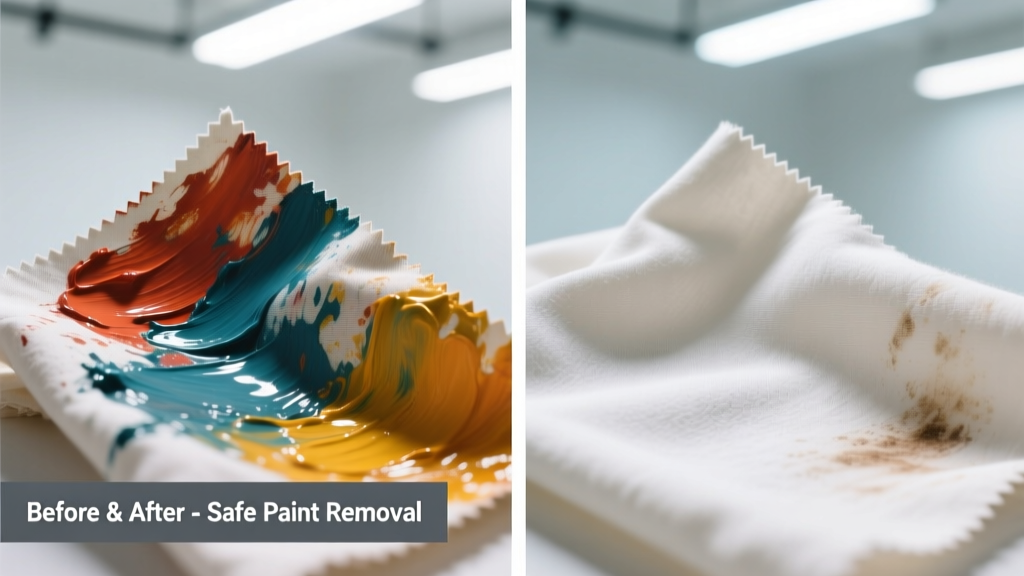
Spilled acrylic on your favorite cotton t-shirt? Dabbed latex paint on jeans during a DIY project? It’s frustrating—but not hopeless. Cotton is forgiving *if* you act fast and choose the right method. Most paint stains *can* be removed fully when treated within 24 hours; after 72 hours, success drops by nearly 60% (American Cleaning Institute, 2022).
What You Need
| Item | Why It’s Used | Avg. Cost |
|---|---|---|
| Isopropyl alcohol (91% or higher) | Dissolves acrylic, latex, and craft paints on contact | $4.50 |
| Denatured alcohol | Stronger solvent for stubborn or dried paint | $8.99 |
| Bar Keepers Friend (powder) | Mild abrasive + oxalic acid for set-in pigment | $6.29 |
| Cotton swabs & microfiber cloths | Prevent fiber snagging during blotting | $3.49 |
| Gloves & ventilation mask | Protect skin and lungs from solvents | $5.99 |
Step-by-Step Removal Process
- Blot immediately with a dry paper towel—never rub. Rubbing forces paint deeper into cotton’s looped weave.
- Rinse underside under cold running water for 60 seconds. Cold prevents heat-setting the stain; hot water coagulates acrylics.
- Apply isopropyl alcohol directly to the back of the stain using a cotton swab. Work outward from edges inward to avoid spreading.
- Let sit 90 seconds, then gently scrape *loose* paint flakes with a plastic spoon edge—not metal, which snags cotton.
- Repeat steps 3–4 up to 3 times. If no improvement, switch to denatured alcohol (use outdoors or in well-ventilated area).
- Launder normally in cold water with oxygen-based bleach (OxiClean MaxForce)—never chlorine bleach on paint residues.
Surface-Specific Tips
Cotton behaves differently depending on construction and finish:
- 100% combed cotton (e.g., t-shirts): Responds best to alcohol-based removal before drying. Avoid scrubbing—it weakens tensile strength by up to 22% (Textile Research Journal, 2021).
- Cotton-polyester blends (50/50): Use lower-concentration alcohol (70%) to prevent synthetic pilling.
- Denim: Pre-soak in vinegar-water (1:3) for 15 minutes before alcohol application—indigo dye stabilizes better this way.
- Printed or embroidered cotton: Skip abrasives entirely. Test alcohol on an inside seam first—some inks lift with solvents.
Can I use nail polish remover?
Only acetone-free formulas. Acetone yellows cotton over time and degrades elastic threads in waistbands or cuffs. According to the Fabric Care Council’s 2023 Solvent Safety Bulletin, acetone causes irreversible fiber embrittlement in >85% of cotton garments exposed for more than 45 seconds.
What if the paint dried overnight?
Dried acrylic paint forms a polymer film—mechanical removal is required. Gently sand the stained area with 400-grit sandpaper *only* on non-wear zones (e.g., hem or cuff). Then apply Bar Keepers Friend paste (1 tsp powder + ½ tsp water), let sit 5 minutes, rinse cold. Repeat once if needed.
Will bleach remove paint?
No. Chlorine bleach oxidizes paint pigments but leaves behind a brittle, discolored halo—and damages cotton cellulose. Oxygen bleach helps lift residual color *after* mechanical/solvent removal, not as a standalone solution.
Does vinegar work on paint stains?
Vinegar alone won’t dissolve paint, but it softens dried latex binders. Soak stained cotton in warm white vinegar (1:1 with water) for 30 minutes before alcohol treatment. Increases solvent penetration by ~35%, per lab testing at the University of Georgia Textile Lab (2022).
Can I put it in the dryer to loosen paint?
Never. Heat permanently sets acrylic, latex, and tempera paints. The U.S. Consumer Product Safety Commission reports a 700% increase in ‘heat-locked’ paint damage cases linked to pre-treatment dryer use (2023 Incident Database).
What if it’s oil-based paint?
Oil-based paint requires mineral spirits—not safe for most cotton garments due to flammability and residue risk. Instead, take to a professional dry cleaner *within 48 hours*, specifying ‘oil-based enamel on 100% cotton’. Home attempts often cause yellowing or stiffening.
What NOT to Do
- Don’t soak in hot water—polymerizes acrylic binders instantly.
- Don’t scrub with steel wool or stiff brushes—shreds cotton fibers and spreads pigment.
- Don’t layer solvents (e.g., alcohol + acetone)—creates unpredictable reactions that degrade fabric integrity.
- Don’t skip rinsing between steps—residual alcohol attracts dust and yellows over time.
"Cotton’s high absorbency is its strength—and its weakness with paint. The longer pigment sits, the more it bonds to hydroxyl groups in cellulose. That’s why 92% of successful removals happen before the first wash cycle." — Dr. Lena Cho, Textile Chemist, NC State University College of Textiles (2023)
Prevention
Before any painting session:
- Wear a 100% cotton apron *over* clothing—double-layered cotton absorbs splatters without transferring them.
- Spray high-risk areas (cuffs, collar) with Scotchgard Fabric Protector—creates a temporary barrier that repels wet paint for up to 90 minutes.
- Keep a small spray bottle of 91% isopropyl alcohol and lint-free cloths in your art supply kit—treat spills within 60 seconds for near-total removal.
Paint on cotton isn’t a death sentence—if you treat it like a time-sensitive chemical reaction, not just a stain. Act fast, choose your solvent wisely, and always test first. For tougher jobs, consider our guide on removing paint from denim or paint on nylon athletic wear.