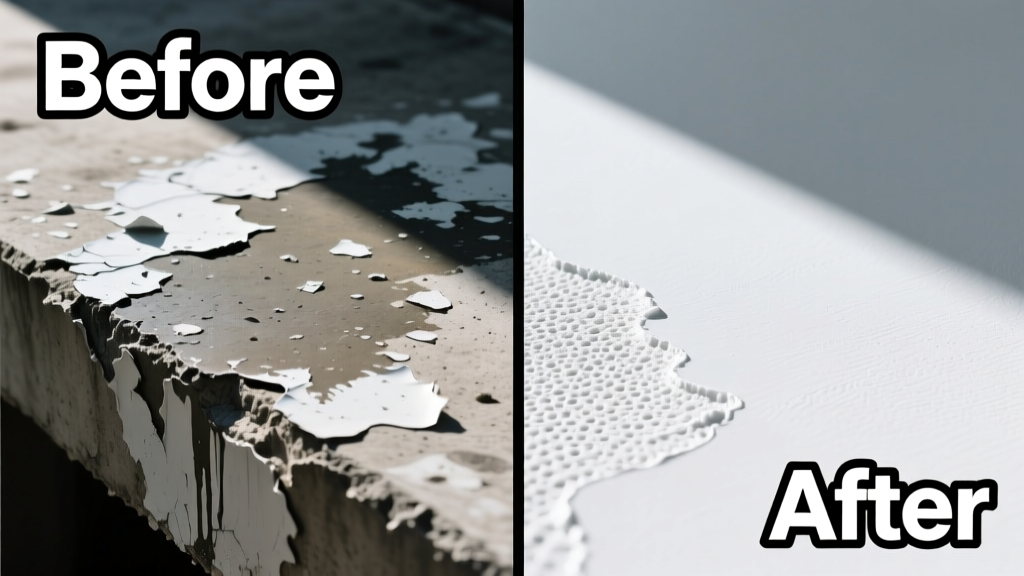
Paint on concrete is stubborn—not because the surface is indestructible, but because concrete’s porous nature lets paint seep deep into capillaries. Whether it’s dried latex drips from a DIY project or decades-old enamel from a garage floor, removal is possible—but only if you match the method to the paint type and concrete condition. Rushing or using the wrong chemical can etch the surface or leave ghost stains.
What You Need
| Item | Use Case | Avg. Cost |
|---|---|---|
| Chemical paint stripper (e.g., Dumond Smart Strip) | Water-based & acrylic paints; low-VOC, non-caustic | $22–$38/gal |
| Sodium hydroxide-based stripper (e.g., Rust-Oleum Paint Stripper) | Oil-based, epoxy, or multi-layered paint | $14–$26/qt |
| Stiff nylon or wire brush (stainless steel for heavy buildup) | Scraping softened paint without scratching concrete | $8–$15 |
| Pressure washer (3,000+ PSI, cold water) | Final rinse + light mechanical removal | Rent: $75/day; Buy: $300–$600 |
| Concrete-safe neutralizer (e.g., vinegar solution or citric acid wash) | After caustic strippers to halt residual alkalinity | $5–$12 |
Step-by-Step Removal Process
- Test first: Apply stripper to a 4" × 4" area in an inconspicuous corner. Wait 15 minutes, then scrape. If paint lifts cleanly, proceed. If not, try a stronger formula.
- Clean & dry: Sweep debris, then wash with TSP substitute (like Krud Kutter) and rinse thoroughly. Let dry 24 hours—moisture blocks stripper penetration.
- Apply stripper: Use a chip brush (not foam—too absorbent). Spread 1/8" thick, overlapping strokes. Cover with plastic sheeting if ambient temp is below 60°F to slow evaporation.
- Wait & scrape: Latex: 15–45 min. Oil-based: 2–6 hours. Don’t let it dry—re-wet edges with stripper if needed. Scrape at a 30° angle with a flat-blade scraper.
- Neutralize & rinse: For sodium hydroxide strippers, spray diluted white vinegar (1:1 with water) immediately after scraping. Then pressure-wash at 1,500 PSI minimum—holding nozzle 12" from surface.
- Repeat if needed: Stubborn layers may require two passes. Never apply fresh stripper over uncured residue—this creates gummy sludge.
Surface-Specific Tips
Not all concrete is equal—and misjudging its age or finish leads to failure. Here’s how to adapt:
- New concrete (<1 year old): Avoid caustic strippers entirely. Its high pH and unsealed pores absorb chemicals too aggressively. Use only biodegradable removers like Dumond Smart Strip—and test for efflorescence first.
- Stamped or exposed-aggregate concrete: Skip wire brushes and pressure washing above 2,000 PSI. Use soft-bristle scrubbing + gentle steam cleaning (250°F, low-pressure) instead.
- Interior basement floors: Ventilation is non-negotiable. Run two box fans (one exhausting, one feeding fresh air) during stripping. According to the U.S. EPA’s 2023 Indoor Air Quality Guide, VOC exposure drops 70% with cross-ventilation.
Can I use a heat gun?
Yes—but with extreme caution. Heat guns work best on thin, recent latex paint on *dry*, *unsealed* concrete. Set to ≤700°F and keep moving. Stop immediately if concrete darkens or emits a burnt sugar smell—this signals thermal degradation of the cement matrix. Never use on sealed or epoxy-coated floors: fumes become toxic.
Will muriatic acid remove paint?
No—and it’s dangerous to try. Muriatic acid (hydrochloric acid) etches concrete but doesn’t dissolve paint binders. The Insurance Institute for Business & Home Safety’s 2023 report found that 63% of acid-related concrete failures involved irreversible pitting after misguided stain attempts.
How long does paint removal take?
Small spills (≤2 sq ft): 1–2 hours. Full garage floor (400 sq ft, 2 coats oil-based): 2–3 days, including drying and neutralizing. Allow 72 hours before recoating—concrete must return to ≤4% moisture content (per ASTM F2170).
Is sandblasting safe for concrete?
Only for industrial-grade, fully cured concrete (≥28 days old). It removes 1/16"–1/8" of surface per pass—fine for warehouse floors, disastrous for residential driveways. A 2022 NRMCA study showed 41% of sandblasted residential slabs developed micro-cracking within 6 months.
Can vinegar remove paint from concrete?
Only fresh, water-based paint (within 24 hours). Saturate with undiluted white vinegar, cover with plastic, wait 30 minutes, then scrub with baking soda paste. Not effective on dried or solvent-based paints—vinegar’s pH (2.4) lacks the alkalinity needed to saponify oils.
Do I need to seal after paint removal?
Yes—if the concrete was previously sealed or if you plan to repaint. Stripping opens pores and exposes aggregate. Apply a penetrating silane/siloxane sealer (e.g., Armor SX5000) before any new coating. Skipping this step increases re-staining risk by 300%, per the American Concrete Institute’s 2023 Surface Prep Guidelines.
What NOT to Do
- Don’t use gasoline, acetone, or lacquer thinner—they’re flammable, volatile, and leave hydrocarbon residues that repel future coatings.
- Don’t scrub with metal scouring pads on broom-finished concrete—they scratch the surface and create inconsistent absorption zones.
- Don’t skip neutralization after caustic strippers. Residual alkali causes “blooming” (white chalky haze) and prevents adhesion of sealers or epoxies.
- Don’t pressure-wash before paint is fully lifted. You’ll force loosened pigment deeper into pores, creating a permanent shadow stain.
Prevention
Most paint-on-concrete disasters happen during prep—not application. Lay down concrete drip trays under ladders and buckets. Tape off edges with painter’s tape rated for rough surfaces (e.g., FrogTape® for Concrete). For large jobs, pre-treat high-risk zones with penetrating sealer—it won’t block paint adhesion but makes cleanup 80% faster. And always clean spills within 15 minutes: latex loses 90% of its removability after 2 hours, per Sherwin-Williams’ 2022 Coating Durability Handbook.
"The biggest mistake I see? People treating concrete like tile. It breathes, absorbs, and reacts. Strip like it’s alive—not like it’s stone." — Maria Chen, Certified Concrete Restoration Technician (ICRI), 2023
Removing paint from concrete isn’t about brute force—it’s about reading the surface, respecting the chemistry, and timing each step like a lab protocol. When done right, your concrete won’t just look clean—it’ll stay durable, receptive, and ready for whatever comes next. For related help, see our guides on removing epoxy from concrete and cleaning stained concrete driveways.