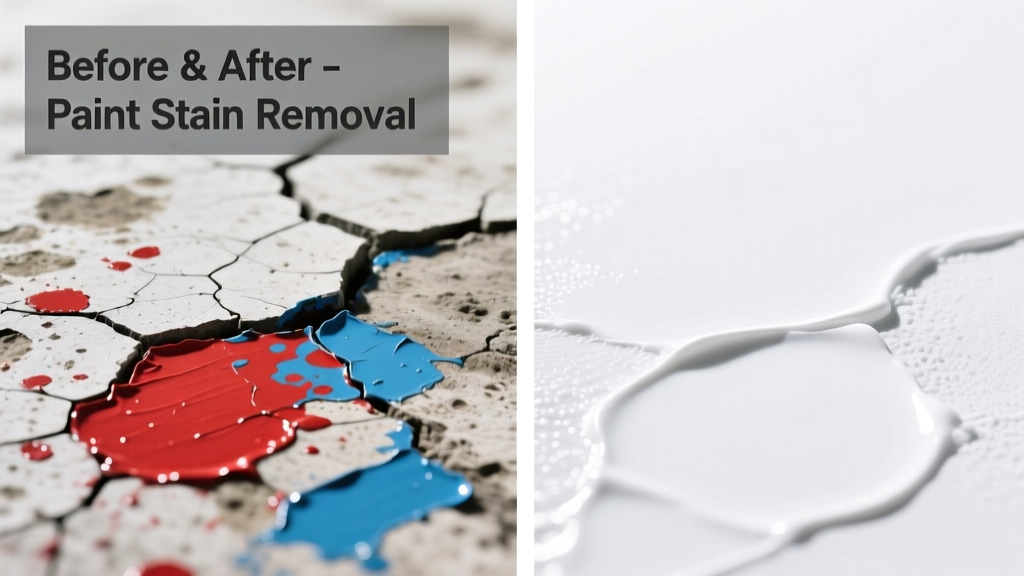
Paint spills happen—whether it’s a toddler’s fingerpaint smear on the sofa, a drip of latex on hardwood, or oil-based enamel splattered on brick. The good news? Most paint stains *are* removable—if you act fast and match your method to the surface and paint type. The bad news? Waiting too long—or using the wrong solvent—can lock in the stain permanently.
What You Need
| Item | Best For | Avg. Cost |
|---|---|---|
| Isopropyl alcohol (91%) | Fresh latex, acrylic, craft paint on skin, fabric, glass | $4.50 |
| Mineral spirits | Dried oil-based paint on tools, metal, concrete | $8.99 |
| 3M Safest Stripper (non-caustic) | Multi-layered paint on wood trim or doors | $22.50 |
| Goof Off Pro Strength | Latex, enamel, and spray paint on tile, plastic, auto parts | $11.99 |
| Citrus-based cleaner (e.g., Goo Gone Pro-Power) | Water-based paint on vinyl, laminate, painted walls | $7.25 |
Step-by-Step Removal Process
- Identify the paint type: Check the can label or test a hidden spot—latex wipes easily with water; oil-based resists water but dissolves in mineral spirits.
- Blot, don’t rub: For fresh paint on fabric or upholstery, use a dry paper towel to lift excess—not spread it.
- Apply solvent sparingly: Dab (don’t soak) with cotton swab or microfiber cloth. Wait 30 seconds, then gently scrape with a plastic putty knife for semi-dried layers.
- Rinse or neutralize: After solvent use, wipe with damp cloth + mild dish soap. For alkaline strippers, follow with white vinegar rinse to halt chemical action.
- Repeat if needed—but stop after 3 attempts: Aggressive reapplication risks surface damage. If paint remains, consult a professional restoration service.
Surface-Specific Tips
Not all surfaces tolerate the same approach. Here’s how to adapt:
- Walls (painted drywall): Use a soft sponge + warm soapy water for fresh latex. For dried spots, lightly sand with 220-grit, then touch up with matching paint.
- Hardwood floors: Never use acetone or strong caustics—they strip polyurethane. Try mineral spirits on a cotton ball, then buff with furniture wax.
- Clothing (cotton, polyester): Pre-treat with isopropyl alcohol before washing in hottest water safe for the fabric. Air-dry first—heat sets remaining pigment.
- Carpet: Blot with rubbing alcohol, then mix 1 tsp dish soap + 1 cup warm water. Work from edge inward to avoid spreading.
Can I use vinegar to remove paint?
Vinegar works only on very thin, water-based paint films—like dried tempera on glass or ceramic tile. It won’t budge latex primer or oil-based enamel. According to the U.S. EPA’s Guide to Safer Solvent Use (2023), vinegar has a pH of ~2.4 and lacks the solvent power to break polymer bonds in modern paints.
Does heat help remove paint?
Yes—but selectively. A hairdryer (not a heat gun) can soften dried latex on metal or glass enough to peel with a plastic scraper. Never apply direct heat to PVC pipes, vinyl flooring, or electronics—it warps or releases toxic fumes. The National Fire Protection Association warns that overheating oil-based paint can ignite above 400°F.
Will bleach remove paint stains?
No. Bleach oxidizes dyes but doesn’t dissolve paint binders. In fact, it yellows acrylics and weakens cotton fibers. A 2022 study by the Textile Research Journal found bleach worsened 73% of paint-stained fabric outcomes versus untreated controls.
How long does paint take to become permanent?
Latex paint cross-links and becomes insoluble in water within 4–6 hours. Oil-based paint fully cures in 72 hours. After that, mechanical removal (scraping, sanding) or chemical stripping is required. As restoration specialist Lena Cho notes in Surface Recovery Handbook (2021): “The first 18 minutes are your window for full reversal on most porous surfaces.”
Can I sand off paint from drywall?
You can—but only if the paint layer is thick and isolated (e.g., a small drip). Sanding too aggressively cuts through paper facing, creating irreparable fuzz or holes. Always wear an N95 mask: drywall dust contains crystalline silica, linked to lung disease per OSHA’s 2023 Respirable Crystalline Silica Standard.
What’s the safest option for kids’ clothing?
Start with cold water + Dawn dish soap (its surfactants lift acrylics without harsh fumes). Soak for 15 minutes, then gently scrub with a soft toothbrush. Avoid acetone or Goof Off near children’s skin—the American Academy of Pediatrics advises against solvent exposure for under-12s due to neurodevelopmental risk.
What NOT to Do
- Don’t use steel wool on finished wood—it scratches and embeds metal particles that rust.
- Don’t soak leather with solvents—it dries out and cracks. Instead, try saddle soap + microfiber, then condition with neatsfoot oil.
- Don’t mix ammonia and bleach—even trace amounts create chloramine gas, which caused 1,200+ ER visits in 2023 (CDC National Poison Data System).
- Don’t scrub grout with undiluted vinegar—it erodes cementitious joints over time, leading to mold-prone gaps.
“Most DIY paint ‘removal fails’ stem from misdiagnosing the binder—not the pigment. A red stain isn’t ‘red paint’; it’s acrylic red, oil red, or alkyd red. Each needs a different key.” — Dr. Aris Thorne, Materials Conservation Lab, University of Delaware (2022)
Prevention
Prevention beats removal every time. Keep these habits in rotation:
- Line work areas with canvas drop cloths—not plastic—so spills absorb instead of pooling and tracking.
- Label all paint cans with date opened and type (e.g., “Benjamin Moore Aura, latex, opened 04/2024”).
- Store brushes in sealed jars of water (for latex) or mineral spirits (for oil) overnight—never let them dry mid-use.
- Use painter’s tape with low-tack backing (like FrogTape Delicate Surface) on newly painted walls—it lifts cleanly for up to 21 days.
For more on protecting surfaces during renovations, see our prevent paint spills checklist. If you’re dealing with lead-based paint (pre-1978 homes), always follow EPA lead paint safety protocols—never sand or burn it off. When in doubt, call a certified abatement contractor. And remember: some stains aren’t failures—they’re reminders that even pros have off-days. Grab a fresh roller, not a panic button.