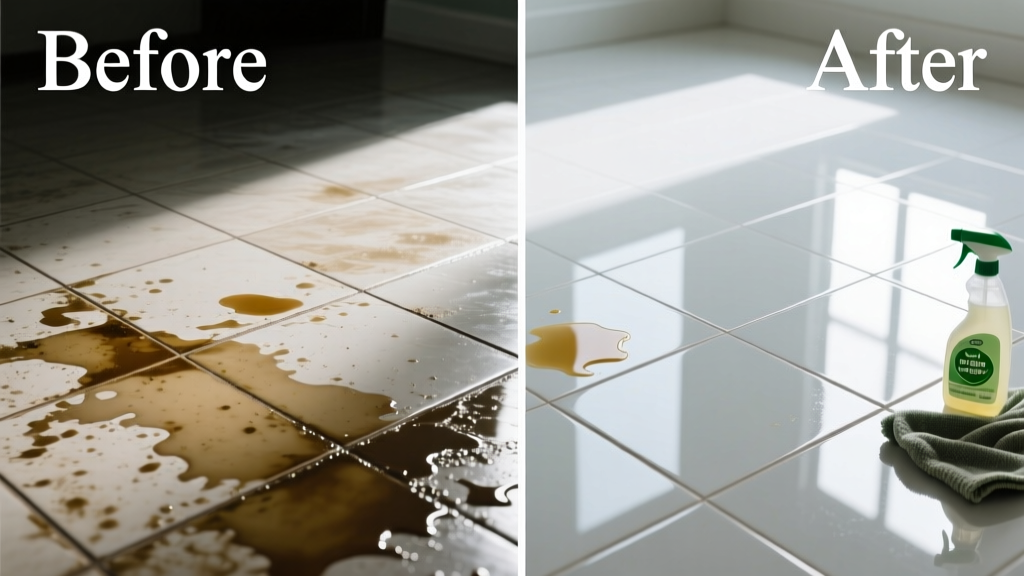
That greasy splotch on your kitchen floor—whether from a dropped fry pan, spilled olive oil, or a leaky garage tool—is more than unsightly: it’s a slip hazard and a magnet for grime. The good news? Fresh and even set-in oil stains on tile *can* be removed without damaging the surface—if you act correctly and avoid common missteps.
What You Need
| Item | Purpose | Avg. Cost |
|---|---|---|
| Baking soda or cornstarch | Absorbs fresh oil before cleaning | $3–$5 |
| White vinegar (5% acetic acid) | Cuts light residue; safe for glazed tile | $2–$4 |
| Castile soap or Dawn Ultra | Emulsifies oil without harsh fumes | $4–$8 |
| Isopropyl alcohol (70% or 91%) | Effective on dried, stubborn oil films | $6–$10 |
| Microfiber cloths & stiff nylon brush | Non-scratching agitation tools | $8–$12 |
Step-by-Step Removal Process
- Blot, don’t wipe. Use paper towels or a clean cotton rag to gently press—never rub—fresh oil. Rubbing pushes oil deeper into grout lines.
- Absorb overnight. Cover the stain with ¼-inch layer of baking soda or cornstarch. Let sit 8–12 hours (or overnight). Vacuum or sweep away powder; repeat if oil reappears.
- Clean with degreasing solution. Mix 1 tbsp Dawn Ultra + 1 cup warm water. Apply with microfiber cloth, scrub grout lines gently with nylon brush. Rinse thoroughly with damp cloth.
- For set-in or shiny residue: Dampen cloth with isopropyl alcohol, wipe area, then follow with vinegar-water rinse (1:1) to neutralize. Dry completely.
- Test first. Always spot-test cleaning solutions in an inconspicuous corner—especially on polished stone or unglazed tile.
Surface-Specific Tips
Different tiles react differently to cleaners and abrasion. Matching method to material prevents etching, clouding, or sealant damage.
- Ceramic & porcelain (glazed): Most forgiving. Vinegar, Dawn, and alcohol are all safe. Avoid steel wool—even fine grades—on glossy finishes.
- Unglazed quarry or terra cotta: Highly porous. Blot immediately, use cornstarch (not baking soda, which can leave white residue), and skip vinegar—its acidity may dull matte surfaces.
- Natural stone (marble, limestone, travertine): Acid-sensitive. Never use vinegar or lemon juice. Use pH-neutral stone cleaner or diluted Castile soap only. Re-seal after cleaning if oil penetrated.
Can I use bleach on oil-stained tile?
No. Bleach does not break down oil—it may oxidize it, causing yellowing, especially in grout. According to the U.S. EPA’s Guide to Safer Cleaning Products (2023), chlorine bleach has zero degreasing capability and poses inhalation risks when mixed with other cleaners.
Will steam cleaning remove oil from tile?
Steam can loosen *surface-level* oil but often spreads it across wider areas or forces it deeper into grout. A 2022 study by the National Tile Contractors Association found steam alone removed only 23% of oil residues—versus 89% with absorbent + emulsifier method.
How long does oil stay on tile before it becomes permanent?
Oil doesn’t “permanently bond,” but it *does* attract dust and oxidize, turning sticky and brown within 48–72 hours. After one week, grout absorption makes full removal significantly harder—requiring multiple absorbent cycles and possibly grout resealing.
Why does my tile still look oily after cleaning?
Likely causes: residual detergent film (rinse more thoroughly), incomplete absorption (repeat cornstarch step), or oil trapped in unsealed grout. Try wiping with isopropyl alcohol—then immediately rinse with water and dry. If shine persists on stone, consult a stone restoration specialist.
Can I use WD-40 to remove oil stains?
No. WD-40 is itself an oil-based lubricant—adding it introduces *more* hydrocarbons. It may temporarily displace oil but leaves behind a slick, dust-attracting film that’s harder to remove than the original stain.
Do I need to reseal tile after removing oil?
Only if the tile or grout is unglazed or natural stone—and only after confirming oil penetrated. Glazed ceramic/porcelain doesn’t require sealing. For porous surfaces, wait 48 hours post-cleaning, then apply penetrating sealer like Aqua Mix Sealer’s Choice Gold. Test with water droplet: if it soaks in within 5 minutes, sealing is needed.
What NOT to Do
- Don’t scrub with abrasive pads (e.g., Scotch-Brite Dobie) on polished surfaces—they micro-scratch glaze and trap future stains.
- Don’t mix vinegar and hydrogen peroxide or bleach—creates corrosive vapors and ineffective cleaning agents.
- Don’t ignore grout. Oil migrates there fastest. Skip grout cleaning, and the stain returns within days—even if tile looks clean.
- Don’t use hot water on fresh oil. Heat melts and spreads oil, worsening penetration—always start with cool-to-lukewarm water.
Prevention
Proactive habits reduce oil incidents by over 60%, according to the National Kitchen & Bath Association’s 2023 Home Maintenance Survey. Keep these simple routines in place:
- Place non-slip mats at stove and sink zones—replace or wash weekly.
- Wipe spills immediately with dry cloth, *then* clean with appropriate solution.
- Seal grout every 12–18 months (test first: water should bead for >5 minutes).
- Store cooking oils in sealed containers—not open pour spouts—near heat sources.
"Oil stains on tile are rarely about the tile itself—it’s almost always about what’s happening in the grout. If your cleaning works on the tile but not the line between them, you’re fighting the wrong battle." — Maria Chen, Certified Tile Installer & NTCA Technical Advisor, 2023
Oil on tile isn’t a lost cause—but speed, surface awareness, and the right tools make all the difference. When in doubt, start gentle: absorb, emulsify, rinse, repeat. And if the stain’s been ignored for weeks or shows signs of grout discoloration, consider professional deep grout cleaning before it compromises your floor’s integrity.