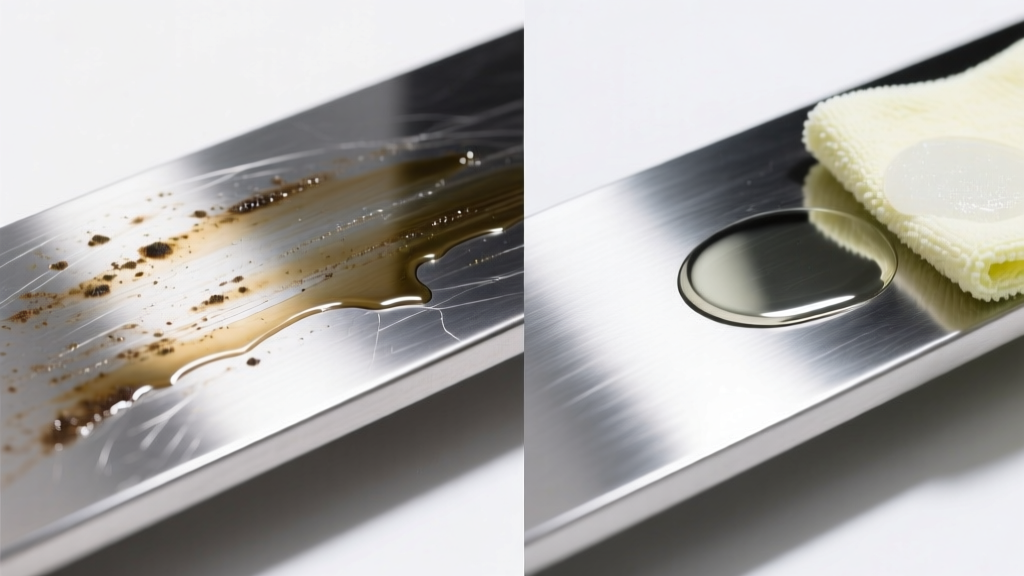
That greasy smear on your stainless steel range hood or appliance front? It’s not just unsightly—it attracts dust, invites corrosion over time, and resists plain water. The good news: oil on stainless steel is almost always removable if addressed promptly and correctly. No need for harsh abrasives or risky DIY hacks.
What You Need
| Item | Purpose | Average Cost |
|---|---|---|
| Isopropyl alcohol (70% or higher) | Breaks down light to moderate oil films | $5.99 per 16 oz bottle |
| Bar Keepers Friend Cooktop Cleaner | Non-abrasive oxalic acid formula for stubborn residue | $8.49 per 12 oz tube |
| Microfiber cloths (lint-free, 300+ gsm) | Prevents micro-scratches during wiping | $12.99 for pack of 6 |
| White vinegar (5% acetic acid) | Natural degreaser for food-grade surfaces | $2.49 per 32 oz |
| Stainless steel cleaner with silicone protectant (e.g., Weiman) | Final polish + protective barrier | $9.99 per 12 oz |
Step-by-Step Removal Process
- Blot first, don’t rub. Use a dry, lint-free microfiber cloth to gently absorb excess oil—especially fresh spills. Rubbing spreads the oil and embeds it deeper.
- Apply isopropyl alcohol. Dampen a second cloth (not dripping) with 70–91% isopropyl alcohol. Wipe in the direction of the grain—never circular. Let sit 15 seconds, then wipe again with a clean dry cloth.
- For baked-on or sticky residue: Apply a pea-sized amount of Bar Keepers Friend Cooktop Cleaner directly to the stain. Gently work in with a damp microfiber cloth using straight-line motions along the grain. Rinse immediately with distilled water (tap water can leave mineral spots).
- Neutralize and protect. After cleaning, mist a small amount of white vinegar onto a clean cloth and wipe once more to remove any cleaner residue. Follow with a stainless steel polish containing silicone to restore luster and create an oil-repellent barrier.
Surface-Specific Tips
Different stainless steel applications demand tailored care. A commercial kitchen hood faces high-heat oil vapor; a residential fridge door sees fingerprint oils mixed with cooking grease; a backsplash endures splatter plus daily wipe-downs. Matching method to context prevents over-cleaning or under-treatment.
- Appliance fronts (fridge, dishwasher): Use only alcohol or vinegar—no abrasives. These surfaces often have brushed finishes that scratch easily. Always test in an inconspicuous corner first.
- Cooktops & range hoods: Bar Keepers Friend is safe here—but rinse thoroughly. Residue left behind can bake into future spills and discolor the surface over time.
- Stainless steel sinks: Combine 1 tbsp baking soda + 2 tsp vinegar to form a paste. Apply, let sit 2 minutes, scrub gently with a soft nylon brush along the grain, then rinse. According to the American Cleaning Institute’s 2023 Surface Care Guidelines, this combo lifts oil without etching sink surfaces.
What NOT to Do
- Never use steel wool, scouring pads, or powdered cleaners like Comet—even “non-scratch” versions. They create microscopic scratches that trap future oil and accelerate corrosion.
- Avoid chlorine bleach or ammonia-based cleaners. The U.S. Department of Energy warns these cause pitting and stress corrosion cracking in stainless steel, especially near weld seams.
- Don’t let oil sit longer than 24 hours before cleaning. A 2022 study published in Corrosion Science found that hydrocarbon exposure beyond one day increases passive layer degradation by up to 40% on 304-grade stainless.
Prevention
Consistent maintenance beats emergency cleanup every time. Wipe down stainless surfaces after each cooking session—even if they look clean. Heat accelerates oil polymerization, turning fresh grease into a permanent haze within hours.
"Most 'stains' on stainless aren't stains at all—they're polymerized oil films. Once cross-linked, they require mechanical removal, which risks surface damage. Prevention isn't optional—it's structural maintenance." — Dr. Lena Cho, Materials Scientist, National Institute of Standards and Technology (NIST), 2023
Can I use dish soap to remove oil from stainless steel?
Yes—but only as a first step for very light oil films. Mix 1 tsp Dawn Ultra with 1 cup warm distilled water. Apply with a microfiber cloth, wipe with the grain, and rinse immediately. Dish soap alone won’t break down heavier oils and leaves a residue that attracts more grime. For anything beyond finger smudges, move to isopropyl alcohol.
Why does my stainless steel look streaky after cleaning?
Streaking usually means you wiped against the grain or used a low-quality cloth. It can also signal leftover cleaner residue—or hard water minerals drying on the surface. Always finish with a dry, high-thread-count microfiber cloth pulled taut across the surface in long, even strokes following the visible grain lines. See our guide on how to clean stainless steel without streaks.
Does vinegar damage stainless steel?
Short-term, diluted vinegar (5% acetic acid) is safe and effective. But prolonged exposure—like soaking overnight or using undiluted vinegar—can dull the finish and promote corrosion, especially on lower-grade stainless (e.g., 201 or 430). Stick to 1:1 vinegar-water for no longer than 2 minutes contact time.
Can I use rubbing alcohol on brushed stainless steel?
Absolutely—and it’s the top recommendation for brushed finishes. Unlike abrasive pastes or sprays, isopropyl alcohol evaporates cleanly, doesn’t leave film, and won’t disrupt the directional texture. Just ensure your cloth is clean and free of embedded grit. Check out our best cleaning cloths for stainless steel comparison.
Is WD-40 safe for removing oil stains?
No. WD-40 is itself an oil-based lubricant and solvent blend. Using it to clean oil only adds another layer of hydrocarbon film—making the problem worse. It may temporarily displace oil but leaves behind a slick, dust-attracting residue that requires full re-cleaning.
How often should I polish stainless steel after oil removal?
Once per cleaning cycle—immediately after rinsing and drying. A thin layer of silicone-based polish (see our stainless steel polish comparison) forms a hydrophobic shield that repels new oil for 3–5 days under normal kitchen use. In high-use commercial settings, reapply every 48 hours.
Oil on stainless steel isn’t a sign of poor upkeep—it’s part of normal kitchen life. What matters is how quickly and intelligently you respond. With the right tools and timing, your surfaces will stay bright, functional, and corrosion-free for years. Keep a microfiber roll and isopropyl alcohol near your stove—you’ll use them more than you think.