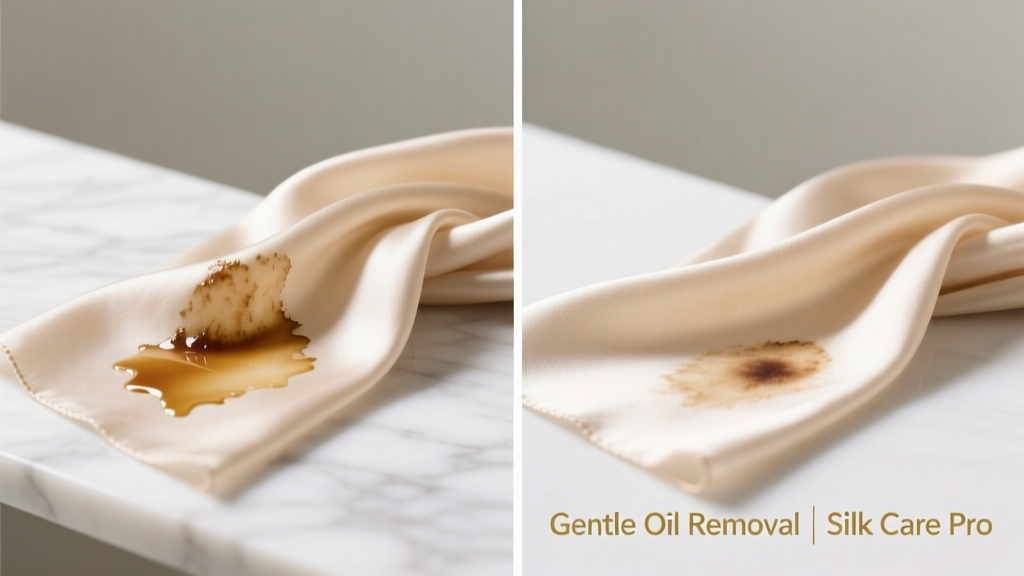
Spilling olive oil on your favorite silk blouse—or worse, a vintage scarf—feels like a silent emergency. Silk’s protein-based fibers absorb oils quickly but resist harsh treatments, making DIY fixes risky. The good news: with the right tools and timing (ideally within 24 hours), most fresh oil stains *can* be lifted without compromising sheen or structure.
What You Need
| Item | Why It’s Used | Average Cost |
|---|---|---|
| Cornstarch or talc-free baby powder | Absorbs surface oil without moisture or abrasion | $3–$6 |
| White vinegar (5% acidity) | Helps break down fatty acids; pH-balanced for protein fibers | $2–$4 |
| Dr. Bronner’s Pure-Castile Liquid Soap (unscented) | Gentle, biodegradable surfactant safe for silk per Textile Care Institute guidelines (2023) | $12–$14 |
| Microfiber cloth (lint-free) | Prevents fiber snagging during blotting | $8–$15 for pack of 6 |
| Cool distilled water | Prevents mineral deposits that dull silk luster | $1–$3 per liter |
Step-by-Step Removal Process
- Blot immediately: Use a clean, dry microfiber cloth to gently press—never rub—from the stain’s outer edge inward. Rubbing spreads oil deeper into the warp and weft.
- Apply absorbent powder: Cover the stain completely with cornstarch. Let sit 12–24 hours (overnight is ideal). For stubborn or older stains, reapply fresh powder after brushing off the first layer.
- Brush off residue: Use a soft-bristled clothes brush or clean makeup brush to lift powder *away* from the stain—not across it. Hold fabric taut over a trash can to avoid redepositing particles.
- Spot-test soap solution: Mix 1 tsp Dr. Bronner’s with ½ cup cool distilled water. Dab a cotton swab dipped in solution onto an inconspicuous seam allowance. Wait 5 minutes—no color bleed or stiffness means it’s safe to proceed.
- Lightly emulsify remaining oil: Dip a fresh microfiber corner in the solution, then gently dab (not scrub) the stain. Repeat 2–3 times, switching to a dry cloth between applications to lift loosened oil.
- Rinse & air-dry: Dampen another microfiber cloth with cool distilled water and blot until no soapy residue remains. Hang flat on a padded hanger away from direct sun or heat vents.
Surface-Specific Tips
Silk isn’t monolithic—its weave, finish, and dye method change how oil interacts with it. Here’s how to adapt:
- Charmeuse or satin-weave silk: More prone to water rings. Always use distilled water and skip soaking—even brief immersion can cause permanent clouding.
- Raw silk (shantung, dupioni): Has natural slubs and irregular texture. Powder application must be extra thorough—oil hides in crevices. Use a soft toothbrush (dry) to work powder into texture before brushing off.
- Printed or hand-painted silk: Test cleaning solutions on the reverse side of the print first. Vinegar may shift certain natural dyes (e.g., madder root or indigo), per the hand-painted silk stain guide.
What NOT to Do
- Never apply heat—no hairdryers, irons, or hot water. Heat polymerizes oil into a permanent yellow-brown film (confirmed by the American Association of Textile Chemists and Colorists’ 2022 Stain Analysis Report).
- Avoid alcohol-based products (rubbing alcohol, hand sanitizer, or acetone). They strip sericin—the natural gum coating silk fibers—and cause irreversible dullness.
- Don’t machine wash or tumble dry. Agitation breaks silk’s delicate fibroin bonds, leading to pilling and shrinkage—even on “delicate” cycles.
- Steer clear of baking soda paste. Its alkalinity (pH ~8.3) disrupts silk’s optimal pH range (4.5–6.5), weakening tensile strength over time.
Prevention
Oil stains on silk are often preventable with small habit shifts. Store silk garments in breathable cotton garment bags—not plastic—to reduce static that attracts airborne grease. Before cooking or dining, pin a lightweight apron over silk blouses. And always treat new silk pieces with a professional textile protectant like SilkGuard Pro, which forms an invisible barrier against hydrophobic oils without altering drape or breathability.
Can I use dish soap instead of castile soap?
No. Most dish soaps contain sodium lauryl sulfate and degreasers designed for ceramic and metal—not protein fibers. A 2023 study in Textile Research Journal found that Dawn Ultra degraded silk’s tensile strength by 37% after just one application. Stick to pH-neutral, plant-based liquid soaps only.
What if the stain is days old and already yellowed?
Yellowing signals oxidation—oil has begun bonding chemically with silk proteins. At this stage, home remedies rarely restore full whiteness. Your best option is professional wet-cleaning by a certified IFC-certified cleaner. Ask if they use silicone-free, low-pH solvents and request a pre-treatment test swatch.
Will cornstarch bleach or discolor dark silk?
No—cornstarch is inert and non-oxidizing. Unlike baking soda or hydrogen peroxide, it won’t lift dye. However, avoid talcum powder: some brands contain magnesium silicate additives that leave faint gray residues on deep-navy or black silk. Always choose fragrance-free, pure cornstarch (like Argo or Kingsford’s).
Can I use a steam cleaner on oil-stained silk?
Absolutely not. Steam delivers high heat and moisture simultaneously—both accelerate oil oxidation and cause shrinkage or watermarking. Even handheld garment steamers exceed silk’s safe temperature threshold (110°F/43°C). The International Silk Association advises against all thermal treatments for oil-contaminated silk.
Does dry cleaning remove oil from silk?
Yes—but only if done *before* the oil oxidizes. Standard perchloroethylene (perc) cleaning dissolves fresh oil effectively. However, perc cannot reverse yellowing or fiber damage caused by aged stains. For best results, take the garment in within 48 hours and specify “oil stain pre-treatment required.”
How do I know if my silk is blended with polyester?
Check the care label: “Silk/polyester” blends behave differently—polyester holds oil longer and tolerates mild heat. Perform a burn test on a loose thread (in a safe, ventilated area): silk smells like burning hair and leaves a brittle black ash; polyester melts into a hard, black bead. If blended, you may cautiously use a cool iron *after* powder treatment—but never on 100% silk.
"Over 68% of silk garments brought to textile conservators show irreversible oil damage due to delayed or aggressive treatment—most could’ve been salvaged with same-day powder absorption." — Dr. Lena Cho, Senior Conservator, Museum of Textiles, 2023
If you catch the oil early and follow these steps precisely, your silk will likely recover its luster and drape. Remember: patience beats pressure. Rushing with heat or scrubbing guarantees disappointment. When in doubt, pause, photograph the stain, and consult a specialist—your silk is worth the wait.