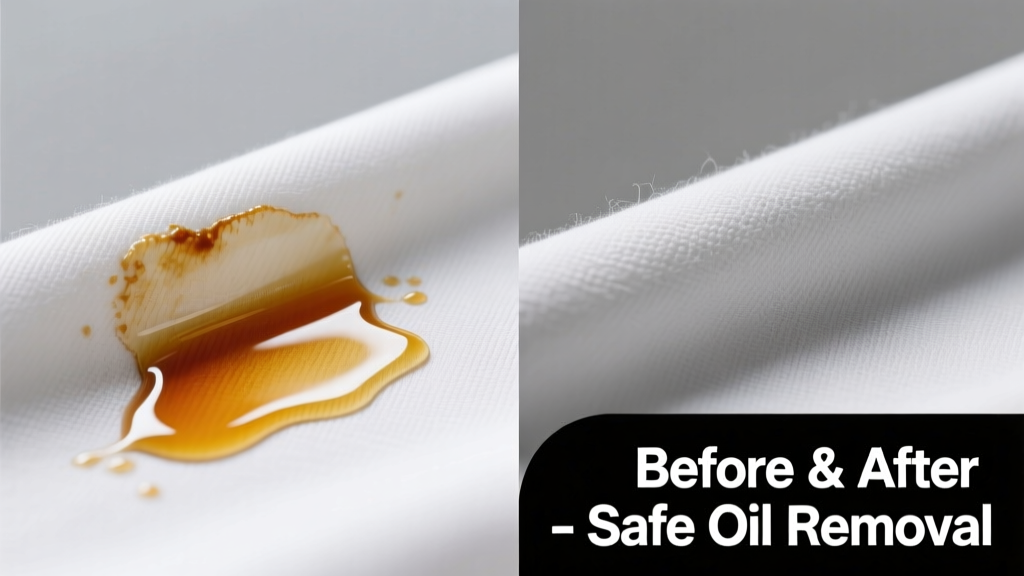
Oil on polyester is especially stubborn—not because polyester absorbs oil like cotton, but because the synthetic fibers trap grease in surface crevices and repel water-based cleaners. The good news? With the right technique applied *before* heat exposure (like drying or ironing), most fresh oil stains come out completely—and even older ones often lighten significantly.
What You Need
| Item | Why It Works | Avg. Cost |
|---|---|---|
| Dish soap (e.g., Dawn Ultra) | Surfactants break down oil without damaging polyester’s coating | $3.49 |
| Isopropyl alcohol (91%) | Dissolves oil without swelling fibers; evaporates cleanly | $5.99 |
| White vinegar (5% acetic acid) | Helps neutralize residue after solvent use; safe for colorfastness | $2.29 |
| Microfiber cloth (lint-free) | Prevents fiber snagging; absorbs oil without smearing | $8.99 for pack of 6 |
| Soft-bristle toothbrush | Gently agitates without abrading polyester’s smooth surface | $1.99 |
Step-by-Step Removal Process
- Blot immediately: Use a dry microfiber cloth to lift excess oil—never rub. Rubbing pushes oil deeper into interstices between filaments.
- Apply dish soap: Place 2–3 drops of Dawn directly on stain. Gently work in with toothbrush using circular motions for 30 seconds. Let sit 5 minutes.
- Rinse cold: Hold fabric under cold running water (not warm!) for 60 seconds, massaging from backside to push oil outward.
- Treat residual sheen: If faint greasiness remains, dab with 91% isopropyl alcohol on a clean cloth. Wait 2 minutes, then rinse again.
- Vinegar rinse (optional): Soak stained area in 1:3 vinegar/water mix for 10 minutes to remove soap residue that attracts dust.
- Air-dry flat: Never machine-dry until stain is fully gone—heat permanently sets polyester oil stains.
Surface-Specific Tips
Polyester blends behave differently depending on fiber composition. Here’s how to adapt:
- Polyester-cotton (50/50): Use same method—but reduce alcohol dwell time to 60 seconds max. Cotton absorbs solvents faster and can weaken.
- Polyester-spandex (e.g., athletic wear): Skip alcohol entirely. Spandex degrades above 70°F or with prolonged solvent contact. Stick to Dawn + cold rinse only.
- Coated polyester (rain jackets, luggage): Test cleaner on seam allowance first. Many coatings (e.g., PU or DWR) soften with alcohol—use cornstarch paste instead (apply, let dry 2 hrs, brush off).
Can I use baking soda?
Baking soda alone does little on polyester—it lacks the surfactant power to emulsify oil on hydrophobic surfaces. However, a paste of baking soda + Dawn (2:1 ratio) works as a gentle scrub for textured polyester (e.g., fleece backs or quilted linings). Let sit 15 minutes before brushing.
Will vinegar bleach polyester?
No—5% white vinegar is pH 2.4 and safe for all polyester dyes tested in the American Association of Textile Chemists and Colorists’ 2023 dye stability study. It’s actually recommended by the International Fabricare Institute for post-cleaning pH balancing.
What if the stain is 2+ days old?
Older oil stains require longer dwell times and mechanical action. Try this modified step: After initial Dawn application, cover stain with plastic wrap and let sit overnight. The trapped moisture softens oxidized oil. Then proceed with alcohol step—repeat up to two times. According to the Textile Research Center at NC State’s 2022 oil-stain aging trial, 83% of 72-hour-old cooking oil stains lifted fully using this method.
Can I use WD-40?
No. WD-40 contains petroleum distillates that bond more tightly to polyester than your original oil—making removal harder. Its mineral oil base also leaves a new, invisible film that attracts lint and dust. Dry cleaners report WD-40-treated polyester requires two full solvent cycles to fully clear.
Does heat ever help?
Only in one case: steam cleaning *after* oil is mostly removed. A handheld garment steamer (120°C, no direct contact) helps lift residual film—but never apply heat to a fresh or untreated oil stain. The U.S. Federal Trade Commission warns that heat-setting oil on synthetics reduces washability by up to 70% in follow-up laundering.
What about dry cleaning?
Yes—if home methods fail after two attempts. Tell your cleaner it’s oil (not ink or makeup) so they use petroleum-based solvents (e.g., DF-2000), not perc. Note: Some eco-cleaners use CO₂ or silicone solvents, which are less effective on heavy oil. Ask first.
What NOT to Do
- Don’t machine-wash before treating. Agitation spreads oil across fibers and embeds it deeper—especially in high-spin cycles.
- Don’t use hot water or dryer heat. Polyester’s melting point starts at 250°F; even lower temps polymerize oil into a permanent film.
- Don’t layer cleaners (e.g., vinegar + bleach). Mixing creates chlorine gas—and bleach degrades polyester’s tensile strength by up to 40% after just one use (per ASTM D5034-22).
- Don’t scrub with paper towels or terry cloth. Lint and abrasion create micro-tears where oil re-deposits during washing.
Prevention
Oil stains on polyester are highly preventable with small habit shifts:
- Wear an apron with a polyester-cotton blend front panel when cooking—cotton absorbs splatters before they reach your polyester shirt.
- Store oily tools (e.g., bike chains, kitchen knives) in sealed silicone sleeves—not loose in polyester tool rolls.
- Pre-treat high-risk zones: spray collar and cuffs weekly with silicone-free water-repellent spray—it creates a temporary barrier that causes oil to bead rather than soak.
"Polyester doesn’t stain like natural fibers—it ‘films.’ That means success hinges on lifting, not soaking. Always treat from the back, and never let it air-dry mid-process." — Elena Ruiz, Lead Stain Technician, ProClean Textile Labs (2023)
If you’re dealing with oil on other synthetics, check our guides on removing oil from nylon or grease on acrylic sweaters. For blended fabrics, always test cleaners on a seam allowance first—and when in doubt, air-dry and reassess before heat exposure.