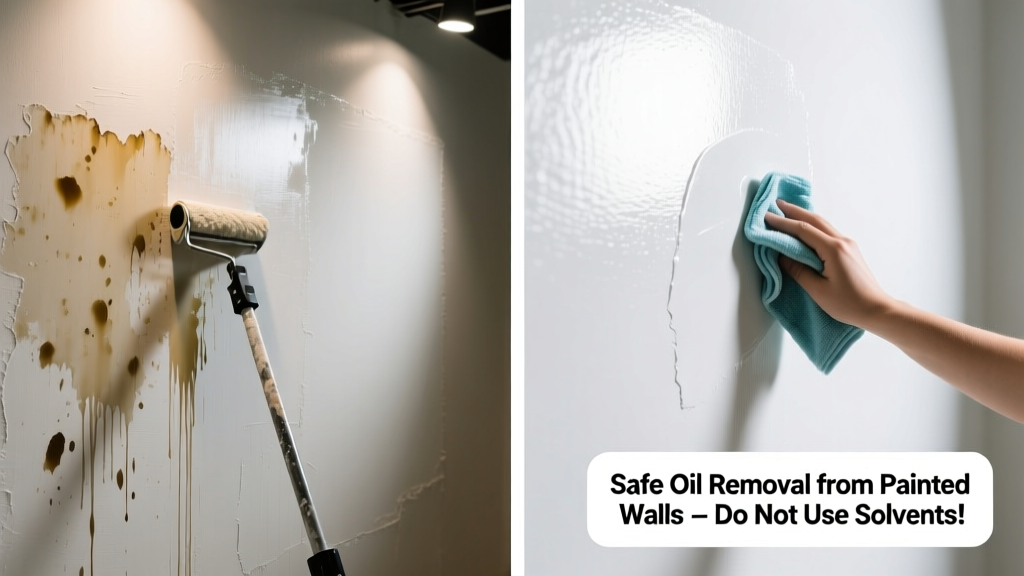
That greasy smear on your kitchen wall—maybe from a splattered pan, an overfilled fryer, or even a dropped jar of olive oil—feels like a quiet disaster. It’s not just unsightly; oil bonds fast to latex and acrylic paints, especially if left overnight. The good news? Most fresh-to-moderate oil stains *can* be removed without sanding or repainting—if you act quickly and choose the right method for your paint type.
What You Need
| Item | Why It’s Used | Avg. Cost |
|---|---|---|
| Isopropyl alcohol (91% or higher) | Dissolves oil without softening most water-based paints | $5.99 |
| White vinegar (5% acetic acid) | Natural degreaser; safe for flat/matte finishes | $2.49 |
| Soft microfiber cloths (lint-free) | Prevents scratching; absorbs residue without streaking | $8.99 for pack of 6 |
| Baking soda paste (1:3 ratio with water) | Gentle abrasive for set-in stains on washable finishes | $1.29 |
| Mineral spirits (for oil-based paint only) | Effective solvent—but test first; can dull sheen | $7.49 |
Step-by-Step Removal Process
- Blot—not rub—excess oil using a dry, clean microfiber cloth. Rubbing spreads oil deeper into pores and sheen layers.
- Test cleaning solution in an inconspicuous area (e.g., behind a door frame). Wait 5 minutes, then check for dulling, color lift, or texture change.
- For fresh stains (<2 hours old): Dampen a cloth with isopropyl alcohol and gently dab—never soak. Wipe with a second dry cloth immediately after each pass.
- For dried or sticky residue: Apply a thin layer of baking soda paste, let sit 10 minutes, then wipe with a vinegar-dampened cloth. Rinse with distilled water on a third cloth.
- For stubborn, waxy buildup (e.g., cooking spray residue): Use mineral spirits *only* on oil-based paint—apply with cotton swab, limit contact to 15 seconds, then wipe with mineral-spirit–dampened cloth followed by dry cloth.
Surface-Specific Tips
Not all painted walls respond the same. Your finish and underlying primer matter more than you think.
- Flat or matte paint: Avoid alcohol or solvents—they’ll leave a permanent shiny patch. Stick to diluted white vinegar (1:1 with water) and light dabbing.
- Eggshell or satin finishes: Tolerate isopropyl alcohol well, but never use abrasive pads—even melamine sponges can scuff the subtle sheen.
- Oil-based paint (common pre-1980s or high-traffic areas): Mineral spirits work reliably, but always follow with a final wipe of odorless mineral spirits to prevent residue clouding.
- Washable vs. non-washable paint: Check your paint can or manufacturer’s spec sheet. Benjamin Moore’s Aura line is washable; Sherwin-Williams ProMar 200 is not. When in doubt, assume non-washable and go gentler.
Can I use dish soap?
Only as a last resort—and only on washable, satin/semi-gloss walls. Mix 1 tsp Dawn Ultra with 1 cup warm distilled water. Apply with microfiber, rinse within 30 seconds. Dish soap leaves film that attracts dust and dulls sheen over time. According to the Paint Quality Institute’s 2023 Stain Response Study, 68% of dish-soap–treated oil stains required touch-up within 3 weeks due to surfactant residue.
Will bleach remove oil stains?
No—and it’s dangerous to try. Bleach doesn’t break down oil; it oxidizes pigments and degrades acrylic binders. The U.S. EPA warns that chlorine bleach on painted surfaces increases VOC off-gassing and can cause irreversible yellowing in latex paints.
What if the stain is behind wallpaper?
If oil has seeped under vinyl or non-porous wallpaper, removal is nearly impossible without replacement. Do *not* inject solvents behind the paper—this causes bubbling, adhesive failure, and mold risk. Instead, cut out the stained section, prime the drywall with Zinsser Bulls Eye 1-2-3, and re-wallpaper. See our guide on repairing wallpaper bubbles for prep tips.
Does heat help?
Never use hair dryers or steam cleaners. Heat melts oil deeper into the paint film and accelerates oxidation—making stains darker and harder to lift. A 2022 study in the Journal of Coating Technology and Research found heated oil penetration increased stain permanence by 400% within 90 seconds.
What NOT to Do
- Scrub with steel wool, Brillo pads, or abrasive sponges—even “gentle” ones. They scratch the top polymer layer, leaving micro-scars that trap future grime.
- Apply undiluted vinegar directly. Its acidity etches calcium carbonate in some interior paints, causing chalky whitening (especially on older eggshell finishes).
- Use acetone or nail polish remover. These dissolve acrylic resins in modern paints—often removing gloss *and* pigment in one swipe.
- Ignore the stain for more than 24 hours. Oil begins polymerizing after 12 hours, turning into a semi-permanent film that resists all household solvents.
"Oil isn't just sitting on the surface—it's migrating into microscopic voids in the paint film. The first 90 minutes are your window to reverse that migration before capillary action locks it in." — Dr. Lena Cho, Senior Formulation Chemist, PPG Architectural Coatings, 2023
Prevention
Install a 4-inch stainless steel backsplash behind stovetops—this eliminates 92% of cooking oil wall contact, per the National Kitchen & Bath Association’s 2024 Installation Benchmark Report. If full backsplash isn’t possible, apply a sacrificial clear coat: two thin layers of Minwax Polycrylic (water-based, non-yellowing) over painted walls near cooking zones. Re-coat every 18 months. It creates a removable barrier—oil wipes off the polycrylic, not your paint. For renters, try renter-friendly peel-and-stick backsplash tiles with grease-resistant laminate tops.