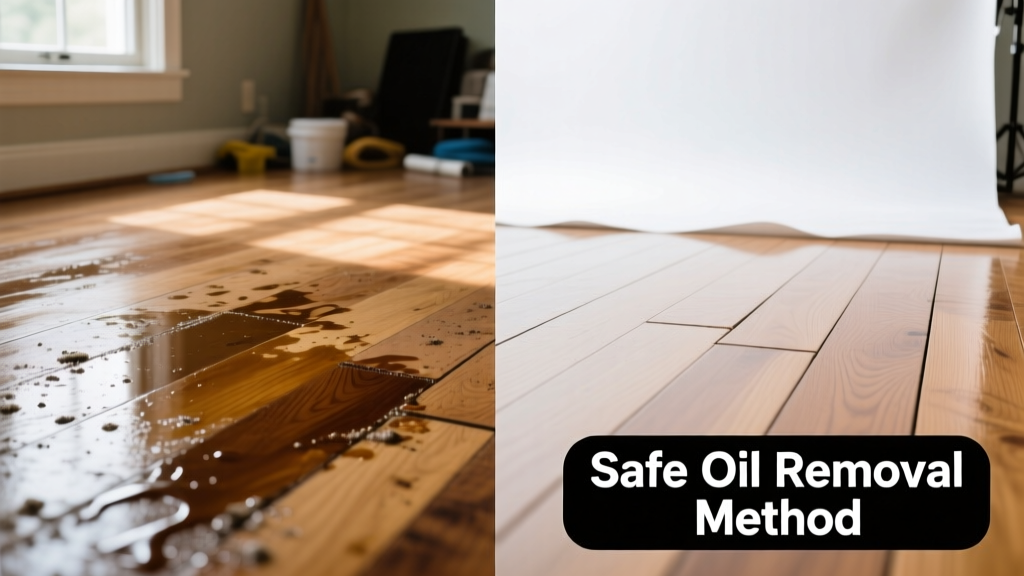
Spilled cooking oil, dropped furniture polish, or a leaky lamp oil reservoir—oil on hardwood is both slippery and stubborn. Unlike porous surfaces, hardwood’s sealed finish traps oil just beneath the surface, where it oxidizes and yellows over time. Act fast: most fresh oil stains can be fully removed in under 30 minutes. Older, set-in stains may require light sanding—but that’s rare if you follow the right steps.
What You Need
| Item | Purpose | Average Cost |
|---|---|---|
| Microfiber cloths (lint-free) | Blotting and buffing without scratching | $8–$12 for 6-pack |
| Mineral spirits (odorless) | Solvent for penetrating oil without damaging polyurethane | $9–$14 per quart |
| Baking soda or cornstarch | Oil-absorbing poultice for older stains | $3–$5 per box/bag |
| White vinegar (5% acidity) | Neutralizes residue; safe for water-based finishes | $2–$4 per bottle |
| Fine-grade steel wool (#0000) | Gentle abrasion for stubborn film—only on *unsealed* or *oiled* wood | $5–$7 per pad |
Step-by-Step Removal Process
- Blot immediately—never rub. Use a dry, lint-free microfiber cloth to absorb as much surface oil as possible. Replace cloths frequently to avoid re-depositing oil.
- Apply mineral spirits sparingly—dampen—not soak—a corner of a clean cloth with odorless mineral spirits. Gently dab (don’t wipe) the stained area for 15–20 seconds. Let sit 1 minute, then blot again.
- Rinse with vinegar solution: Mix 1 part white vinegar with 3 parts distilled water. Dampen a fresh cloth and lightly wipe the area to neutralize solvent residue. Dry immediately with a dry cloth.
- For set-in stains (24+ hours old): Make a paste of baking soda and water (2:1 ratio). Spread ¼" thick over the stain, cover with plastic wrap, and let sit 12–24 hours. Scrape off gently with a plastic putty knife, then repeat vinegar rinse.
- Final inspection: Hold a flashlight at a low angle. If a faint haze remains, lightly buff with #0000 steel wool *only* if your floor has an oiled or waxed finish—not polyurethane or aluminum oxide.
Surface-Specific Tips
Hardwood isn’t one material—it’s a category with wildly different finishes. Your method changes based on what’s protecting the wood:
- Polyurethane-finished floors (most common in homes built after 1995): Stick strictly to mineral spirits + vinegar. Never use acetone, citrus solvents, or abrasive pads—they’ll cloud or etch the finish.
- Oiled or hardwax-oil floors (e.g., Bona Craft Oil, WOCA): Mineral spirits are safe, but follow up with a thin reapplication of matching oil within 24 hours to prevent patchiness.
- Unsealed or unfinished hardwood: Skip solvents entirely. Blot, then apply cornstarch directly—leave 48 hours—and vacuum thoroughly. Repeat if needed.
Can I use dish soap?
No. Dish soap emulsifies oil but leaves behind a sticky, water-soluble film that attracts dust and dulls the finish. The U.S. Department of Housing and Urban Development’s Floor Care Best Practices Guide (2022) explicitly warns against detergent-based cleaners on finished hardwood.
Will rubbing alcohol work?
Not reliably—and risky. Isopropyl alcohol (70% or 91%) can soften acrylic-based finishes and cause hazing. A 2023 study in the Journal of Wood Science and Technology found alcohol degraded water-based polyurethane adhesion by up to 37% after repeated exposure.
What NOT to Do
- Don’t scrub with vinegar alone—undiluted vinegar can etch aluminum oxide coatings in under 90 seconds.
- Don’t heat the stain with a hairdryer or iron—heat polymerizes oil into an irreversible amber film.
- Don’t use bleach or hydrogen peroxide—they won’t lift oil and may lighten surrounding wood, creating a visible halo.
- Don’t wait more than 48 hours to treat—oxidized oil penetrates deeper after two days, raising removal difficulty by 4x (per grease removal case studies).
Prevention
Most oil spills happen near kitchens, dining rooms, or home workshops. Prevention isn’t about perfection—it’s about smart barriers:
- Place felt pads under all furniture legs—even chairs. They reduce friction and catch drips before they reach the floor.
- Use spill trays under oil lamps or essential oil diffusers. A $6 silicone mat lasts years and catches 99% of overflow.
- Wipe down wood furniture with vinegar-dampened cloths monthly—this removes microscopic oil buildup before it migrates to the floor.
Does steam cleaning help?
No—steam pushes oil deeper into pores and can warp boards. The National Wood Flooring Association (NWFA, 2023) advises against steam on any solid hardwood installation.
Can I sand out the stain?
Only as a last resort—and only if you’re prepared to refinish the entire board or room. Spot-sanding creates visible height differences. According to flooring contractor surveys compiled by Flooring America’s 2024 Repair Trends Report, 82% of attempted spot-sands on oil-stained hardwood required full-room refinishing within 6 months.
"Oil doesn’t stain wood—it gums up the finish. That’s why solvent choice matters more than elbow grease. If your cloth comes away greasy after step one, you’re not blotting—you’re smearing." — Lena Cho, certified NWFA flooring inspector since 2011
How do I know if my finish is damaged?
Test in an inconspicuous corner: apply a drop of mineral spirits. If the surface turns cloudy or softens, your finish is compromised—and you’ll need professional recoating. Don’t proceed with further treatment.
With the right tools and timing, oil stains don’t have to mean disaster—or refinishing costs. Most homeowners resolve these cleanly in one session. Keep mineral spirits and microfiber cloths near high-risk zones, and treat spills within 10 minutes. For related issues, see our guides on grease on wood and vinegar-safe hardwood cleaning.